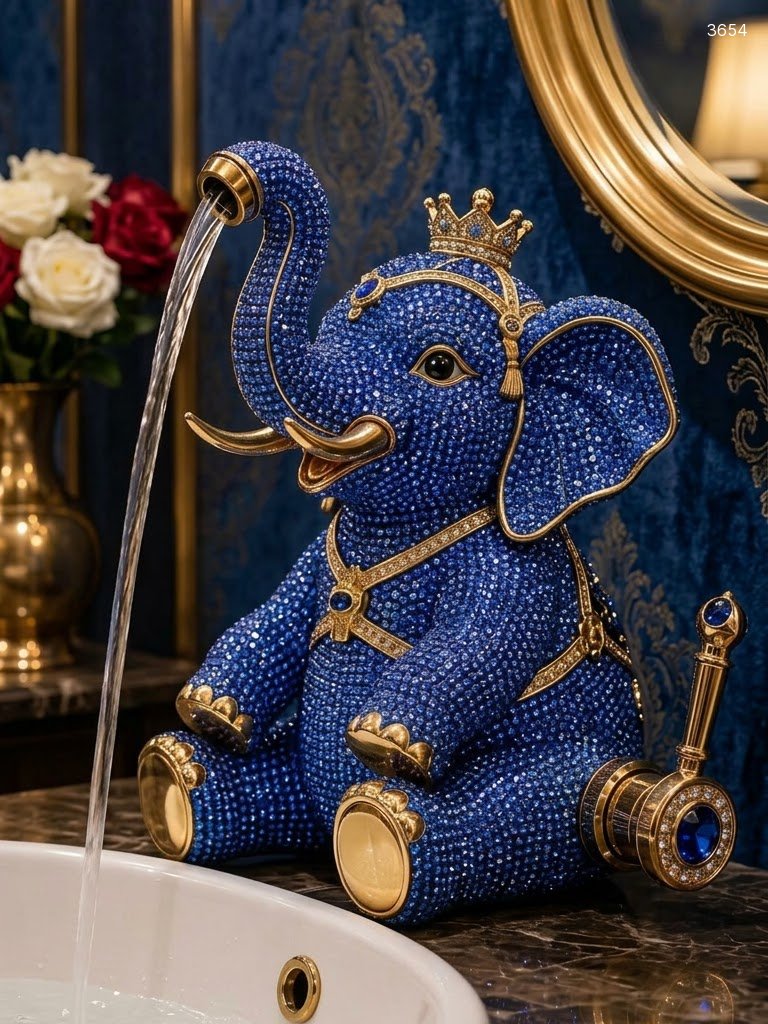
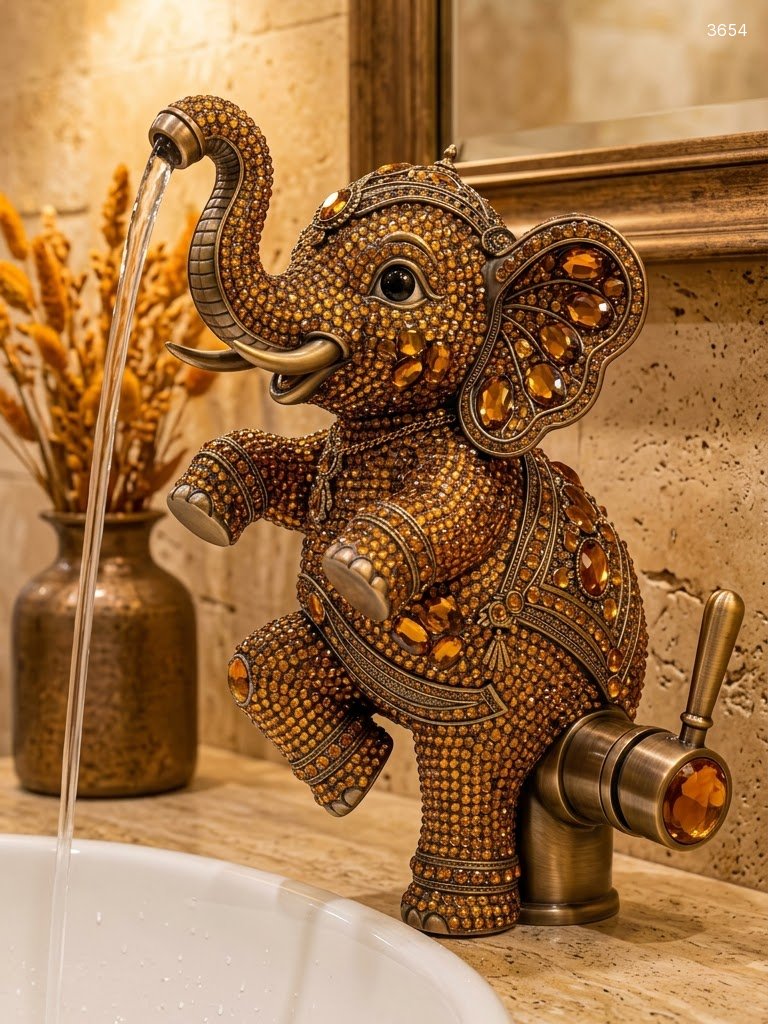
Maximalist bathroom design has been pulling away from plain chrome and brushed nickel for a while now, and figural fixtures are a big part of that shift. An elephant shaped faucet sits right at the center of this trend — a fully functioning water fixture built around the form of an animal, covered edge to edge in tiny rhinestones, with a trunk that acts as the spout. It’s not a subtle accessory. It’s meant to be looked at, and it changes how the rest of the sink area reads once it’s in place.
This piece takes a different look at the same category — not the general appeal of the shape, but the specific choices that go into building one, the poses these figures come in, how they pair with different sink types, and what to think through before settling on one for a particular room.
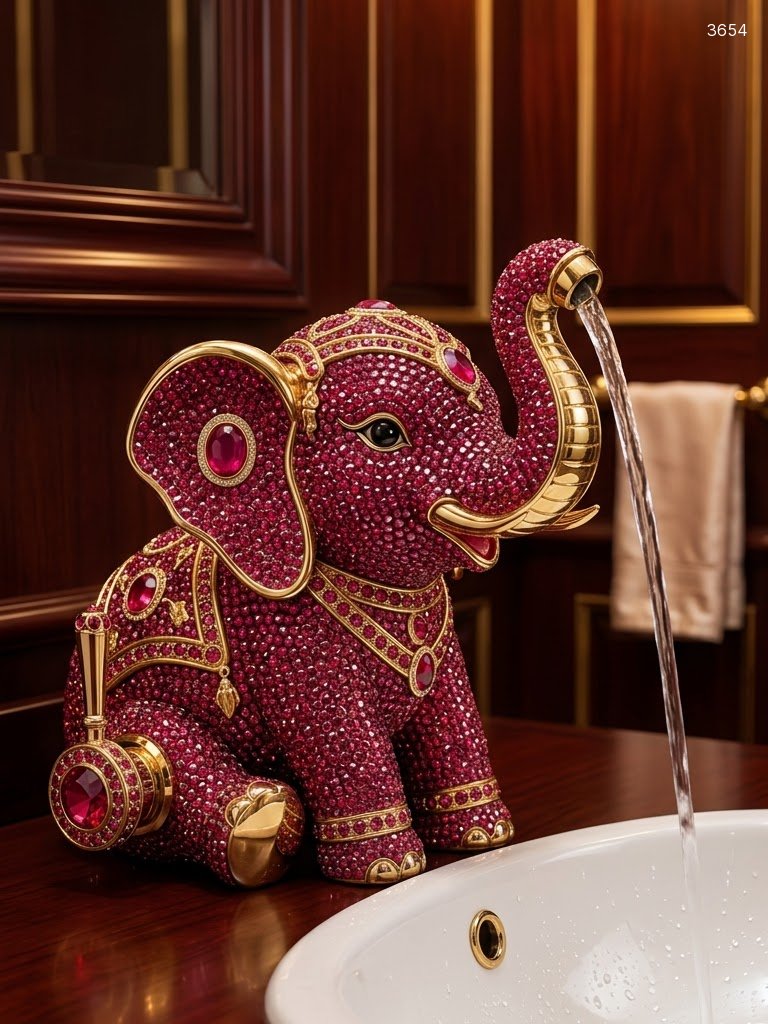
What Makes an Elephant Shaped Faucet a Statement Piece
A standard faucet is judged almost entirely on how well it disappears into a countertop. An elephant shaped faucet is judged on the opposite scale — how much presence it has. The figure typically stands eight to twelve inches tall, positioned at one side of the basin with its trunk curved upward and forward so the water arcs down into the bowl rather than falling straight from a spout tip. That single design choice, curving the water path through an animal’s trunk instead of a metal pipe, is what separates this category from every other faucet style on the market.
The scale of the piece also matters. Because it sits noticeably taller and wider than a conventional tap, it tends to anchor the entire counter visually, pulling attention away from smaller details like drawer pulls or towel bars and putting it squarely on the sink area instead.
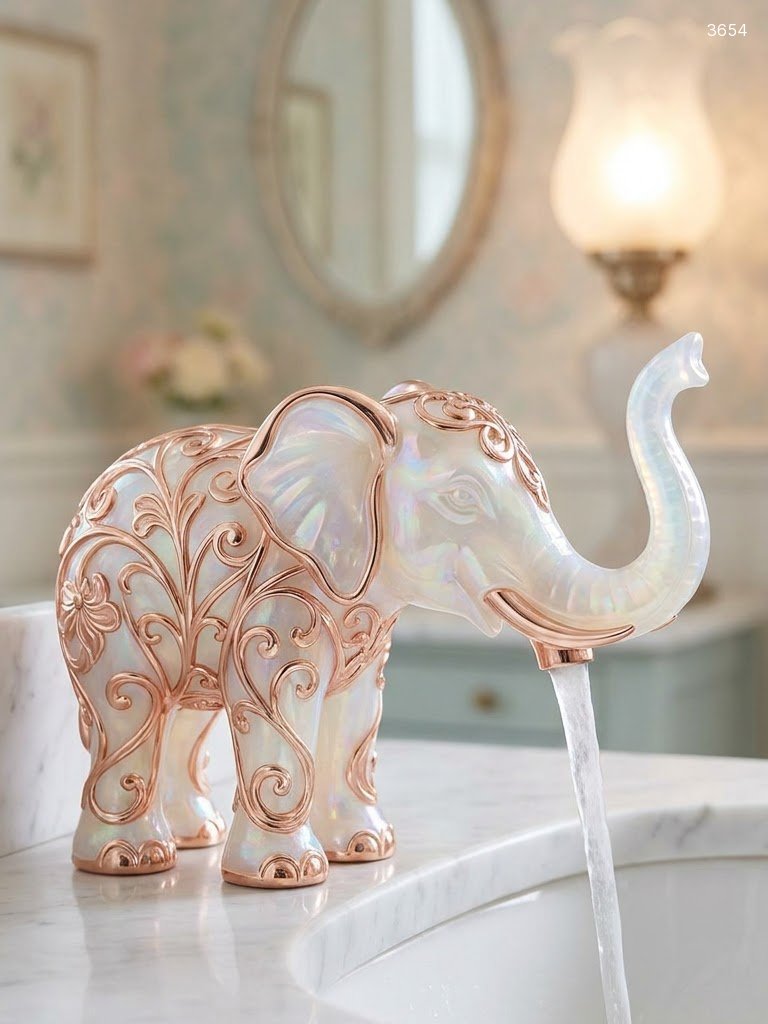
The Rhinestone Setting Technique, Row by Row
Covering a three-dimensional animal figure in small stones is a slower process than most people assume. Flat surfaces are relatively simple to bead, but a trunk, an ear, or a bent knee curves in multiple directions at once, which means each stone has to be angled slightly differently from the one before it just to keep the surface looking smooth rather than lumpy. Artisans typically work in small sections, applying adhesive to one area at a time and setting stones by hand with tweezers or a fine applicator tool before moving to the next patch.
Stone size is usually varied deliberately rather than kept uniform. Smaller stones are used around tight curves — the trunk, the toes, the folds near the joints — while slightly larger stones fill the broader, flatter panels like the belly or the outer ear. This variation is part of what gives the finished piece its texture; a uniform stone size across the whole body tends to look flat under direct light, while mixed sizing catches light at different angles and reads as more dimensional.
Standing, Sitting, and Trunk-Up Poses
Not every elephant shaped faucet is built in the same posture, and the pose actually changes how the fixture functions as much as how it looks. A standing pose, with all four legs planted and the trunk raised in a gentle curve, tends to sit lower and wider on the counter, which suits a broad vanity top with room to spare on either side. A seated pose, with the elephant resting back on its haunches and front legs raised, takes up less counter depth but adds height, which works well on a narrower ledge where floor space in front of the sink is limited.
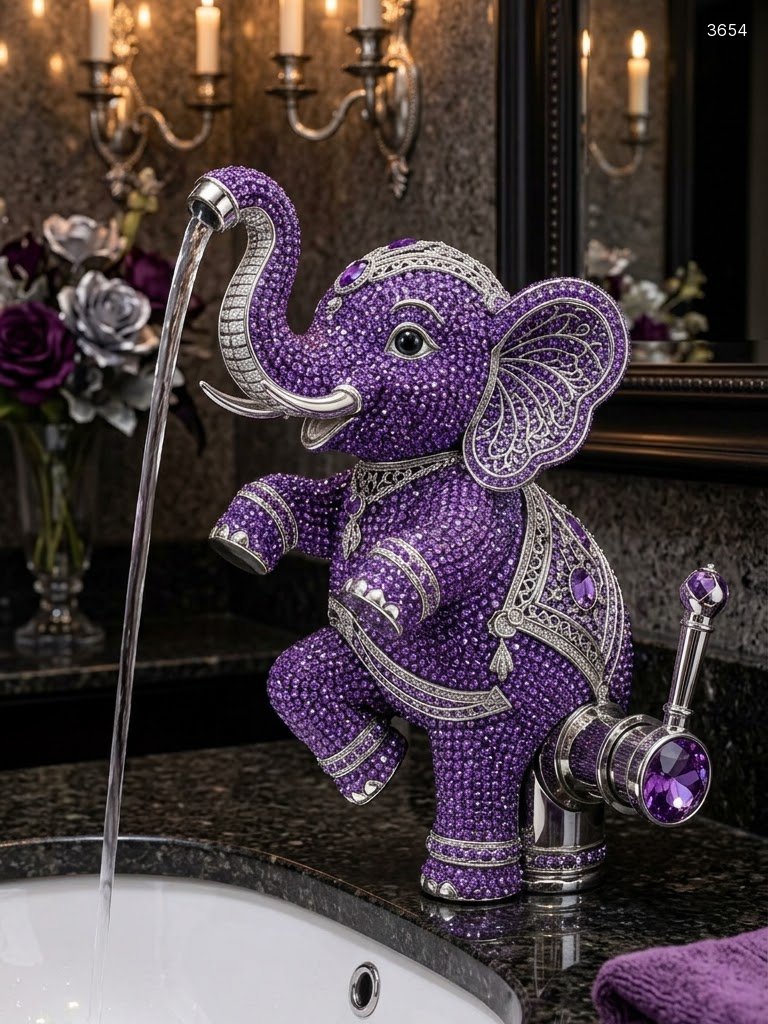
A third variation shows the elephant mid-step, one leg lifted as if walking, trunk stretched fully upward. This pose reads as more dynamic and playful compared to the stillness of a standing or seated figure, and it’s often the choice in bathrooms that are already leaning into a bolder, more theatrical decor direction.
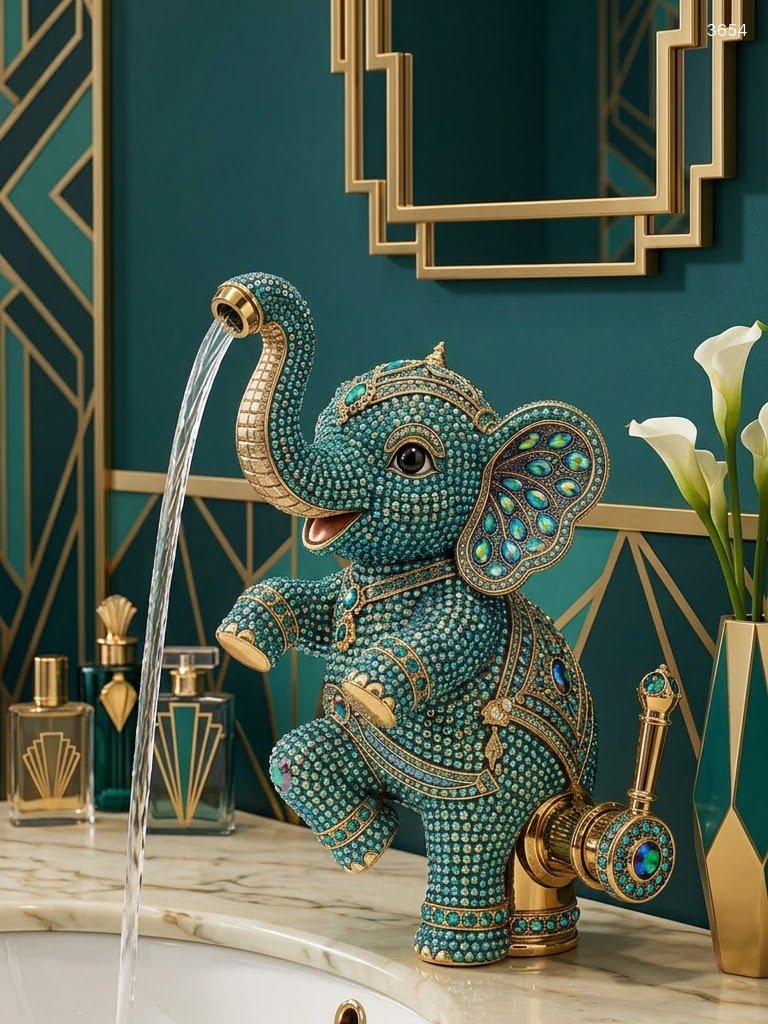
Pairing an Elephant Shaped Faucet with the Right Sink Bowl
Because the figure itself takes up meaningful counter space, the sink bowl underneath needs to be chosen with that in mind. A deep vessel sink — the kind that sits fully above the counter rather than being recessed into it — tends to pair naturally with these fixtures, since the raised bowl brings the water level closer to the trunk and shortens the visual drop between spout and basin. A flatter, undermount sink can still work, but the gap between the trunk tip and the water surface becomes more noticeable, which changes the proportions of the whole setup.
Bowl shape matters too. Round or oval vessel sinks tend to complement the rounded forms of the elephant’s body better than a sharp rectangular basin, which can visually clash with the softer, curved lines of the figure. Stone or marble bowls in particular tend to be a popular pairing, since the natural veining in the stone echoes the organic irregularity of the beadwork rather than competing with it.
How Light Interacts with a Crystal-Covered Surface
Bathroom lighting has an outsized effect on how a rhinestone-covered figure actually reads in a room. Under soft, diffused light — the kind that comes from frosted fixtures or indirect wall sconces — the stones tend to glow evenly across the whole surface, giving the figure a smooth, almost matte shimmer. Under a single direct light source, like a downlight or a bare vanity bulb, the same figure will throw much sharper points of reflection, with certain rows of stones catching bright flashes while others sit in shadow.
This is worth factoring in before final placement, since a fixture that looks evenly lit in a showroom photo can behave very differently once it’s under the specific lighting setup of a particular bathroom. Mirrors placed directly behind or beside the faucet tend to double this effect, bouncing extra light back across the beaded surface and making the piece appear busier than it does in a room without a large reflective surface nearby.
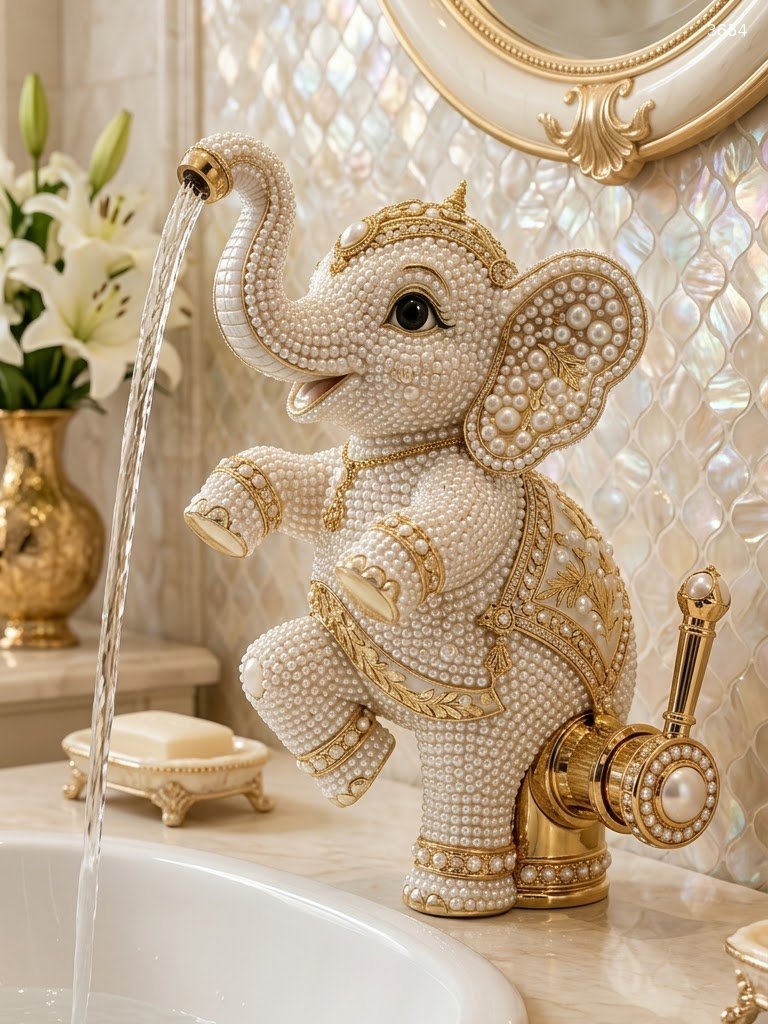
The Valve and Cartridge Mechanism Explained
Underneath the decorative shell, an elephant shaped faucet runs on the same basic plumbing principles as any other single-lever mixer tap. A ceramic disc cartridge sits inside the base, and rotating or lifting the side handle shifts the alignment of two ceramic discs to control how much hot and cold water mix together and how much total flow passes through. This type of cartridge is standard across most modern faucets because ceramic discs resist mineral buildup better than older rubber-washer designs and tend to hold a tight seal for a long service life.
The trunk itself houses the final section of the water path, usually fitted with a small aerator at the tip. The aerator mixes air into the water stream as it exits, which softens the flow and reduces splashing — a detail that matters more here than on a straight-spout faucet, since the curved trunk changes the angle at which water finally reaches the basin.
Where This Style Fits: Powder Rooms, Spa Bathrooms, Hotel Suites
A powder room — the small guest bathroom near an entryway that sees short visits rather than daily routines — is one of the most common places this style shows up, mainly because it’s a low-stakes room to make a bold statement in without affecting the practical flow of a household’s main bathroom. Spa-style primary bathrooms are another frequent setting, particularly ones already built around natural stone, soft lighting, and a slower, more deliberate design pace where a single ornate fixture fits the overall mood rather than standing apart from it.
Hotel and boutique guesthouse bathrooms have also picked up on this style in recent years, using an elephant shaped faucet as a small, memorable detail that guests photograph and associate with the property. In that context, the fixture works less as everyday hardware and more as a piece of branding built into the room itself.
A Brief Look at Animal-Shaped Fixtures in Design History
Figural faucets are not a new idea. Fish-shaped spouts, swan-neck taps, and lion-head wall fountains have appeared in bathroom and garden design for well over a century, often built from solid brass and left unadorned so the sculpted metal itself carried the visual interest. What’s changed in recent years is the addition of dense surface decoration — rhinestones, enamel, painted detail — layered over that same basic figural concept, turning a sculpted shape into something closer to jewelry.
The elephant specifically has become one of the more common animal choices in this newer wave, likely because its body shape lends itself well to the format: a raised trunk becomes an obvious, natural spout in a way that few other animals offer as cleanly.
Questions to Ask Before Choosing a Finish
With so many color and stone combinations available, narrowing the decision usually comes down to a few practical questions. What’s the dominant color already in the room — walls, tile, countertop — and does the figure need to blend into that palette or stand apart from it as a contrast piece? Is the lighting in the space warm or cool toned, since that will shift how certain stone colors appear once installed? And how much visual activity is already happening in the room, since a heavily patterned tile or wallpaper may call for a simpler stone finish rather than one with multiple colors layered together.
Working through these questions before finalizing a selection tends to prevent the most common regret with a piece like this — choosing a finish that looked striking in isolation but fights with the rest of the room once it’s actually installed.
Closing Thoughts
An elephant shaped faucet asks more of a bathroom than a standard fixture does, but it also gives more back — a functioning tap that doubles as a hand-finished sculpture, built through a slow, deliberate process that most plumbing hardware never goes through. From the pose and stone technique to the sink pairing and lighting conditions around it, every detail changes how the finished piece actually reads in a real room rather than a catalog photo. Getting those details right is what turns the fixture from a curiosity into a piece that genuinely belongs in the space it’s placed in.
NOTE: All images in this post are AI-generated and intended solely for inspiration. These are not real products available for sale, and we do not operate any online store or website for purchases.