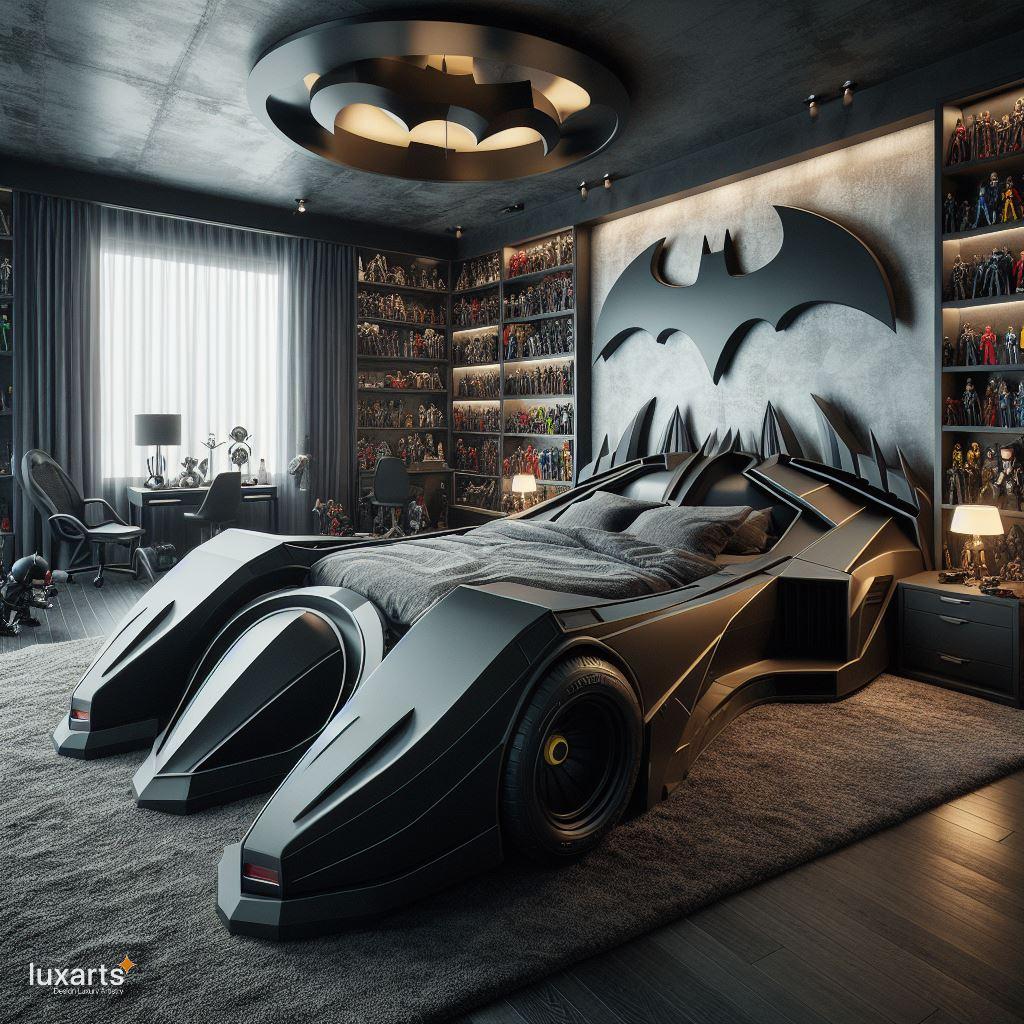
There’s a particular kind of joy that comes from crawling into a bed shaped like your favorite car. Classic car inspired sleeping bags take that childhood daydream — the one where you fall asleep at the wheel of a Mustang or a Ferrari — and turn it into an actual piece of bedroom furniture. These plush, oversized sleep pods are stitched, padded, and shaped to mimic the curves of iconic vehicles from the 1950s through the 1970s, right down to the chrome-look bumpers, embroidered badges, and custom license plates. They sit somewhere between novelty furniture, wearable nostalgia, and genuinely functional bedding, and that combination is exactly why they’ve become such a talking point in home decor circles.
This piece walks through where the design concept comes from, the themes and colors currently trending, where these pieces work best in a home, how to keep one looking sharp, and why so many homeowners end up more attached to theirs than they expected.
Where the Design Concept Comes From
The appeal of a car-shaped sleeping bag isn’t really about cars — it’s about memory. Automotive design from the mid-20th century carries a visual language that most people recognize instantly: rounded fenders, split grilles, whitewall tires, chrome trim, two-tone paint jobs. Designers working on these sleep pieces study the proportions of an actual vehicle — hood length, cabin shape, wheel arches — and translate them into soft-sculpture form using foam padding, quilted panels, and velvet-textured fabric. The goal is recognition at a glance. You should be able to look at the silhouette from across a room and know it’s a Beetle, a Cobra, or a vintage Chrysler without needing to read a label.
What separates a well-made version from a cheap costume-like knockoff is the attention to secondary details: stitched panel lines that mimic body seams, embroidered badges instead of printed ones, wheel wells with actual dimension, and interior “cabin” space padded like real upholstery. Those small touches are what make the piece read as a design object rather than a toy.
Popular Design Themes You’ll Actually See
A handful of automotive eras dominate this category, each pulling from a distinct chapter of car history.
- Italian supercar wedge shapes — low, angular, and aggressive, often finished in a bold yellow or deep red with a badge on the nose, echoing the wedge-era Lamborghini silhouette.
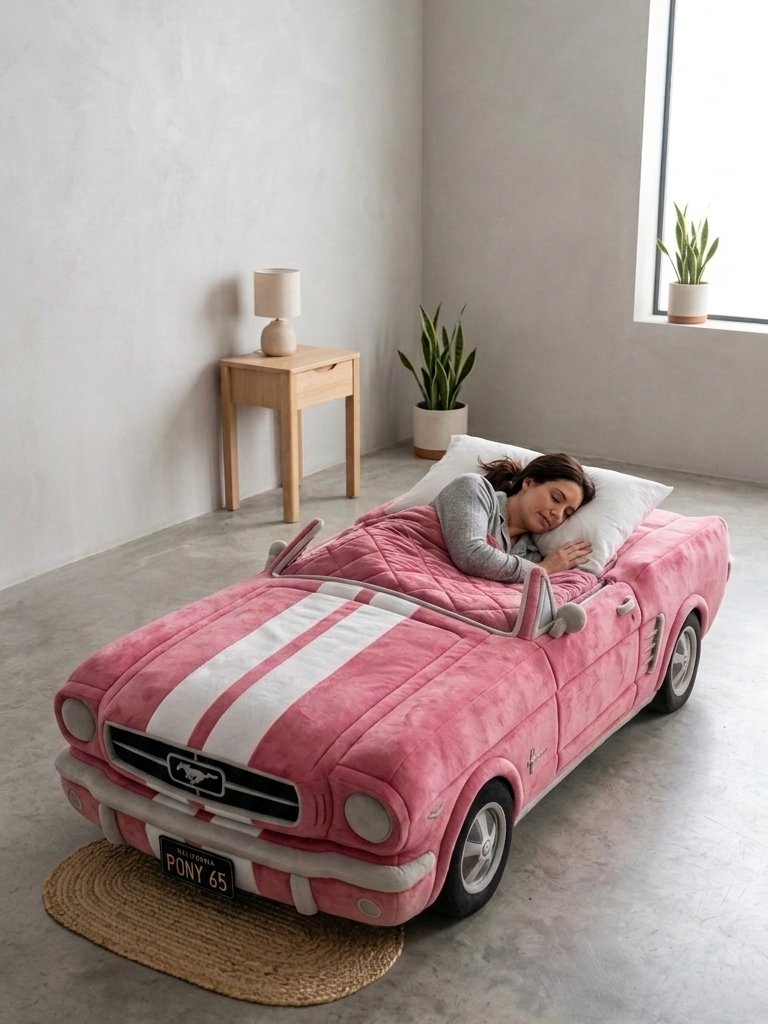
- American muscle and pony cars — long hoods, dual racing stripes, and a stance that reads as pure 1960s Detroit, frequently rendered in soft pastel tones for a lighter, less literal take.
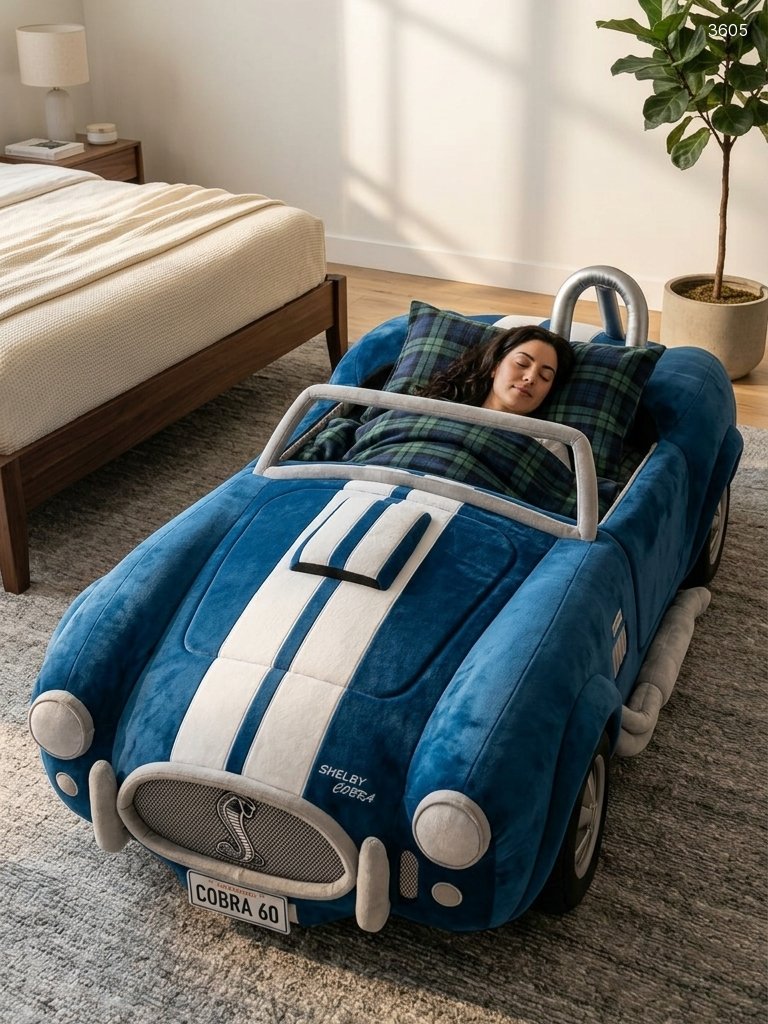
- British-American roadsters — open-top two-seaters with a roll bar detail and a wide grille, usually paired with tartan or plaid accent pillows for a workshop-meets-bedroom feel.
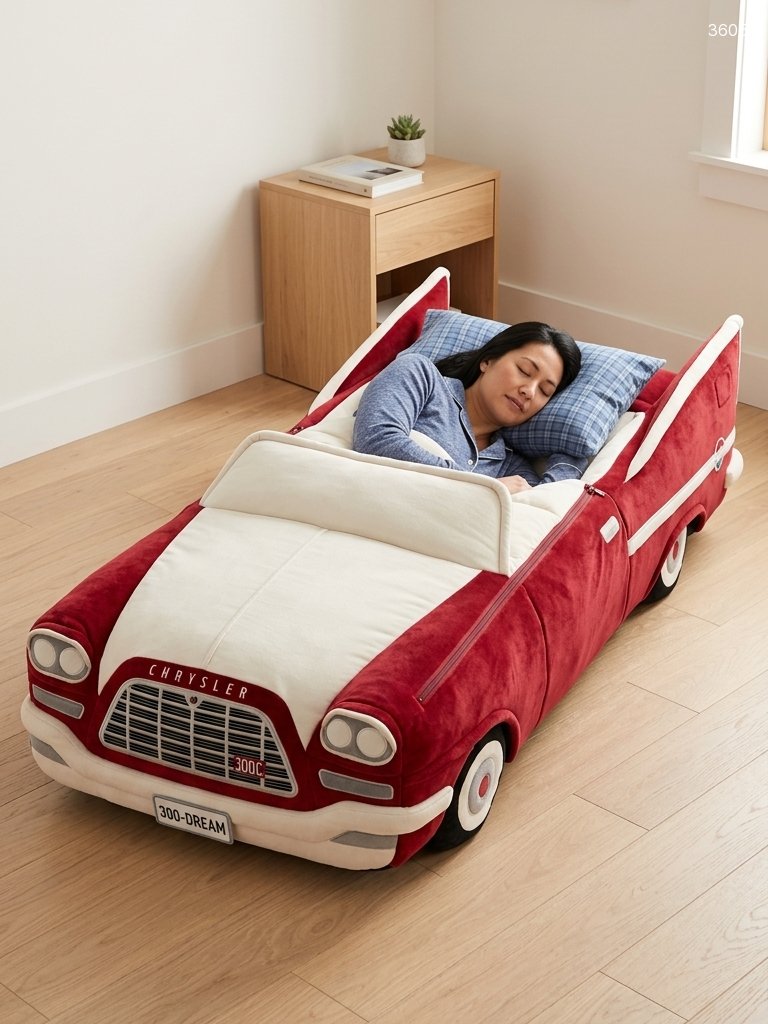
- 1950s land yacht convertibles — wide, low, and finished with whitewall-style wheel trim, tailfins, and a two-tone paint scheme that leans into mid-century Americana.
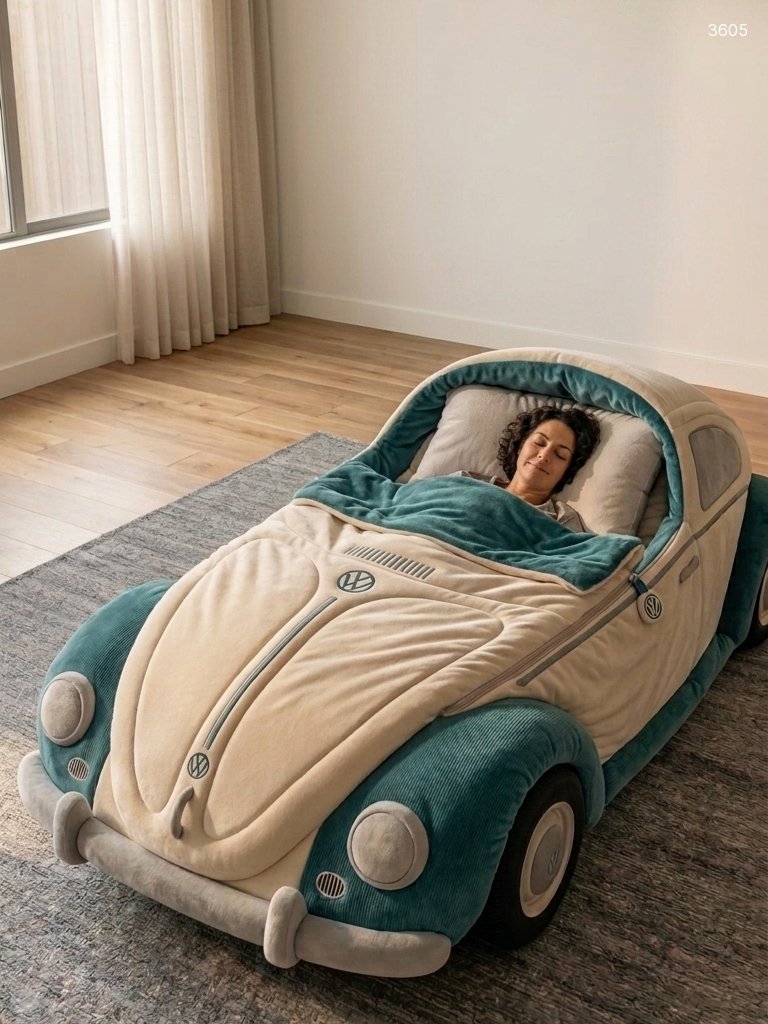
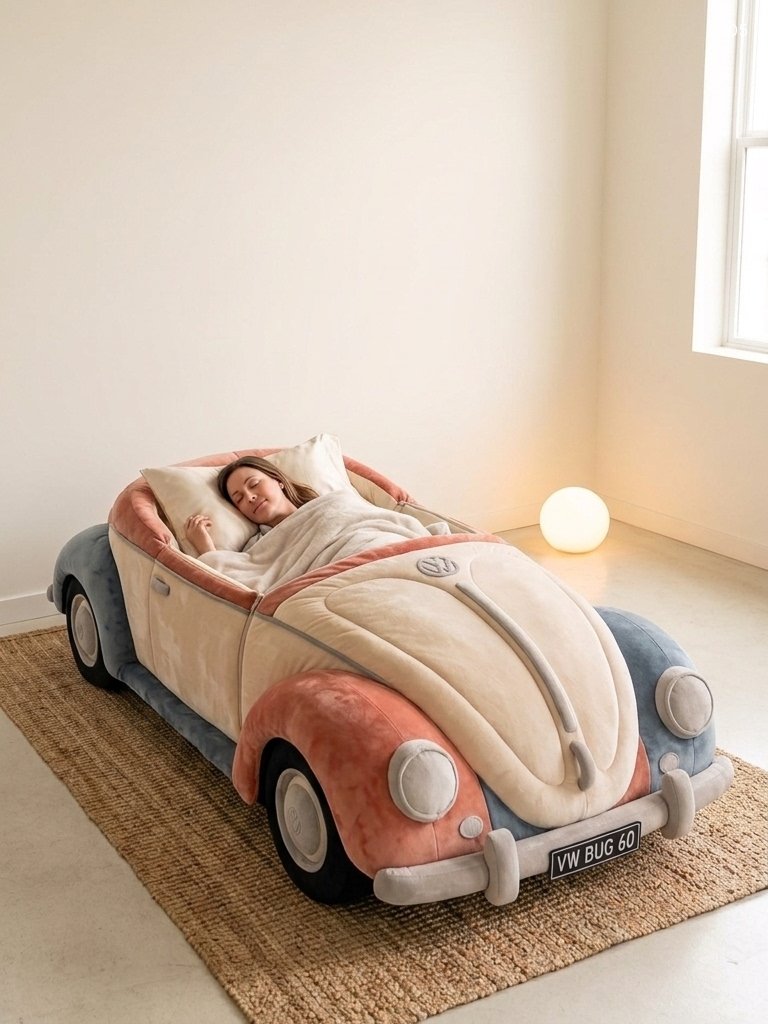
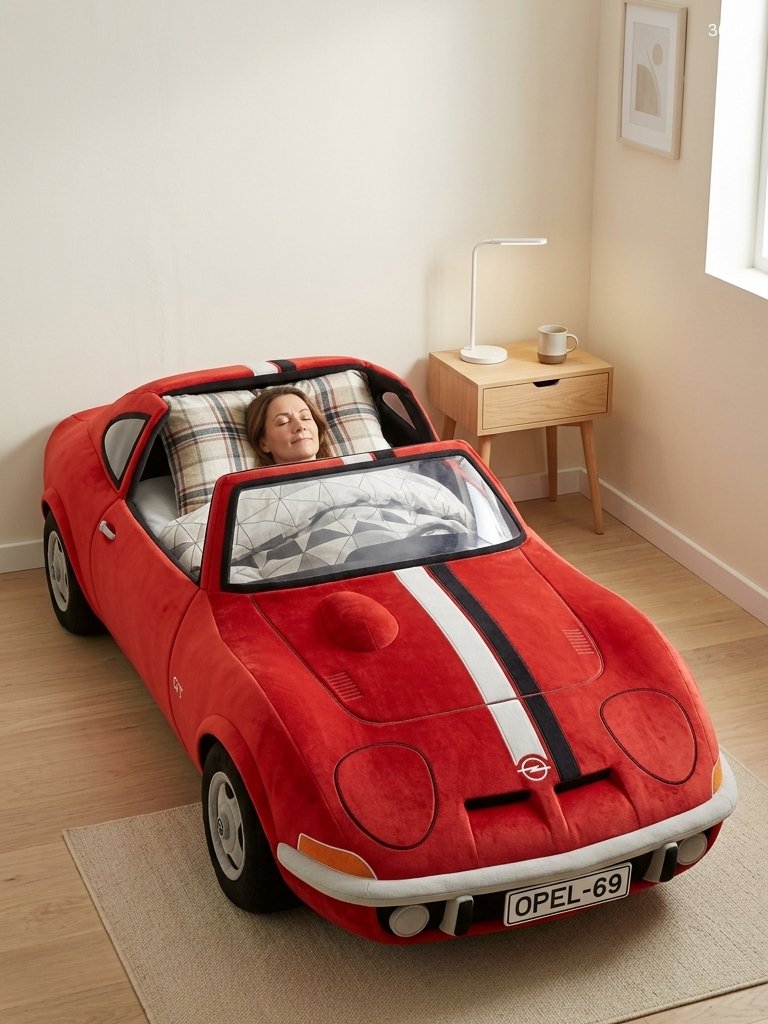
- European economy classics — rounded, friendly proportions modeled after the Volkswagen Beetle, often reworked in soft neutrals like sage, blush, and cream rather than the original factory colors.
None of these designs try to be a scale-accurate replica. They’re stylized enough to feel playful while staying faithful enough to the source vehicle that anyone who grew up around classic cars will recognize it immediately.
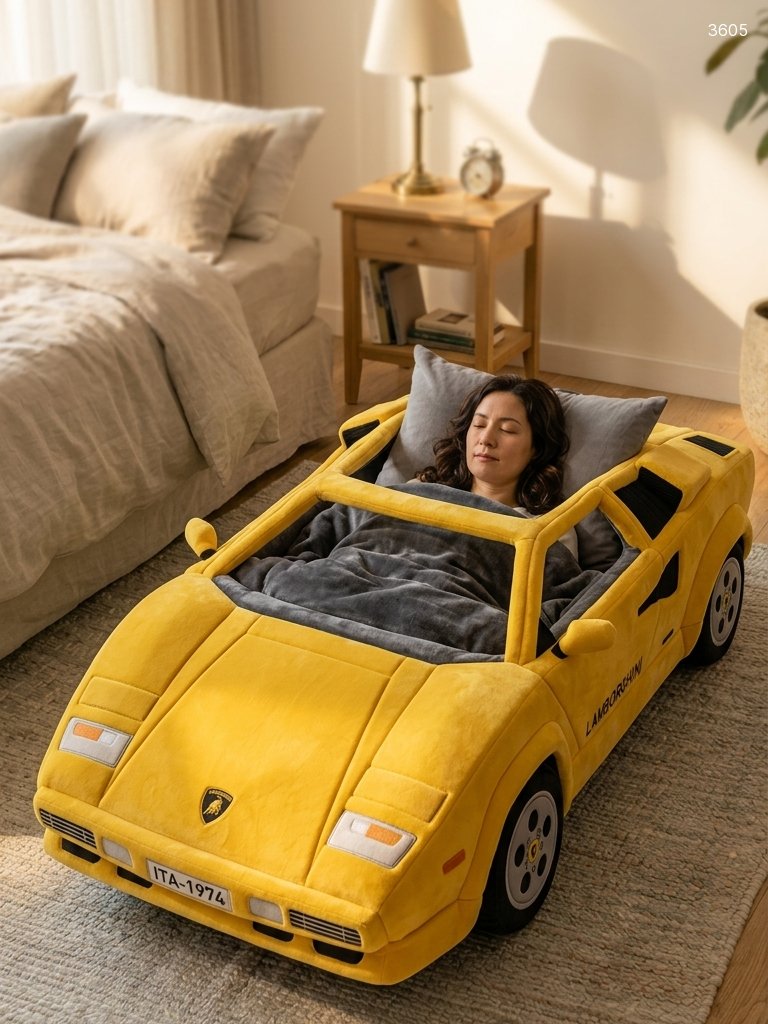
Color Choices and the Mood They Set
Color does a lot of the emotional work in this category, arguably more than shape does. A sleeping bag molded into a supercar silhouette but finished in soft pink reads completely differently than the same shape in glossy red or matte black. Warm reds and deep blues tend to lean into the “serious car enthusiast” aesthetic — these are the pieces that show up in themed kids’ rooms or garage-adjacent guest spaces. Pastel pinks, dusty blues, and cream tones soften the same silhouette into something that feels more like a statement decor piece than a toy, which is why they show up often in shared bedrooms or nurseries being decorated for a child who isn’t necessarily obsessed with cars but whose parents want something visually striking.
Two-tone combinations — cream paired with teal, or blush paired with slate — borrow directly from vintage paint schemes and tend to photograph the best, which is part of why they’re so common in the more design-forward versions of this product. Muted, dusty colors also age better in a room than saturated primary tones, since they blend into a wider range of existing wall colors and furniture.
Comfort Features Hiding Under the Hood
Underneath the automotive shell, these are still functional sleep products, and the better ones don’t skimp on that side of things. Most use a soft-touch outer shell — velvet, plush minky, or brushed fleece — over a foam or fiberfill structure that holds the car shape without collapsing under body weight. The interior “cabin” area is where the actual sleeping bag or quilted insert lives, usually zippered so it can be removed and washed separately from the molded shell.
Padded headrests double as pillows, door panels are built with enough structure to lean against while sitting up and reading, and the higher-quality versions include a firm base layer so the whole piece holds its shape on hardwood or tile rather than sagging over time. Ventilation gets built into the design too — mesh-lined “windows” or vented rear panels keep the sleeper from overheating inside what is essentially a padded enclosure.
Best Places to Use One
These pieces work best in rooms with enough open floor space to let the full silhouette read properly — cramming one into a tight corner hides the shape and defeats the purpose. A kid’s bedroom with a car or racing theme is the obvious fit, but they show up just as often in more unexpected spots:
- Guest bedrooms, where the novelty factor makes for a memorable stay rather than a forgettable spare room
- Finished basements and media rooms, especially ones already leaning into a garage or workshop aesthetic
- Reading nooks or playrooms, used more for lounging than actual overnight sleep
- Vacation rentals and themed Airbnb setups, where a distinctive piece of furniture becomes part of the property’s identity
- Man caves and hobby rooms belonging to actual car collectors, where the sleeping bag doubles as a display piece even when nobody’s using it to sleep
Style Pairings That Just Work
Because the sleeping bag itself is such a strong visual anchor, the room around it works best when it stays relatively restrained. A few pairings tend to hold up consistently well:
- Warm wood tones — a light oak nightstand or floorboards keep a brightly colored car piece from feeling like it’s floating in a sterile space.
- Neutral linen bedding on the adjacent bed — if there’s a regular bed in the same room, keeping its palette simple lets the car piece stay the visual focal point rather than competing with it.
- A single vintage-style accessory — an old-fashioned alarm clock, a small potted plant, or a retro table lamp nearby reinforces the mid-century mood without overdoing the theme.
- Woven or jute area rugs — a natural-fiber rug under the piece grounds it visually and adds texture that contrasts nicely with the smooth plush exterior.
- Plaid or tartan accent pillows — particularly effective with the roadster-style designs, giving a slightly rugged, workshop-adjacent feel.
Where it tends to go wrong is over-theming the whole room — matching wallpaper, matching curtains, racing flags on every wall. The sleeping bag reads best as the one big, confident design statement in an otherwise calm space.
Why Homeowners Keep Coming Back to This Trend
Part of the draw is straightforward nostalgia — plenty of adults grew up around a specific car, whether it was a parent’s daily driver or a poster on a bedroom wall, and seeing that shape recreated as something you can actually sleep in taps into that memory directly. But there’s also a practical side to the appeal. Kids’ bedroom furniture typically has a short shelf life before a child ages out of the theme, and a piece this distinctive gives a room real personality without requiring a full renovation to achieve it.
There’s also a social element that shouldn’t be underestimated. These pieces photograph well, they’re conversation starters when guests see them, and they give a otherwise ordinary bedroom a story worth telling. For collectors and car enthusiasts specifically, owning a soft-sculpture version of a car they admire — one they may never own in real life — scratches an itch that a poster or a die-cast model simply can’t.
Keeping Yours Looking Showroom Fresh
Because these pieces combine a structured shell with a removable interior, care routines are usually split into two parts. The padded exterior — the “body” of the car — typically can’t go in a washing machine due to its size and internal foam structure, so spot cleaning with a mild fabric cleaner and a soft brush is the standard approach for spills or surface dust. Vacuuming the plush fabric periodically with a soft brush attachment keeps the pile looking fresh and prevents dust buildup in the seams.
The interior sleeping bag insert or quilted liner is usually removable via a zipper and can go through a regular wash cycle on a gentle, cold setting, then air dry or tumble dry on low to avoid damaging any padding. Keeping the whole piece out of direct, prolonged sunlight helps prevent fading, especially on the brighter reds, yellows, and pinks that are popular in this category. Rotating or fluffing the padded sections every so often also helps the shape hold up over years of use rather than flattening unevenly in high-contact areas like the headrest or seat base.
A quick once-over with a lint roller on the exterior between deeper cleans goes a long way toward keeping the fabric looking like it just rolled off a showroom floor rather than a bedroom floor.
Final Thoughts
Classic car inspired sleeping bags manage to do something a lot of themed furniture attempts and fails at — they feel genuinely designed rather than gimmicky. The strongest versions balance recognizable automotive silhouettes with real comfort engineering, giving a room personality without sacrificing function. Whether the goal is decorating a car-obsessed kid’s bedroom, adding a memorable piece to a guest room, or simply indulging a lifelong soft spot for a particular vintage model, this category proves that nostalgia and practical bedding aren’t mutually exclusive. The right one turns an ordinary corner of a home into something people actually want to talk about.
NOTE: All images in this post are AI-generated and intended solely for inspiration. These are not real products available for sale, and we do not operate any online store or website for purchases.