Anyone who has tried to fit a morning ride and a baby’s nap schedule into the same hour knows the trade-off. You either strap the car seat carrier onto a jogging stroller and walk, or you leave the little one at home and grab the bike alone. A bicycle stroller changes that equation. Instead of choosing between exercise and childcare, parents get a single rig that rolls as a stroller around the house and shifts into a pedal-powered ride once the sidewalk opens up into a park path or a quiet road. It sounds like a small mechanical trick, but the way it changes a parent’s daily routine is anything but small.
What Sets a Bicycle Stroller Apart From a Regular Stroller
A standard stroller is built around walking speed. Its wheels, frame geometry, and steering are all tuned for someone moving at three or four miles an hour on foot. A bicycle stroller starts from a different premise: the same bassinet or seat that carries the baby also attaches to a frame capable of carrying an adult rider’s weight and momentum. The front end swaps between a set of swivel casters for pushing and a full wheel-and-pedal assembly for riding. The child’s compartment barely changes between the two states, which matters more than it might seem, since the baby experiences the same padded seat, the same harness, and the same canopy whether mom or dad is walking beside the frame or sitting on it.
How the Frame and Wheels Convert Between Modes
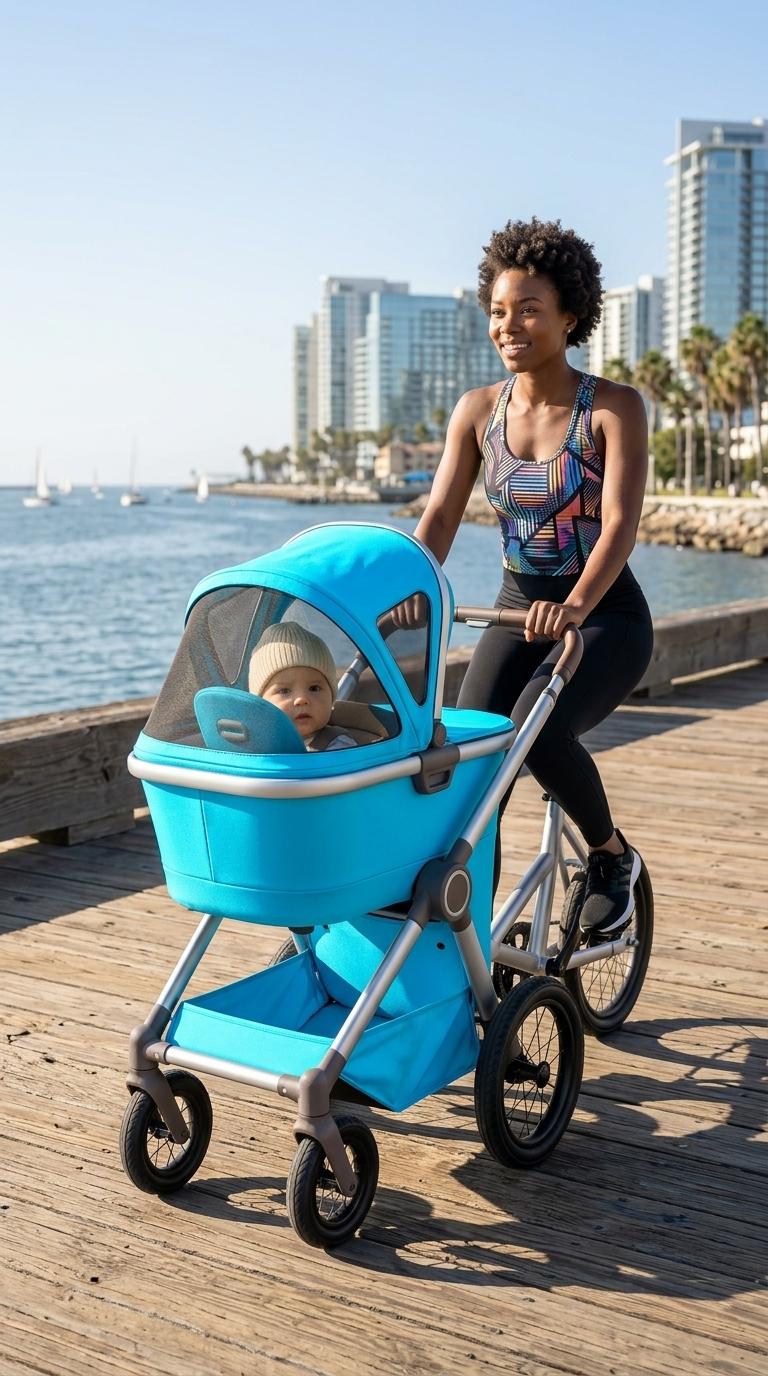
The conversion hinges on a modular front section. In stroller form, two small wheels sit under a light aluminum frame, keeping the whole unit compact enough to steer through a doorway or a grocery aisle. To switch over, the front wheels detach and a single larger wheel with a handlebar and pedal crank locks into the same mounting point. Most designs use a quick-release pin or a cam-lock lever rather than tools, so the change takes a minute or two once a parent has done it a handful of times. The rear axle and the storage basket underneath the bassinet stay put through both configurations, which keeps the diaper bag, water bottles, and blanket exactly where they were left.
The Bassinet and Seating Area
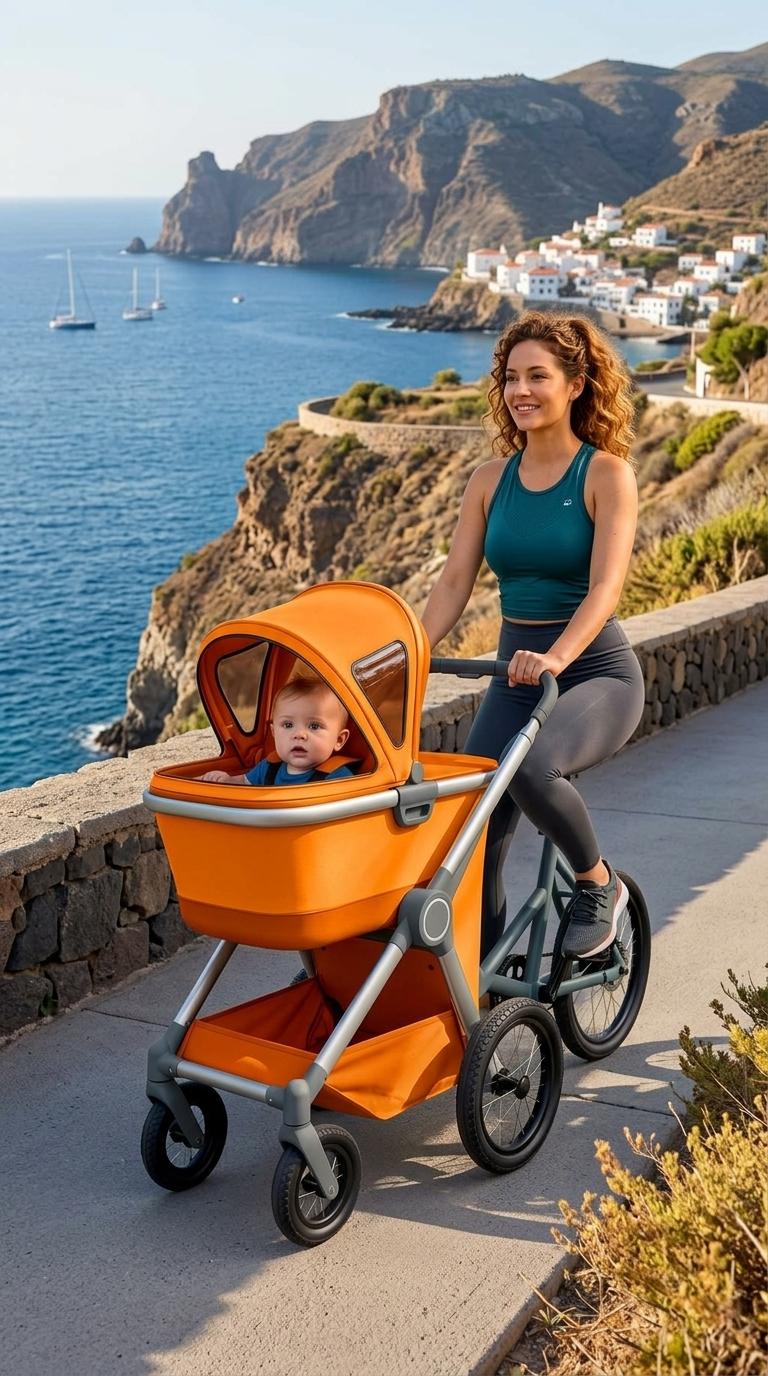
The child’s compartment is really the heart of the whole design, and manufacturers treat it that way. A deep bassinet with high side walls keeps a baby secure whether the frame is being pushed over a curb or pedaled down a gravel path with a bit of vibration. A retractable canopy with a mesh panel lets a parent check on the baby without unzipping anything, while a clear plastic window at the front blocks wind on cooler mornings without cutting off the view. Padding inside the seat is usually thick enough to absorb small bumps, and a five-point or three-point harness keeps the baby positioned even if the terrain gets uneven. Ventilation matters just as much as protection here, since a sealed compartment on a warm afternoon ride can get uncomfortably stuffy fast.
Riding Comfort and Handling for the Adult
None of this works if the person pedaling struggles to control the load. Bicycle strollers place the child’s weight low and close to the frame’s center, which keeps the handling predictable at low speeds and on turns. Wider tires with some tread help on packed dirt or gravel, and a few models add front suspension to smooth out rougher surfaces before the jolt reaches the baby. Hand brakes on the handlebar give the rider the same stopping control as a normal bike, and a lower gear ratio suits the slower, steadier pace that makes sense with a baby on board rather than the higher speeds a solo cyclist might chase.
Safety Details Worth Checking Closely
Because the same frame carries a baby whether it is being walked or ridden, safety features need to hold up in both roles. A locking parking brake keeps the whole unit from rolling away when it is stopped in stroller mode. Reflective strips on the wheels and frame help with visibility during early morning or evening rides. A wide wheelbase reduces the chance of tipping on a turn, and a low step-through frame lets a parent mount and dismount without swinging a leg over the child’s compartment. Weather shields and rain covers, sold separately in many cases, extend the usable months by keeping wind and light rain off the baby without trapping heat.
Terrain and Settings Where This Combo Performs Well
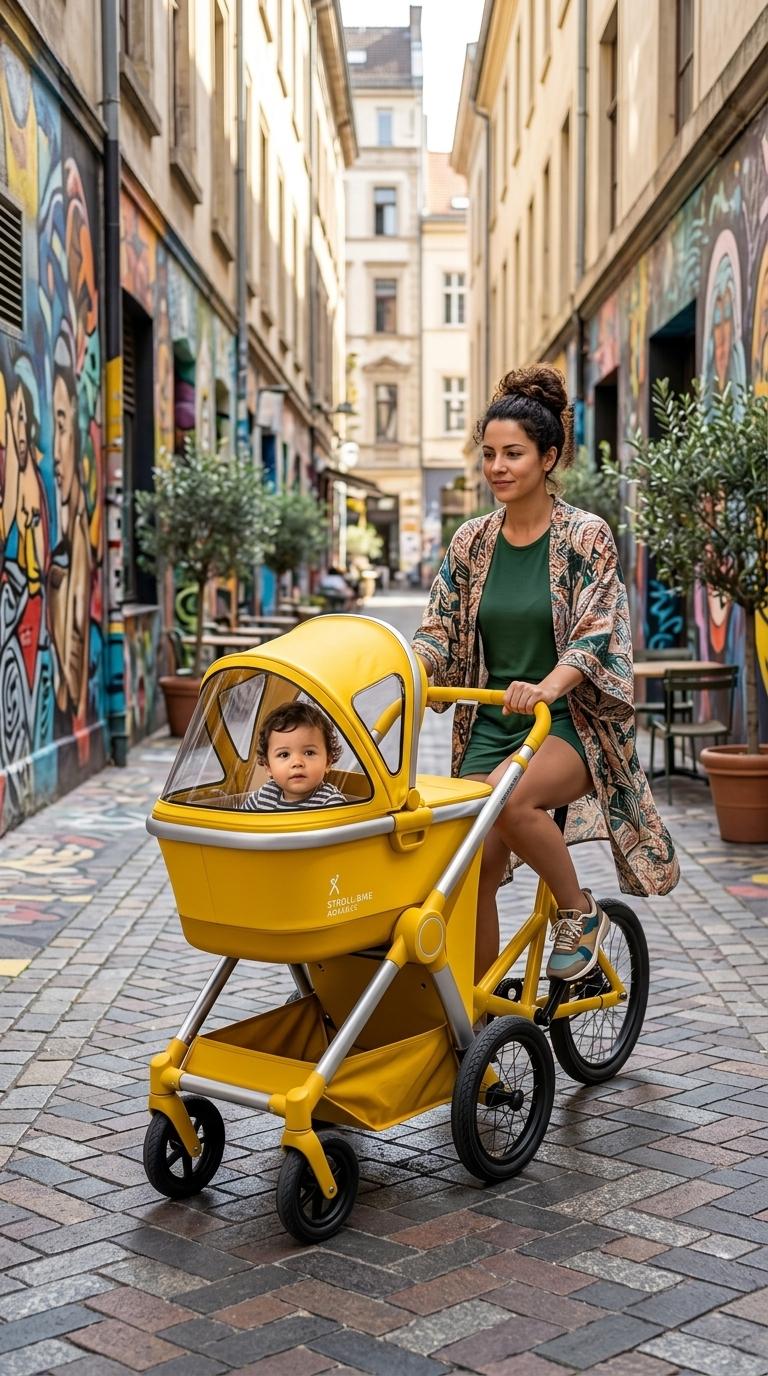
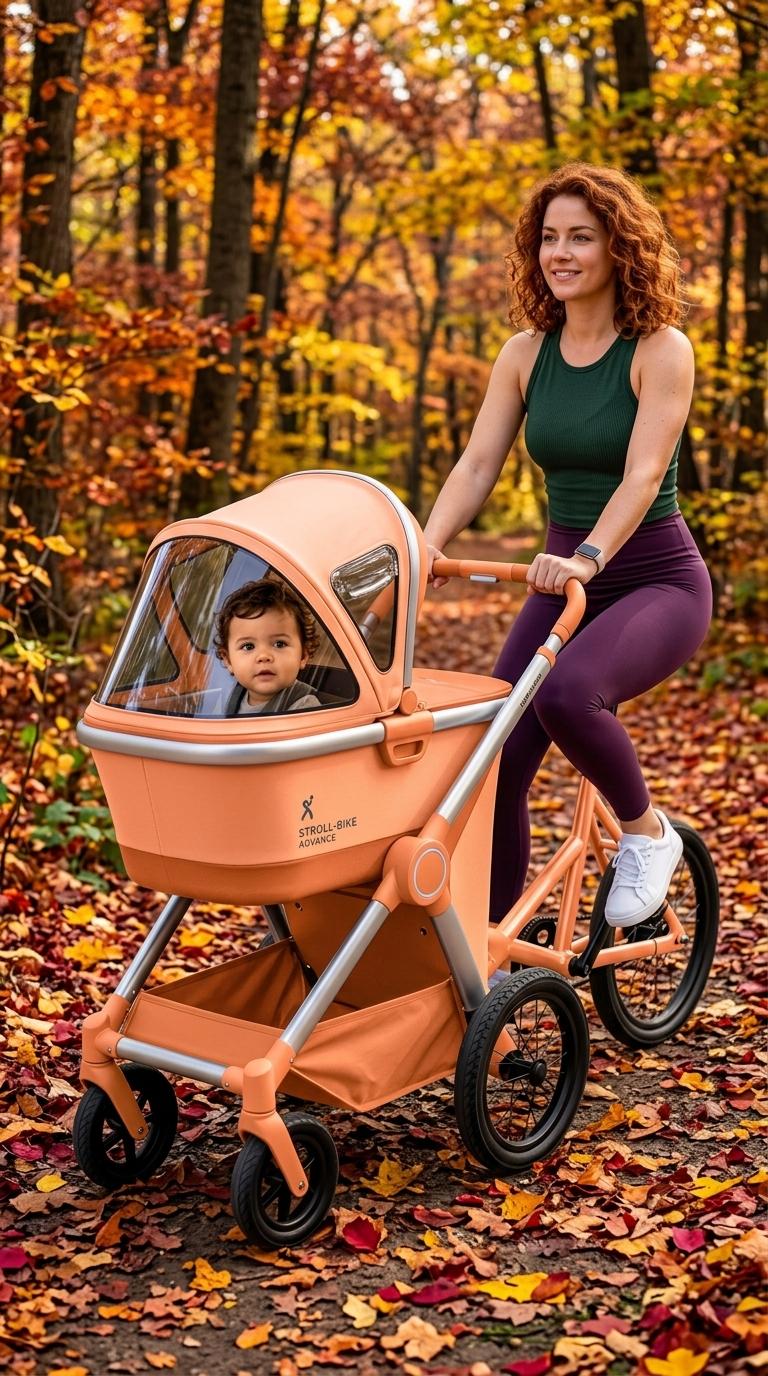
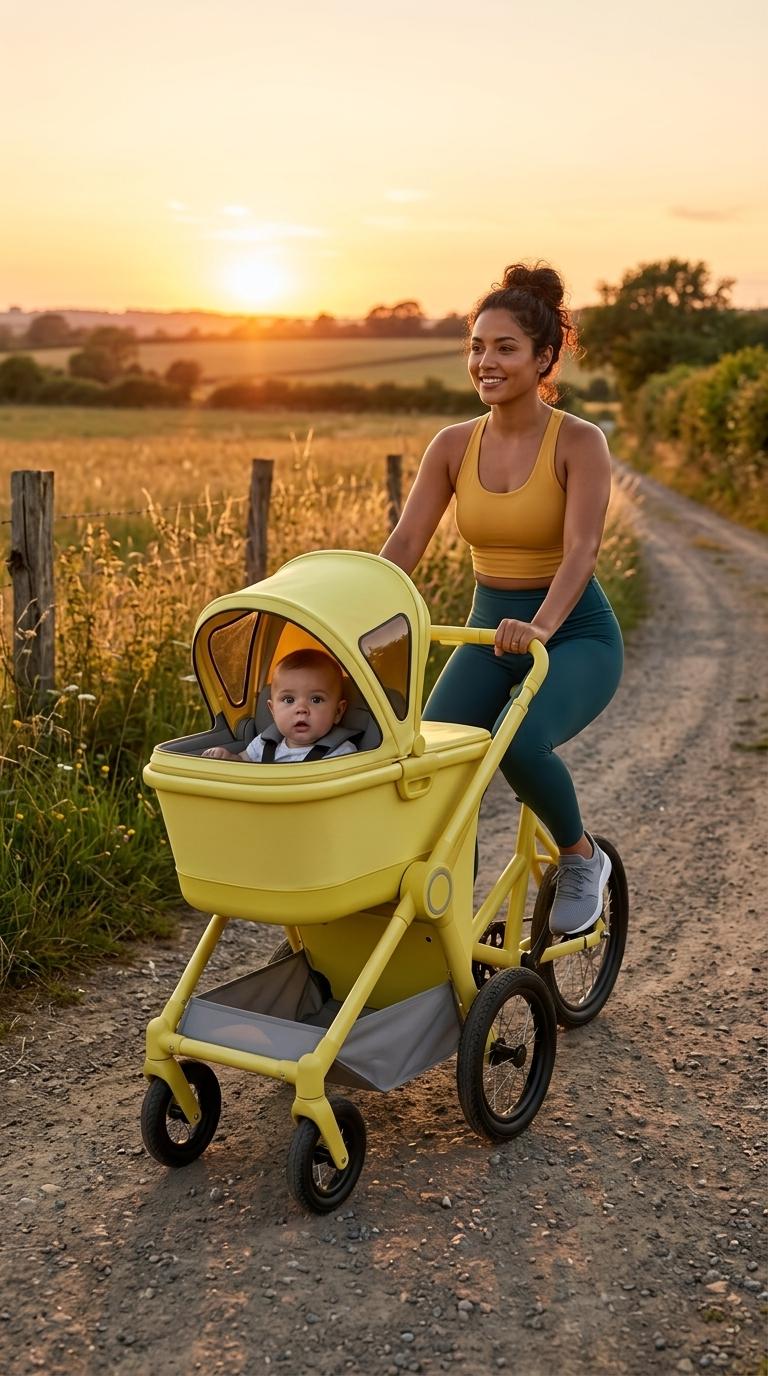
A bicycle stroller earns its keep on routes that mix surfaces. A dirt path through open farmland, a paved trail cutting through a forest carpeted in fallen leaves, a coastal road hugging a cliff edge, a cobbled alley in an old city center, a wooden boardwalk along a harbor — these are exactly the kinds of settings where switching between a wide, stable stroller footprint and a rolling bicycle stance pays off. On narrow cobblestone streets, the compact stroller wheels thread through foot traffic. Once the path opens onto a wider trail, the bike wheel takes over and covers ground far faster than walking pace, letting a parent get real exercise in without leaving the baby behind.
Fitting the Hybrid Into a Daily Routine
Practical use comes down to a few habits. Folding the frame down for a car trunk or an apartment hallway is worth testing before relying on it daily, since folded dimensions vary between designs. The under-seat basket holds a diaper bag and a few groceries, but it is worth checking the listed weight limit before loading it up on a longer outing. Riders who plan to switch between walking and pedaling more than once on the same trip benefit from practicing the wheel swap at home first, away from a curb or a crowded path, so it becomes second nature rather than something to figure out mid-errand.
Adjusting for Weather and Seasons
A sun canopy that adjusts to several angles helps on bright afternoons, while a mesh insert keeps air moving through the compartment during warmer months. Cooler seasons call for a wind shield or a fleece liner rather than heavy blankets that can shift during a ride. Rain calls for a dedicated cover rather than improvising with a plastic bag, since airflow still needs to reach the baby even when the compartment is sealed against moisture. Riders who use their hybrid year-round tend to keep a lightweight seasonal accessory kit packed and ready rather than shopping for extras each time the weather turns.
Who Tends to Get the Most Out of This Setup
Parents who already had an active routine before having a baby are the most natural fit, since the hybrid lets that routine continue rather than pause for a year or two. People living in neighborhoods with bike lanes, waterfront paths, or car-free trails find the most use out of the riding mode specifically. Families who travel with a baby also lean on the stroller mode heavily, since airports, hotel lobbies, and cobbled old-town streets all favor the compact, walkable configuration over the bike setup. Joggers who previously used a running stroller often find the added pedal option opens up longer routes than they could comfortably cover on foot.
Bringing Fitness and Family Time Onto the Same Ride
What makes this hybrid worth paying attention to isn’t a single clever hinge or wheel swap — it’s how much of a parent’s day it touches. A trip to the park, a grocery run, a longer ride along the coast, and a stroll through a farmers market can all happen on the same frame without swapping gear or leaving the baby with someone else. The best version of this combo disappears into the background of an ordinary day: the wheels change, the pace changes, but the baby stays comfortable and secure through all of it, and the parent gets to keep moving instead of choosing between the ride and the routine.
NOTE: All images in this post are AI-generated and intended solely for inspiration. These are not real products available for sale, and we do not operate any online store or website for purchases.