
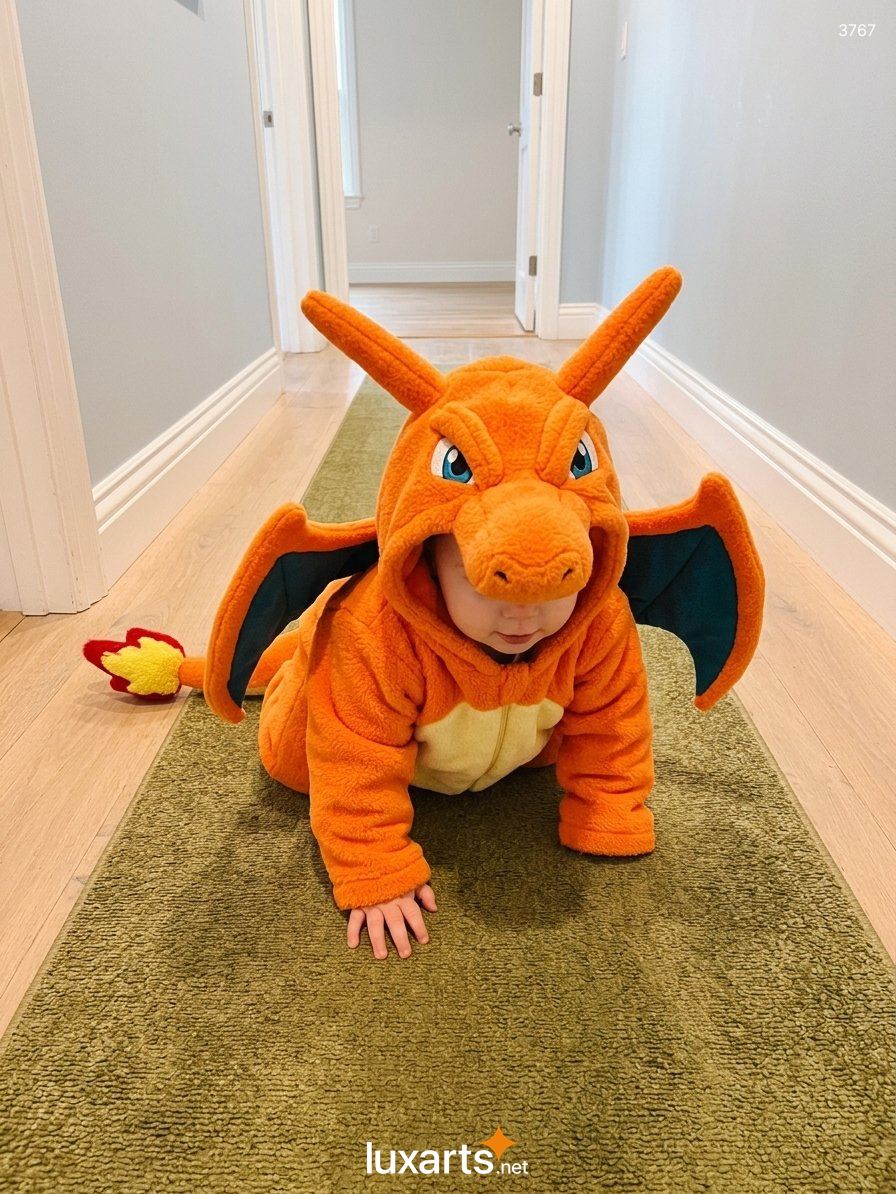
3D Plush Novelty Baby Onesie: Fluffy Animal, Dragon & Holiday Hooded Romper
Crawling is the stage when a baby’s wardrobe stops being decoration and starts being equipment. Knees slide across hardwood, hands grab at rug fibers, and every outfit gets dragged down the hallway at least twice a day. Somewhere in that chaos, many parents find out that a costume does not have to be stiff, scratchy, or saved for one evening in October. A 3D plush novelty baby onesie is cut like a pajama but built like a stuffed toy, which is why it keeps turning up in family photo albums.
This guide covers what the style actually is, how the animal, dragon, and cartoon versions differ from each other, how holiday wear works in practice, and which construction details are worth noticing before a baby spends an afternoon inside one. The photos throughout were taken in a hallway with a crawling baby in each design, so you can see how every shape behaves in motion rather than on a hanger.
What Makes a 3D Plush Novelty Baby Onesie Different
Most baby costumes are flat. A printed jumpsuit with a face on the chest and maybe a headband with felt ears is usually the whole idea. A 3D plush novelty baby onesie works the other way around, because the character is built out of volume. Ears stand up from the hood, a tail curls off the back, and a shell, a flower bud, or a row of dorsal ridges sits where a backpack would normally go. The garment does more than show a character. Its shape becomes the character’s body.
Three features separate this style from an ordinary costume:
- Sculpted attachments. Horns, wings, tails, leaves, and ears are stuffed or lined so they hold their shape. A dragon horn that flops sideways looks sad, so these pieces usually contain a light fill or a firmer inner layer.
- Plush pile fabric. The outer layer is typically a long-pile fleece, sherpa, or minky-style knit that reads as fur from across the room and feels like a blanket up close.
- A one-piece hooded cut. A zipper or snap front, a hood that frames the face, and sleeves and legs that enclose the limbs, often finished with paw or mitten-style cuffs.
Put those together and the product lands somewhere between pajamas and dress-up. The baby can nap on the sofa, crawl through the house, and be photographed in the same outfit, and the character look comes along without any extra effort.
Fluffy Animal Rompers and the Appeal of Soft Silhouettes
Fluffy animal designs are the foundation of the whole category. Babies respond to round shapes and soft textures, and adults respond to the same cues, since the stuffed toy is one of the oldest comfort objects there is. When a baby wears one, the baby becomes the toy, and that reversal is most of the charm.
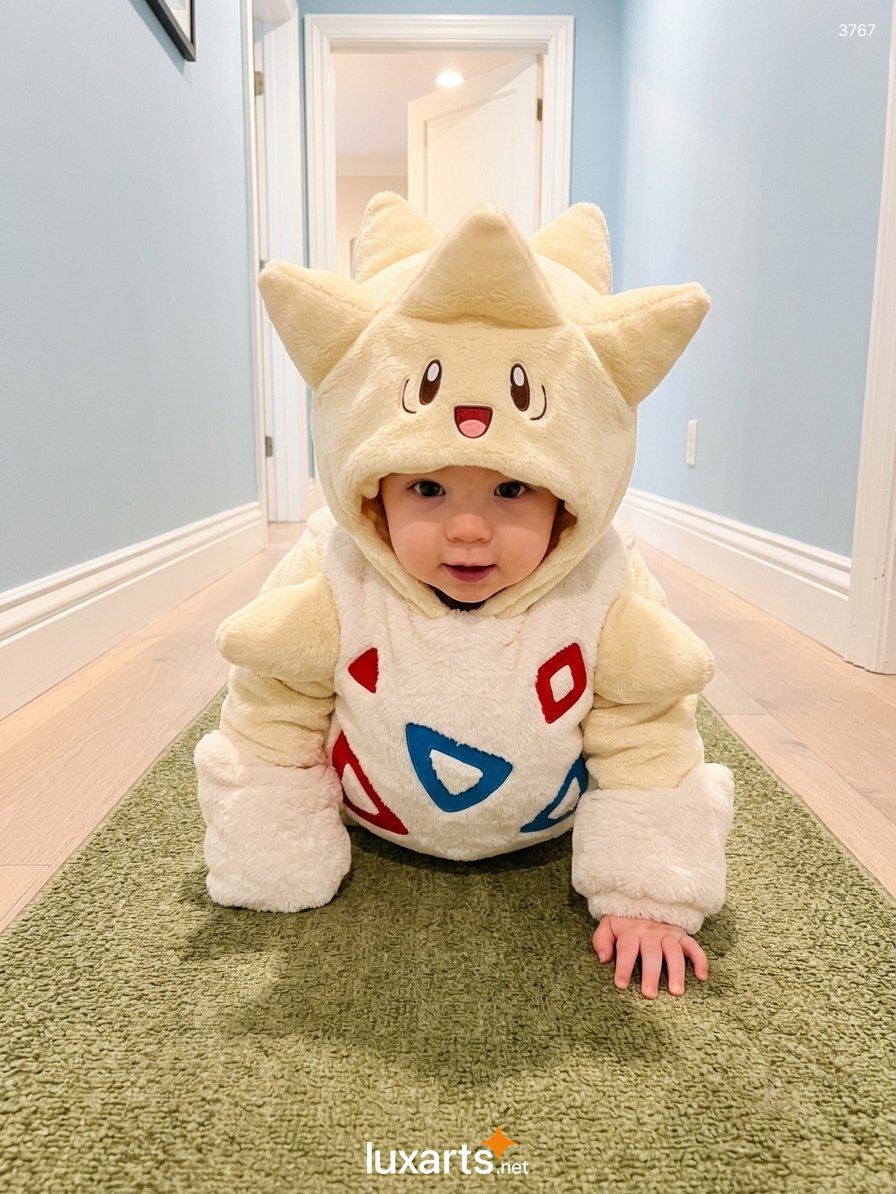
The cream-colored design at the top of this page shows how far a simple idea can go. The hood carries five soft points, two dark stitched eyes, and a small pink mouth, while the chest is a pale fleece with red and blue triangles in the corners. There is no mechanical part and no loose accessory. For a baby who is still learning to coordinate hands and knees, that kind of plain construction is a practical advantage.
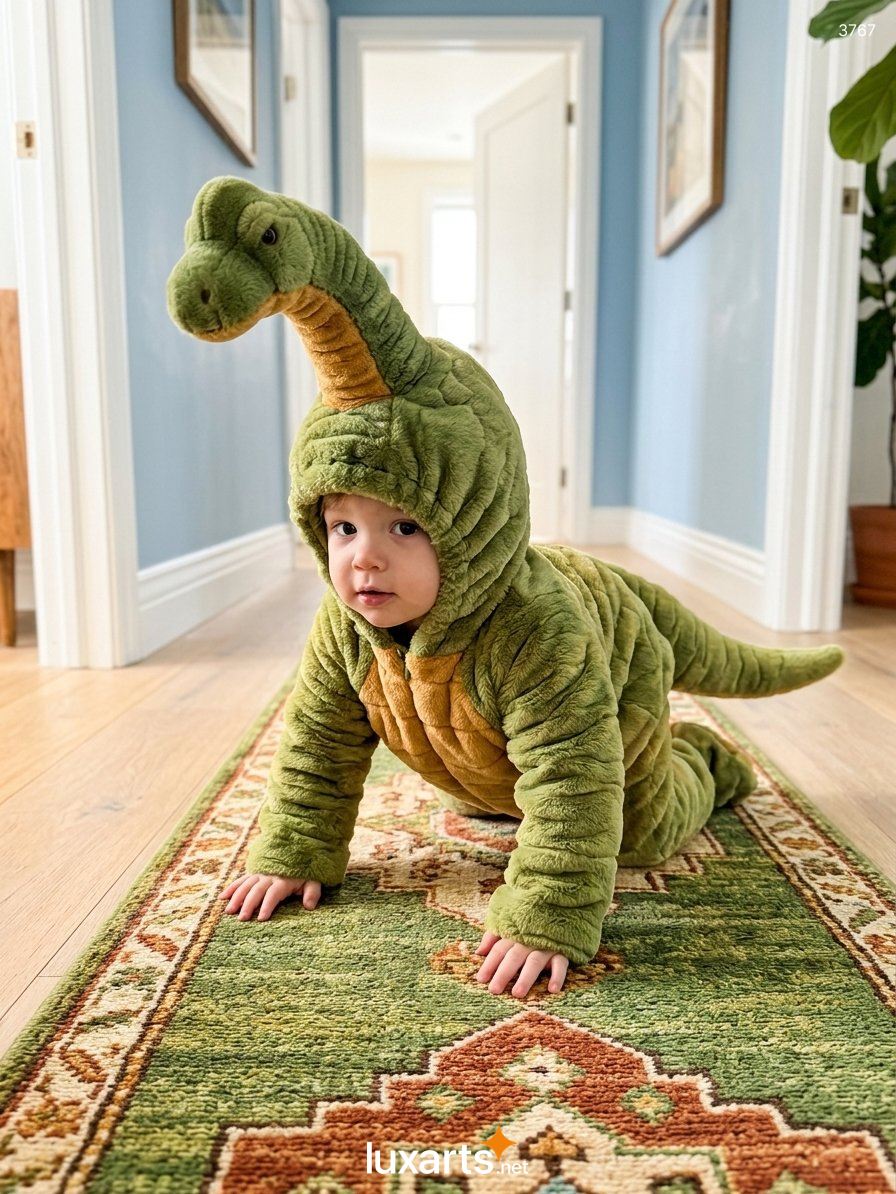
The long-necked dinosaur takes the opposite approach and relies on structure. The hood stretches into a tall, curved neck with a sculpted head at the top, and the body is a quilted, ribbed plush in two shades of green with a golden-tan belly panel. A tapered tail trails behind the legs. Because the neck is stuffed and leans forward, the baby in the photo looks like a small creature peering around a corner. The quilted texture also gives the fabric more body than flat fleece, so the silhouette survives a full crawl across the floor.
Dragon and Creature Rompers: Big Personality in a Small Size
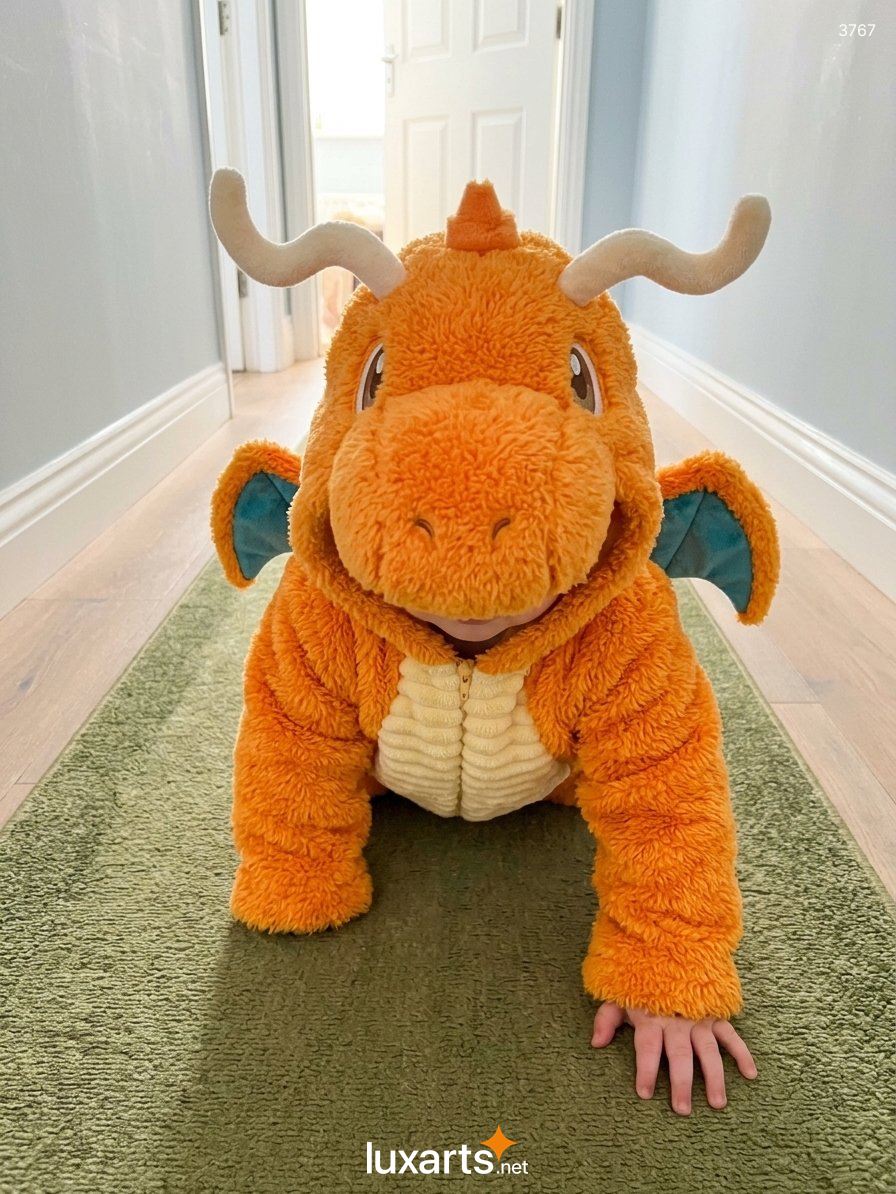
Dragon designs show how much detail this style can hold. The orange version photographed here has long, curved cream horns, a rounded snout built into the front of the hood, a small crest on top, and a pair of wings with teal linings at the shoulders. The belly panel is a ribbed cream plush that echoes the scales on the underside of a dragon’s body. With the baby’s head lowered, the snout sits over the chin and the whole look reads as a friendly, slightly sleepy dragon.
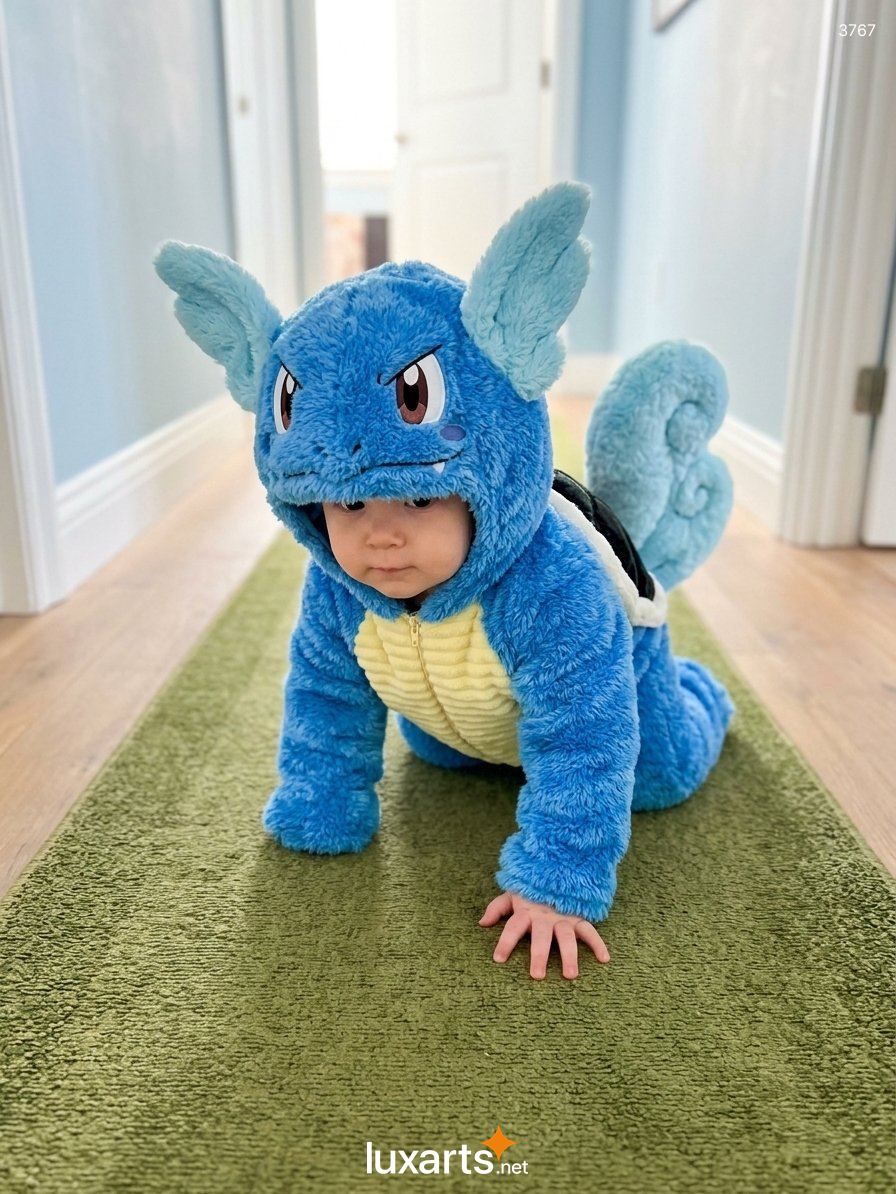
Water and grass creature designs bring different details. The blue one has pointed fin-style ears in a lighter teal plush, a stern stitched brow over the eyes, a curled tail that stands upright, and a dark shell with a cream rim across the back. The front has a pale yellow ribbed chest panel with a zipper running down the middle, so the closure is built into the design rather than hidden.
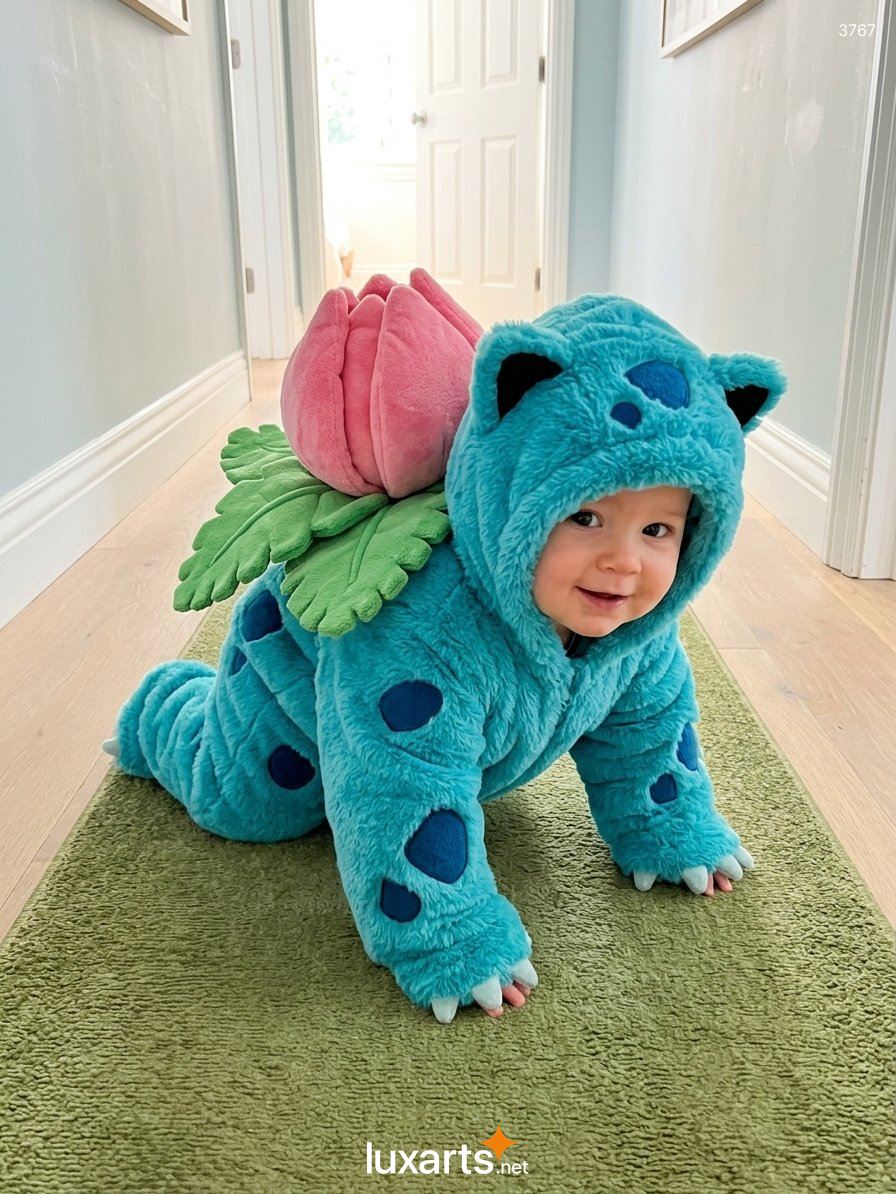
The turquoise design with a pink flower bud goes further into sculpture. Dark blue spots are appliquéd across the arms and legs, pale claws finish the cuffs, and a bud made of pink fabric petals sits on a pair of green leaves between the shoulders. A baby wearing this carries a small garden on their back, which is exactly the kind of detail that makes people stop scrolling.
Why the Back View of a 3D Plush Novelty Baby Onesie Matters
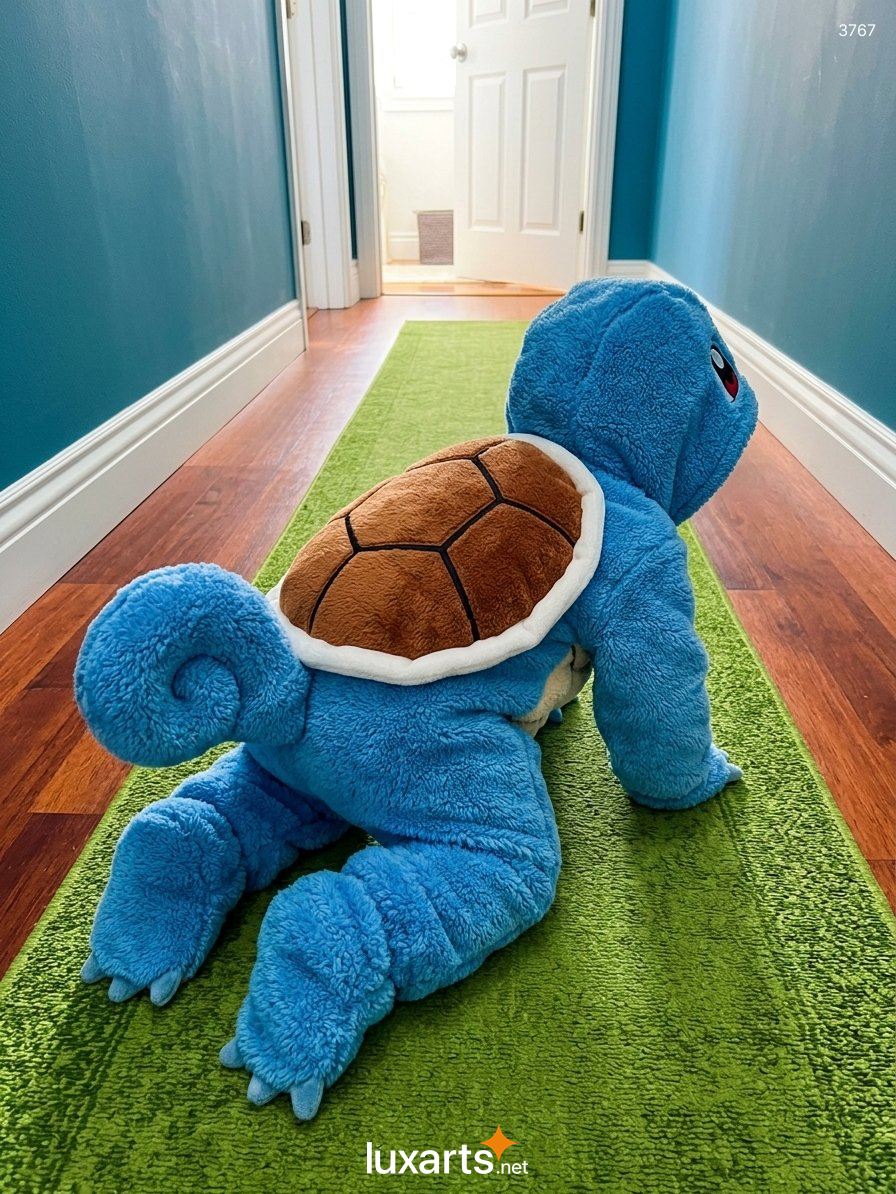
Parents tend to photograph from the front, but the back of a 3D plush novelty baby onesie is often where the design work shows most. The shell in the photo below is a brown quilted panel with dark hexagon lines and a white border. The tail is a thick spiral of the same blue plush, and the legs end in padded feet with small pale claws.
A shell like this has to be soft and low. A rigid piece would press into the baby’s back whenever they sit or tip over, so well-made versions use a flat, quilted pad with only a light fill. When you look at any design with a back attachment, press the shell, bud, or wings with your hand. If it feels hard, tall, or stiff, it will probably be uncomfortable when the baby sits against a sofa or a parent’s chest.
Cartoon Character Hooded Rompers: Yellow Sponge and Pink Starfish
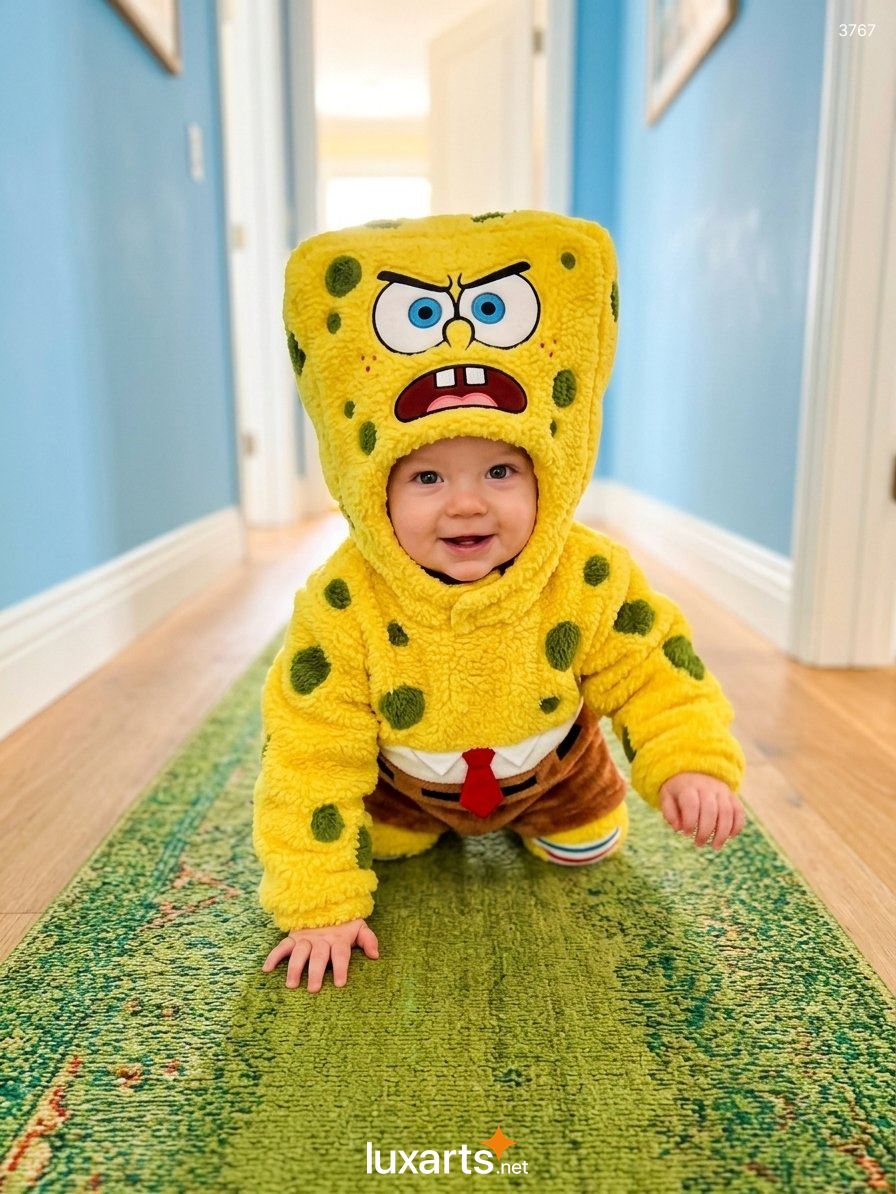
Cartoon characters follow two routes in this category. The first is the full-form hood, where the head shape itself becomes part of the costume. The yellow square character in the photo below has a boxy hood covered in green spots, large round eyes with blue irises, and an open, shouting mouth. Underneath, the baby is beaming. That contrast between a furious hood and a laughing face is the entire joke, and it works every time.
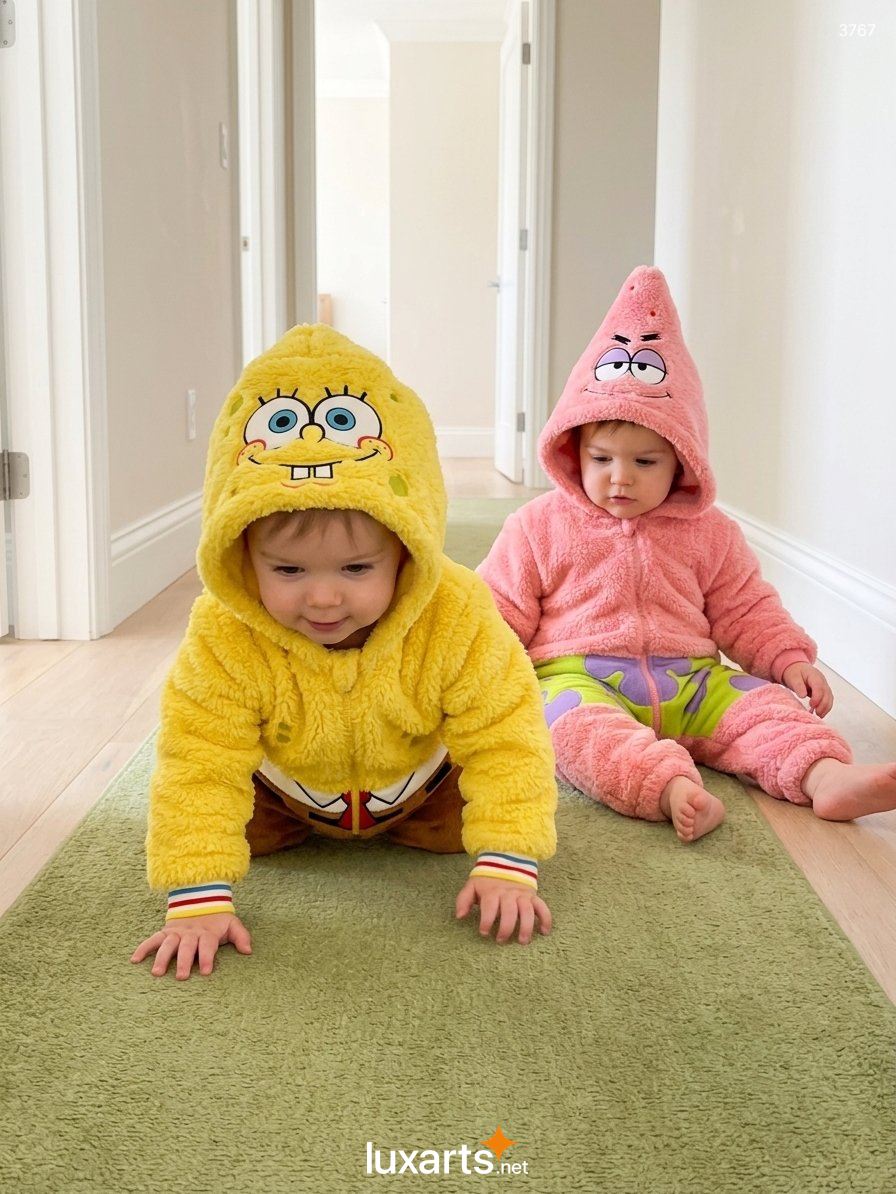
The second route is the two-piece hoodie-and-pants set, which suits babies who are sitting, scooting, and starting to pull up. In the sibling photo, the yellow character appears as a fleece hoodie with a smiling face on the hood and striped cuffs, while the pink starfish friend wears a pointed hood with sleepy purple eyelids and green pants printed with purple flowers. Both sets are soft, zip up the front, and separate into top and bottom, which makes diaper changes less of a wrestling match.
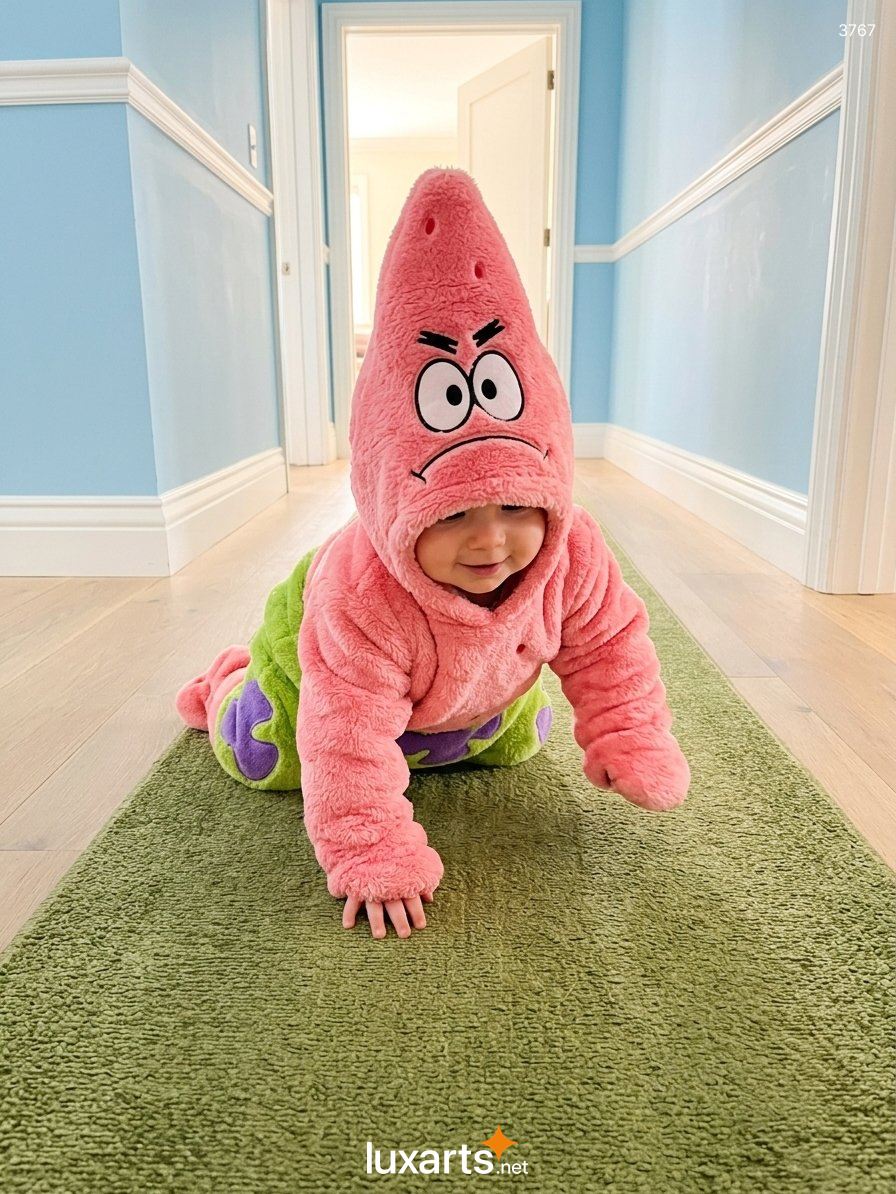
The pink character also appears as a full-body romper in the last photo of this group. The tall pointed hood carries a pair of dark brows and a deep frown, and the green-and-purple pants peek out below the pink fleece jacket. A hood this tall can tip forward when a baby leans down, so a snug fit around the face matters even more than it does with a short hood.
Holiday Hooded Romper Ideas: Halloween, Winter Gatherings and Seasonal Photos
A holiday hooded romper is where this style gets the most use. Halloween is the obvious occasion, but a plush costume that doubles as warm clothing also fits cold-weather celebrations, family dinners, and winter birthday parties. The advantage over a traditional costume is that nothing has to come off when the baby gets tired or the evening gets cold. The outfit is already a layer.
Here are a few situations where this style tends to work well:
- Halloween evenings. Dragons, dinosaurs, and animal designs hold up well on a short walk or a visit to relatives, and the plush fabric handles cool night air.
- Winter holiday mornings. A fleece romper on the living room floor makes a natural background for a seasonal photo, and a baby in a dragon hood fits right in beside the tree.
- Daycare and playgroup parades. Soft attachments and mitten cuffs mean fewer pieces to lose, and teachers usually appreciate costumes that do not need pins or face paint.
- Family theme photos. Siblings or cousins in coordinating characters create a set that looks planned without being hard to arrange.
Temperature deserves attention. Long-pile plush is warm, and a baby in a heated house can overheat quickly. In warm climates or indoor events, put a thin cotton bodysuit underneath and skip any thick base layer. In cold weather, add socks or booties under the feet and keep the hood up only while the baby is awake and supervised.
Fabric, Padding and Construction Details Worth Noticing
Two rompers can look identical in a photo and feel completely different on a baby. A few construction details tell you most of what you need to know.
Eyes and facial features. Embroidered eyes are the safest choice for a baby garment because there is nothing to detach. Printed or appliquéd features are also fine when the edges are sewn down. Plastic eyes on a baby garment are a concern, and any button-style piece should be checked by tugging on it.
Seams and lining. Look at the inside of the garment. A smooth lining or a soft jersey backing keeps pile fibers away from the skin, and flat seams reduce rubbing at the knees and elbows, which see the most friction during crawling.
Closures. A zipper with a fabric guard at the chin protects the neck from metal and plastic. A front opening that runs down to the crotch makes dressing far easier than a back or neck opening, especially with an unwilling baby.
Hood structure. A good hood sits snug on the head without pulling at the chin. The decorative parts, like ears, horns, and crests, should be attached at the top and sides, never in front of the eyes. When the baby looks up, the hood brim should not drop over the forehead.
Fill and attachments. Stuffed pieces should feel even and soft, with no lumps. Tails and wings need to be stitched securely at their bases, since those are the parts that get pulled, sat on, and chewed.
Comfort and Safety Checks for Crawling Babies
A costume that looks wonderful on a screen still has to work for a small person who is moving around on the floor. Run through these checks before every wear:
- Keep the nose and mouth clear. Some designs, like the dragon snout shown earlier, sit close to the chin. Make sure the fabric never covers the airway when the head tilts down.
- Check the sleeves and feet. Cuffs should be loose enough for free finger movement and snug enough that the baby cannot pull their hands inside and get stuck.
- Look for loose parts. Run a hand over eyes, buttons, claws, and appliqués. Anything that moves should be repaired or avoided.
- Watch for overheating. Flushed cheeks, a damp neck, or fussiness are signs it is time to unzip and cool down.
- Mind the floor. Plush legs can slide on polished hardwood. A runner rug, like the ones in these photos, gives knees something to grip.
- Keep it for awake time. Bulky hoods and back attachments are not designed for sleeping, and thick padding should not be worn under a car seat harness.
Supervision matters most near stairs. A baby in a long tail or a stuffed back attachment may not realize how much wider they have become, so block steps while they are dressed up.
Taking Better Photos in a Plush Costume
The hallway photos in this article follow a pattern that is easy to copy at home. A long, narrow space gives the baby a clear path to crawl toward the camera, and the runner rug adds a green or earthy backdrop that makes warm colors like orange, yellow, and pink stand out.
- Get down to the baby’s level. Shooting from the floor makes the character look larger and puts the face in the center of the frame.
- Use window light. Soft daylight from a side window shows off fabric texture without the harsh shadows of an overhead bulb.
- Keep sessions short. Ten minutes is plenty. A baby who has just woken up and eaten is usually in the best mood.
- Capture the back too. Shells, tails, flowers, and wings are half the design, as the turtle photo shows.
- Try pairs. Two babies in complementary characters make the most memorable pictures, even if one looks away.
Washing and Caring for Plush Rompers
Plush fabric looks its best when it is washed gently. Zip the garment fully before washing so the zipper does not snag the pile, and turn it inside out to protect the outer surface. Use a cold or lukewarm gentle cycle with a mild detergent made for baby clothes, and avoid fabric softener, which can flatten the fibers over time.
Air drying is the safest method. If a dryer is necessary, use the lowest heat setting and remove the garment while it is still slightly damp. Brush the pile lightly with a soft-bristle brush once it is dry to bring the fluff back. Stuffed attachments can be spot-cleaned with a damp cloth. After each wash, check horns, tails, and claws to make sure the stitching is still tight.
Sizing, Growth and How Long a Baby Can Wear One
Babies grow quickly, and plush rompers are cut with room built in. A good fit leaves space for a diaper and one thin layer without pulling across the shoulders or at the crotch. Sleeves and legs can be rolled once if they are slightly long, but excess fabric at the feet is a tripping hazard once a baby starts to walk.
The style suits two stages most. Crawlers spend most of their time on hands and knees, so tails and shells are visible and rarely in the way. Early walkers are more active, and shorter designs without long trailing attachments are easier to move in. Because the hood and attachments are proportioned to the character rather than to the baby, expect a different feel at different ages, and check how the hood sits every time the baby’s head and shoulders change.
Frequently Asked Questions
Is a 3D plush novelty baby onesie comfortable for everyday wear?
Yes, as long as the lining is soft, the seams are flat, and the room is not too warm. Many parents use them as cozy loungewear and save the full-hood look for photos and outings.
Can a baby sleep in a plush hooded romper?
These designs are made for awake play. Hoods, horns, and back attachments are not intended for sleep, so remove the garment before a nap and use regular sleepwear.
Will the hood stay on the baby’s head?
A well-cut hood sits comfortably without a chin strap. If the hood slides forward or backward, the garment is probably too big. A snug fit around the crown and cheeks keeps it steady during crawling.
How do I keep the attachments from getting crushed?
Store the romper flat or hung by the hood loop, and avoid folding wings, horns, or flower buds under heavy items. A quick shake and a gentle brushing restore most shapes.
Final Thoughts on the 3D Plush Novelty Baby Onesie
The 3D plush novelty baby onesie works because it turns something ordinary into something playful without asking much of the baby. The fabric is soft, the hood frames the face, and the sculpted ears, horns, shells, and tails supply the personality. Whether the design is a quiet cream-colored creature, a dragon with small teal wings, or a cartoon character with a scowl above a giggling face, the best ones feel like clothing first and costume second.
Check the details that matter: the airway clear of the hood, soft attachments, secure stitching, and a fit that leaves room to move. Add a few minutes of window light and a runner rug, and a hallway becomes a stage for the kind of photo a family will return to for years.
NOTE: All images in this post are AI-generated and intended solely for inspiration. These are not real products available for sale, and we do not operate any online store or website for purchases.


