Universal Laser Wing Light: Safety Ground Projector for Bikes, Scooters & Running
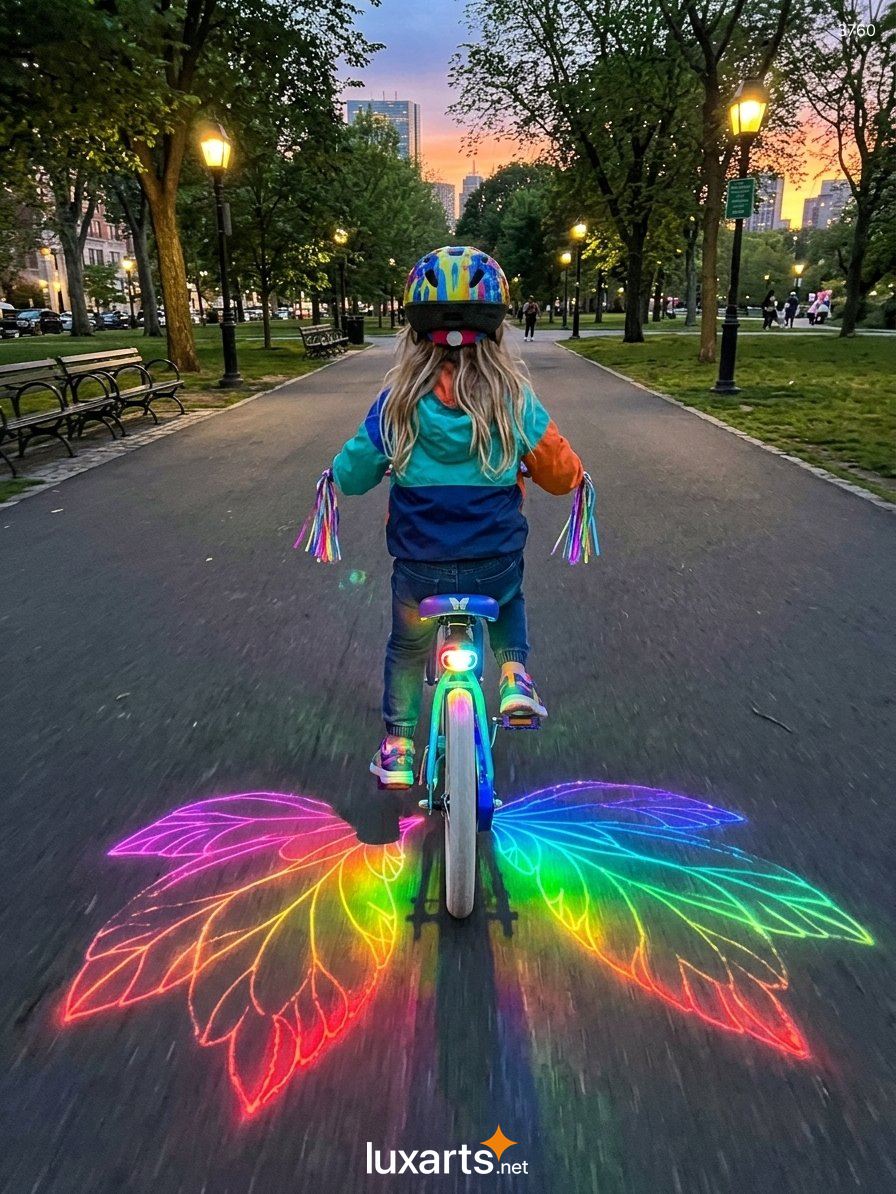
Ask riders who have had a close call after dark what went wrong, and the same sentence comes up again and again: the driver never saw me. A small red tail light helps, yet it is a single dot competing with brake lamps, storefront signs, traffic signals and the glare of oncoming headlights. The Universal Laser Wing Light tackles the problem from a different direction. Instead of only glowing at the back of the bike, it paints a large, bright wing-shaped pattern across the pavement behind the rider, creating a shape that travels along with them and can be noticed from far away.
The idea is simple, and it explains why the Universal Laser Wing Light has drawn interest from parents, evening commuters, joggers and scooter riders. Projected wings make a person on the move look wider, larger and stranger than a lone light ever could, and strange is exactly what a tired driver’s eyes tend to lock onto. This guide explains what the Universal Laser Wing Light is, how ground projection works, how it behaves on bikes, scooters and running routes, which patterns are available and how to use one responsibly so that it adds to safety instead of becoming a distraction.
What Is the Universal Laser Wing Light?
The Universal Laser Wing Light is a compact safety projector that attaches to a bicycle, a scooter or a piece of running gear and casts a pattern onto the surface behind the user. The signature pattern is a pair of spread wings, one on each side of the rider, which gives the product its name. Many versions also offer butterflies, stars, comet trails and arrows, so the same light can match a rider’s taste or purpose.
The word “universal” points to mounting flexibility. Rather than fitting one specific frame shape, the unit relies on adjustable brackets, straps or clips. The same light can sit on a child’s bike on Saturday, a commuter’s seat post on Monday and a running belt on Wednesday evening. An accessory that moves easily between activities is far more likely to stay in daily use than one that ends up in a drawer.
Inside the housing you will usually find three parts: a light source, a pattern lens and a rechargeable battery. Depending on the model, the light source is a laser diode or a high-output LED, and the lens shapes the beam into wings or another design before it reaches the ground. A small switch controls brightness or mode, and a USB port handles charging.
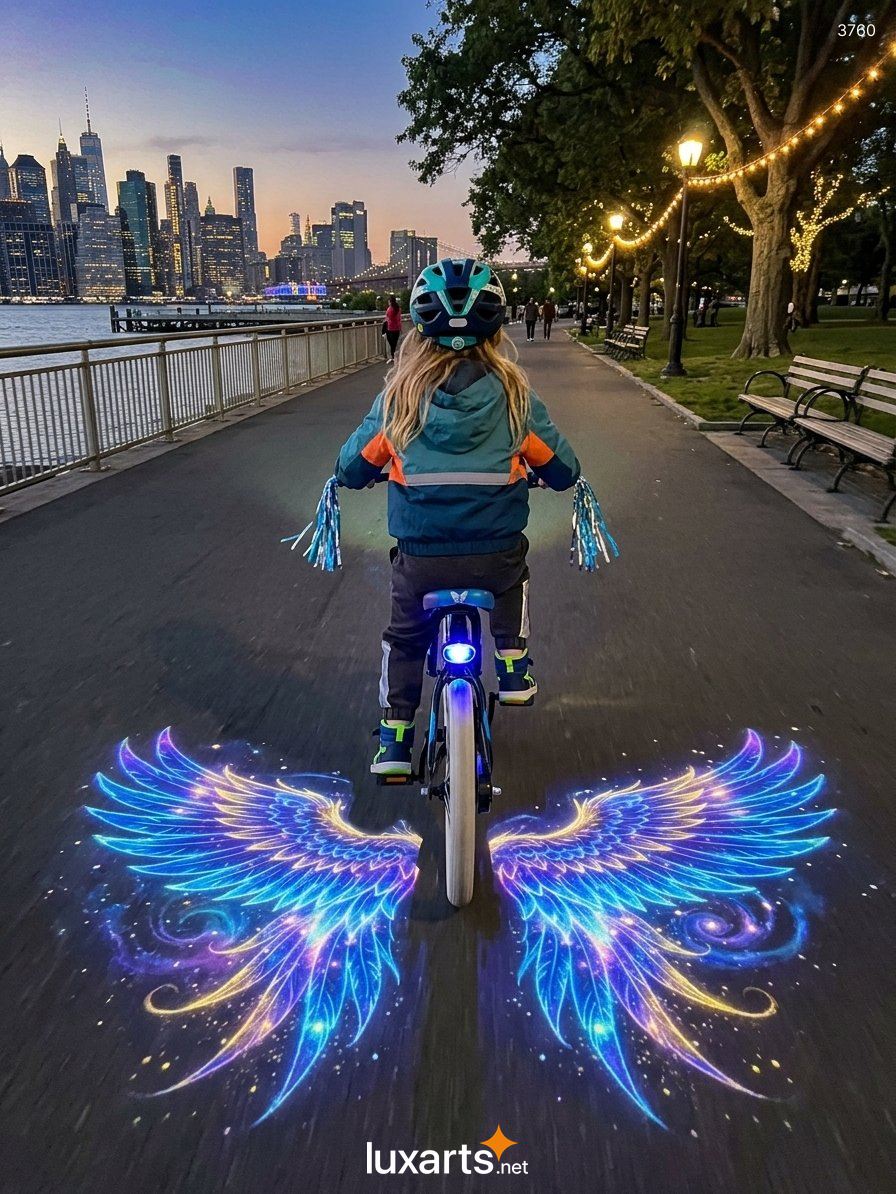
Why Visibility After Dark Matters More Than Most Riders Think
Night riding changes how other road users perceive you. Drivers scan for shapes they recognise, and a cyclist who shows only a faint red dot gives the brain very little to work with. Reaction time depends on how early a hazard is recognised, and recognition depends on size, contrast and movement. Anything that improves those three qualities hands the other person a little more time to react.
The Limits of a Single Tail Light
A standard rear light is essential, but it has built-in weaknesses. It is small. It sits at one point on the bike. From a side angle it can vanish behind a bag, a coat or the rider’s own body. In busy streets, red points of light are everywhere, so one more red dot barely stands out. A tail light also says almost nothing about how wide the rider is, which matters a great deal to a driver deciding how much space to leave while overtaking.
Width, Motion and Pattern Recognition
A projected wing pattern supplies the missing information. Spread across the ground, the wings mark out a corridor noticeably wider than the rider’s body, giving approaching drivers a visual cue for lateral clearance. The pattern also moves smoothly with the bike, and research into night-time conspicuity has repeatedly suggested that people identify a human-powered road user faster when lights hint at movement instead of showing a fixed dot. Add an unfamiliar glowing shape on the asphalt, and the brain flags it as something to look at, then something to steer around.
How the Ground Projection Works
Ground projection sounds technical, yet the principle is easy to follow. The light source produces a narrow, intense beam. A pattern lens or etched slide sits in front of it and blocks or bends part of that beam, so only the outline of a wing reaches the road. Because the unit is angled downward and backward, the image lands a short distance behind the rider, where following traffic can see it clearly.
Several factors decide how good the result looks in practice. Mounting angle controls where the wings land: tilt the unit too far down and the pattern squeezes into a small shape under the rear wheel, tilt it too far up and it stretches thin and dim. Surface colour matters as well. Dark asphalt gives the strongest contrast, while pale concrete or heavily lit pavement washes the pattern out. Wet roads can add a pleasant reflected glow, although they may also scatter the image. Ambient light plays a role too, so under bright streetlights the wings look softer than they do on an unlit cycle path.
Because the unit is fixed to the vehicle or the body, the pattern holds the same position relative to the rider and glides along the ground as they move. That steady companionship makes the Universal Laser Wing Light feel less like a flashing alarm and more like a glowing signature.
Universal Laser Wing Light on Bicycles
Children’s Bikes
Young riders sit low, move unpredictably and are often shorter than the parked cars and hedges around them. For families who ride together at dusk, a projector that spreads wings behind a child’s bike makes the child easier to spot from a distance. There is a motivational side too. A safety accessory only works when it is switched on, and children keep lights on when the light is fun. Butterflies, rainbow feathers and star trails turn an evening ride into something kids look forward to.
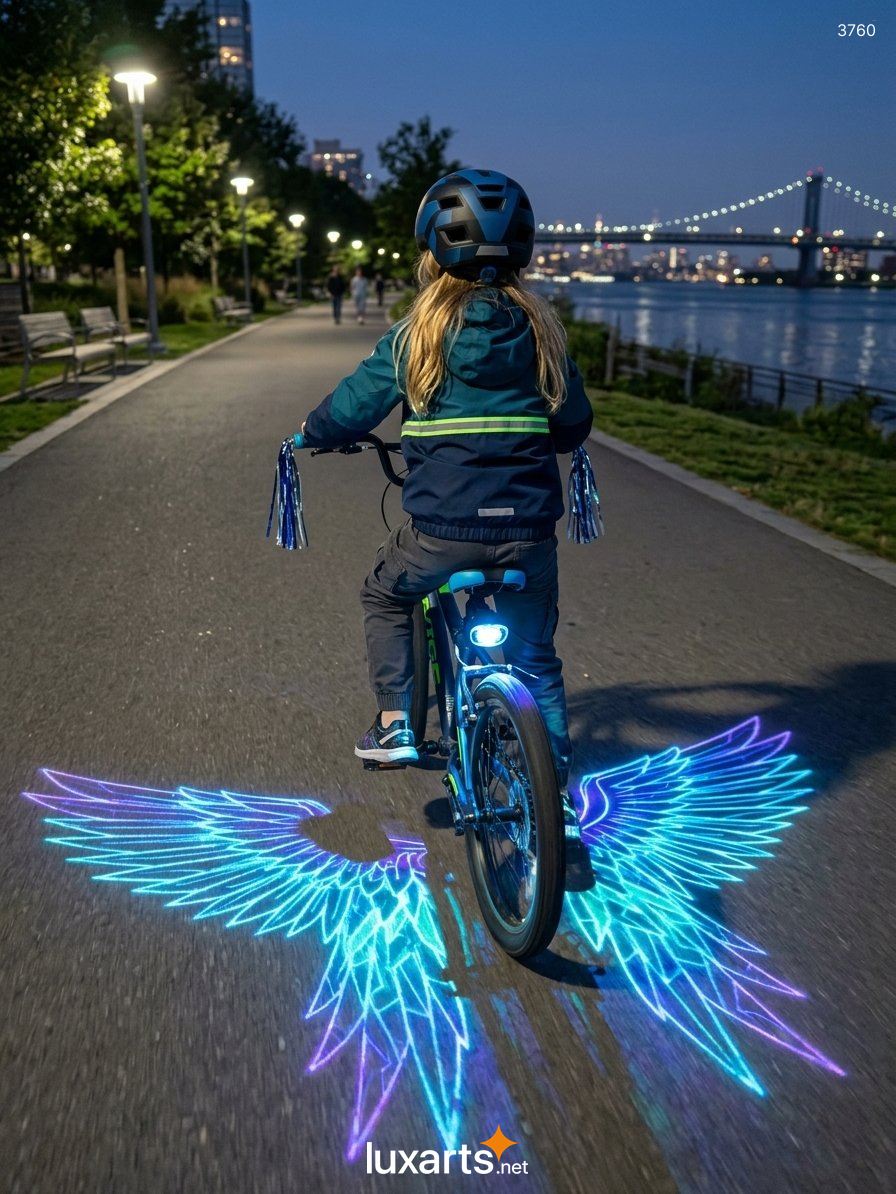
Commuters and Road Cyclists
Adult riders usually want something less playful and more purposeful, and the cleaner wing outlines suit that need. On a road bike the unit typically sits on the seat post or under the saddle, with the beam angled to land just behind the rear wheel. Pair it with a regular red tail light, a bright front lamp and reflective clothing, and the projector becomes one layer in a visibility system. On riverside routes where cyclists, runners and walkers share space, the glowing wings also announce a rider’s approach to people who might not hear a bicycle coming.
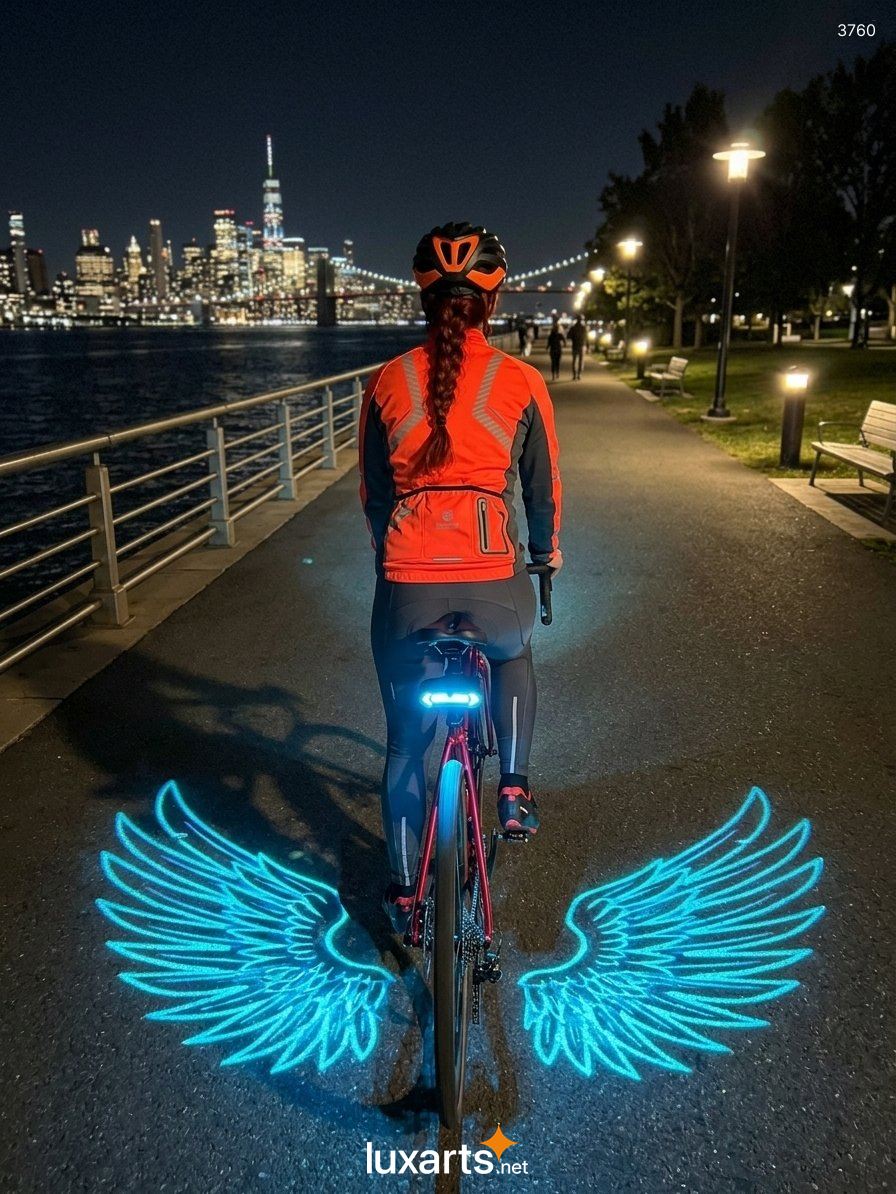
Using the Universal Laser Wing Light on Scooters
Scooter riders face a distinct visibility problem. They stand upright, roll on small wheels close to the ground and often travel on shared paths and road edges where drivers do not expect them. A Universal Laser Wing Light mounted on the rear of the deck or fender, as in the photo below, spreads wings on either side of the scooter and adds visible width at the height where drivers look for hazards.
Check the mount after the first few rides. Small wheels send more vibration through the frame, and a loose bracket makes the pattern shake or drift. It also helps to place the unit away from the rider’s heels so a stray step does not block the beam.
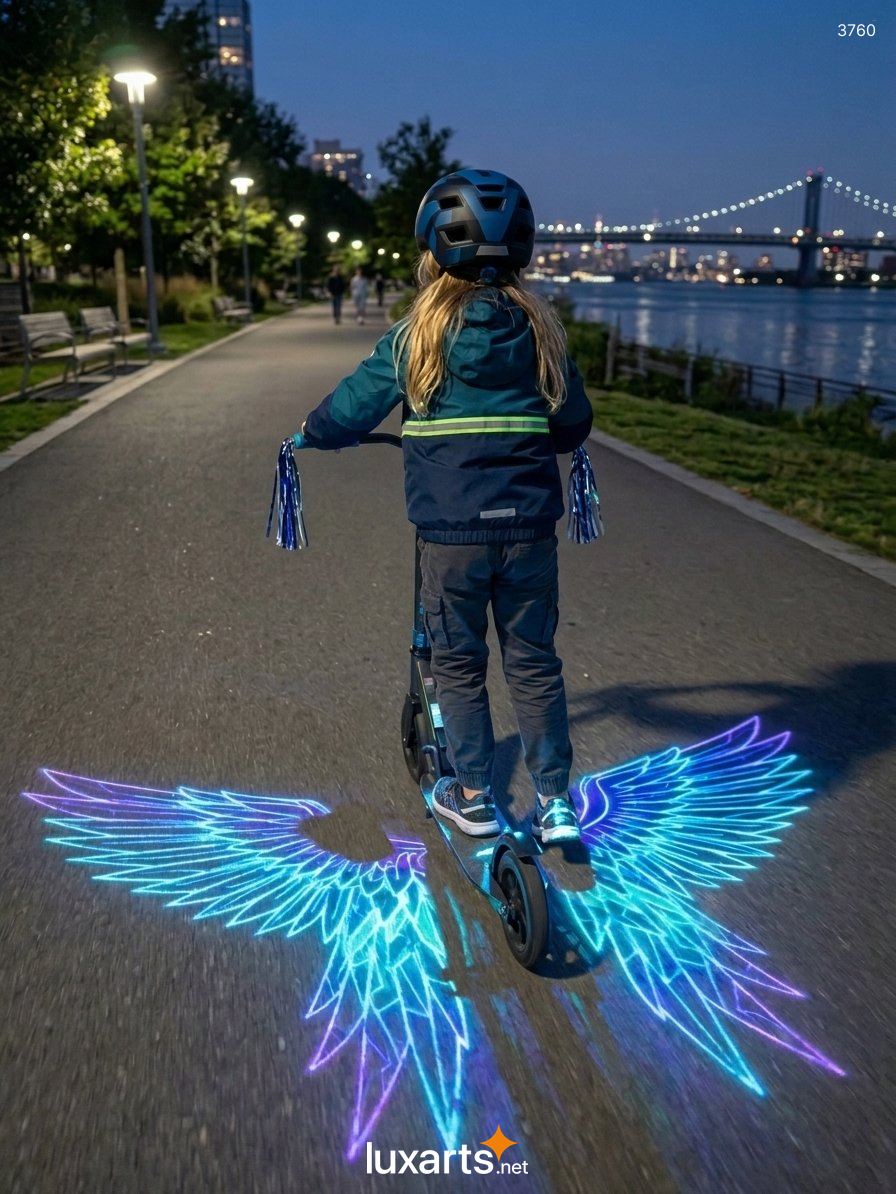
Running, Walking and Evening Workouts
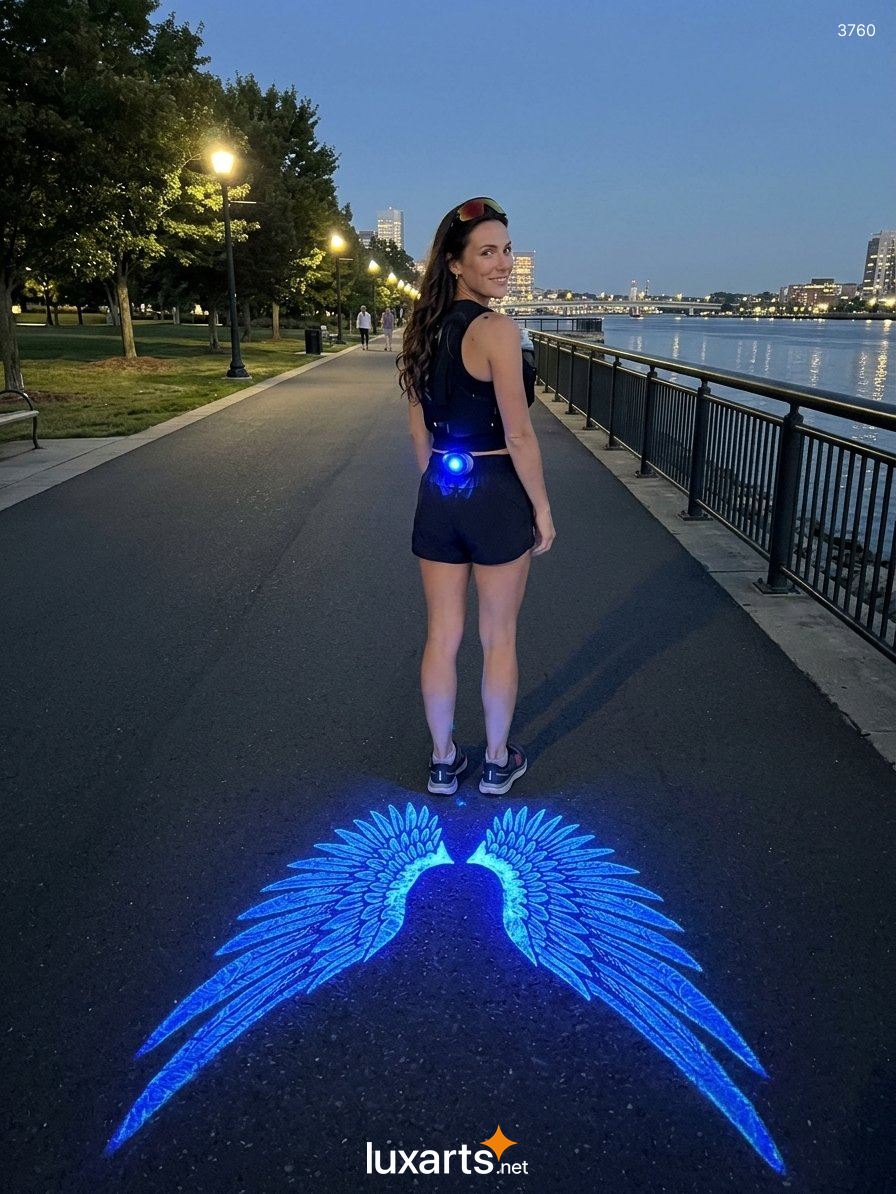
Runners and walkers often assume that streetlights and a light-coloured top are enough. On unlit stretches of path they are not. Clipping the Universal Laser Wing Light to a waist belt, hydration vest or backpack strap sends wings stretching out behind the athlete, which helps on shared routes where cyclists and scooters approach from behind at speed. Those riders see the glow on the ground well before they see the runner’s body, which gives them extra time to adjust their line.
A few practical points matter here. Keep the unit light enough that it does not bounce, choose a secure clip, and angle it so the pattern lands on the path instead of on the legs. Treat it as a complement to a front light or headlamp, because it protects against being approached from behind but does nothing to help the runner see where to step.
Wing, Butterfly and Cosmic Patterns Explained
Pattern choice is more than decoration. A bold, simple outline is quicker to read at a glance and holds up on rough asphalt. A detailed pattern looks spectacular but may lose clarity when the bike moves fast or the surface is uneven. Knowing the main families of designs makes it easier to match a pattern to the way you ride.
Angel and Feather Wings
Feathered wings with clear outlines are the most practical option for everyday riding. Their strong edges stay readable even when the image stretches, and the symmetrical shape reinforces the sense of width behind the rider. Cyan and blue versions are especially popular on commuter routes.
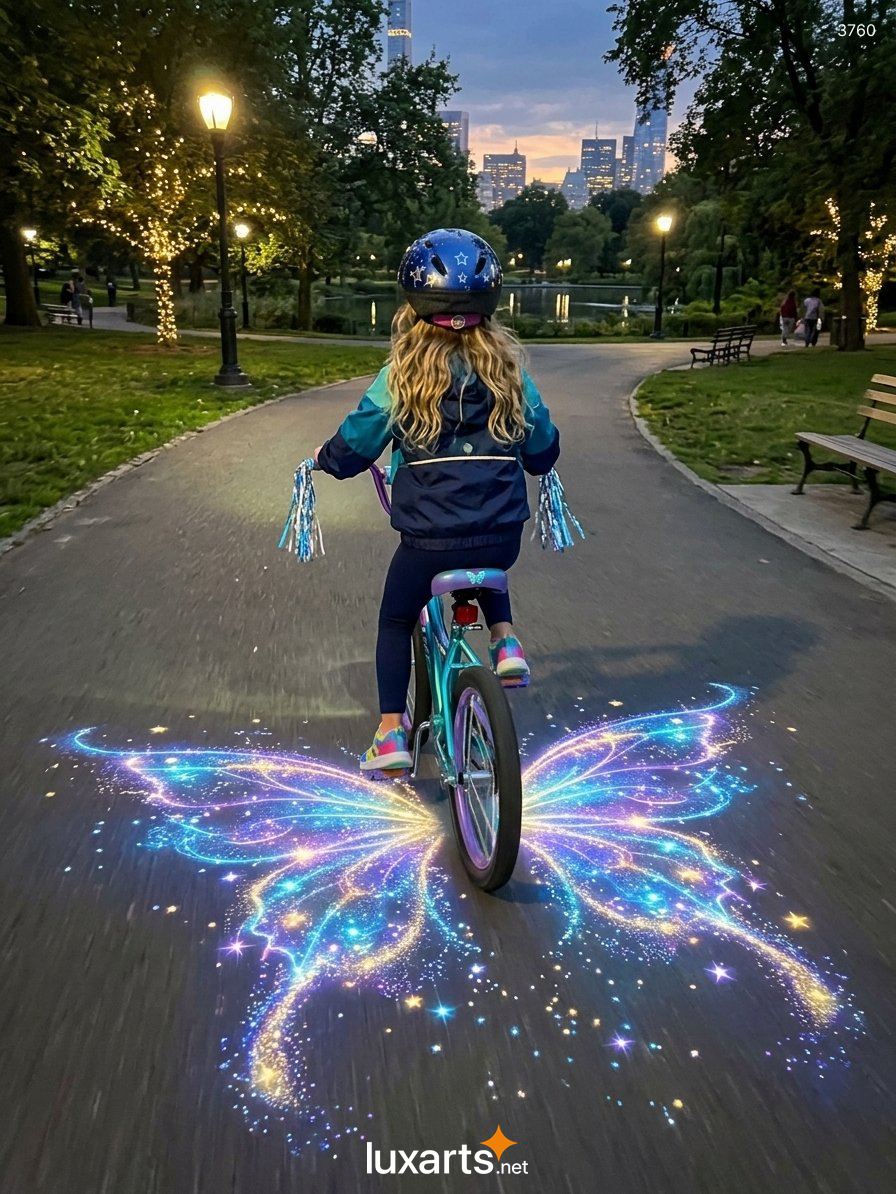
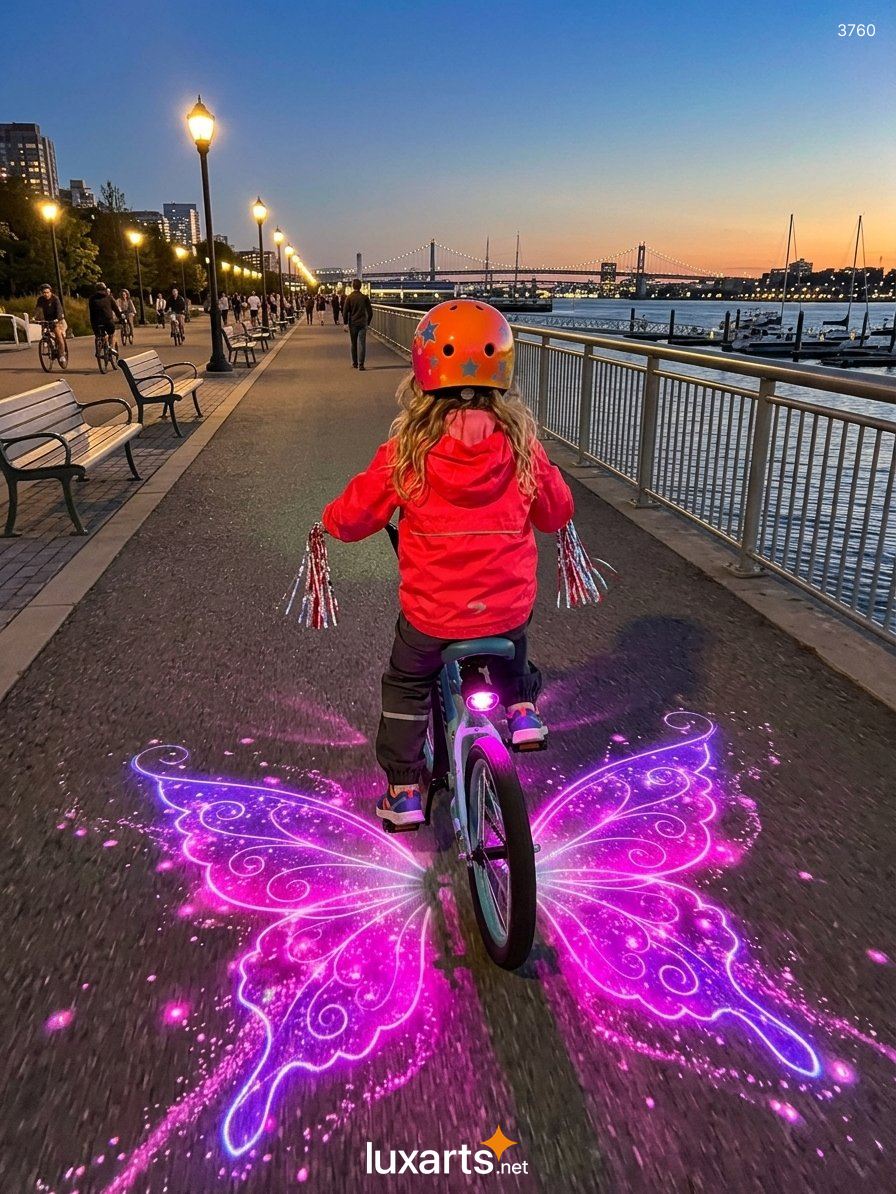
Butterfly Designs
Butterfly patterns lean toward play and decoration. Sparkling dots around the edges and swirling lines inside each wing give the image a soft, glittering look. They are a natural fit for children’s bikes and for family rides at sunset.
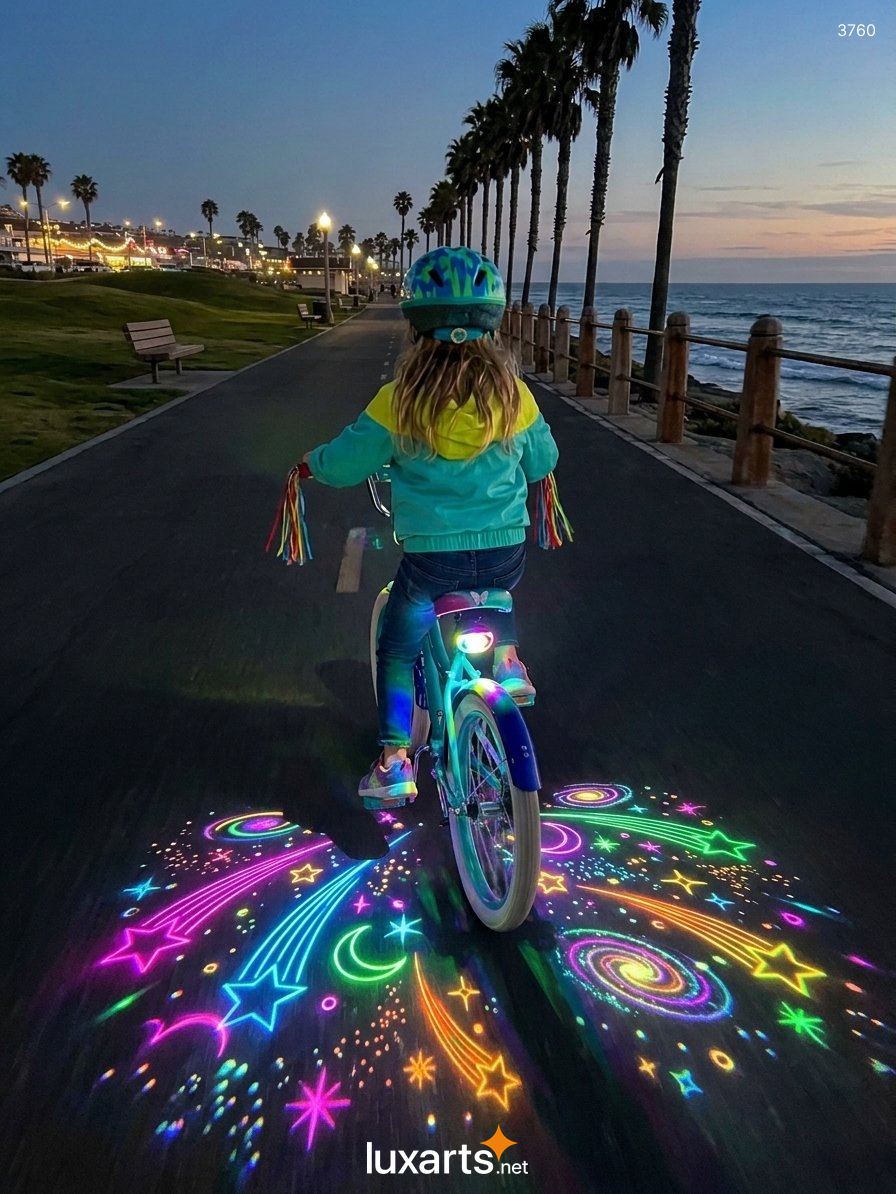
Cosmic and Rainbow Patterns
Comet trails, spirals, crescent moons and star clusters spread across a wide patch of pavement. These busy designs are visually rich and work well for celebrations or relaxed seaside rides. For fast commuting, simpler patterns are the better choice because the eye can read them in a fraction of a second.
Colour and Night Vision
Colour affects how bright a pattern appears. In dim conditions the human eye is most sensitive to blue-green light, so cyan and green projections often look more vivid than deep red or dark blue of the same output. Warm colours still read well against cool surroundings, and multicolour patterns catch attention through variety. The best choice is the one that stays clearly visible on the surfaces you ride over most often.
Directional Arrows and Signalling Your Intentions
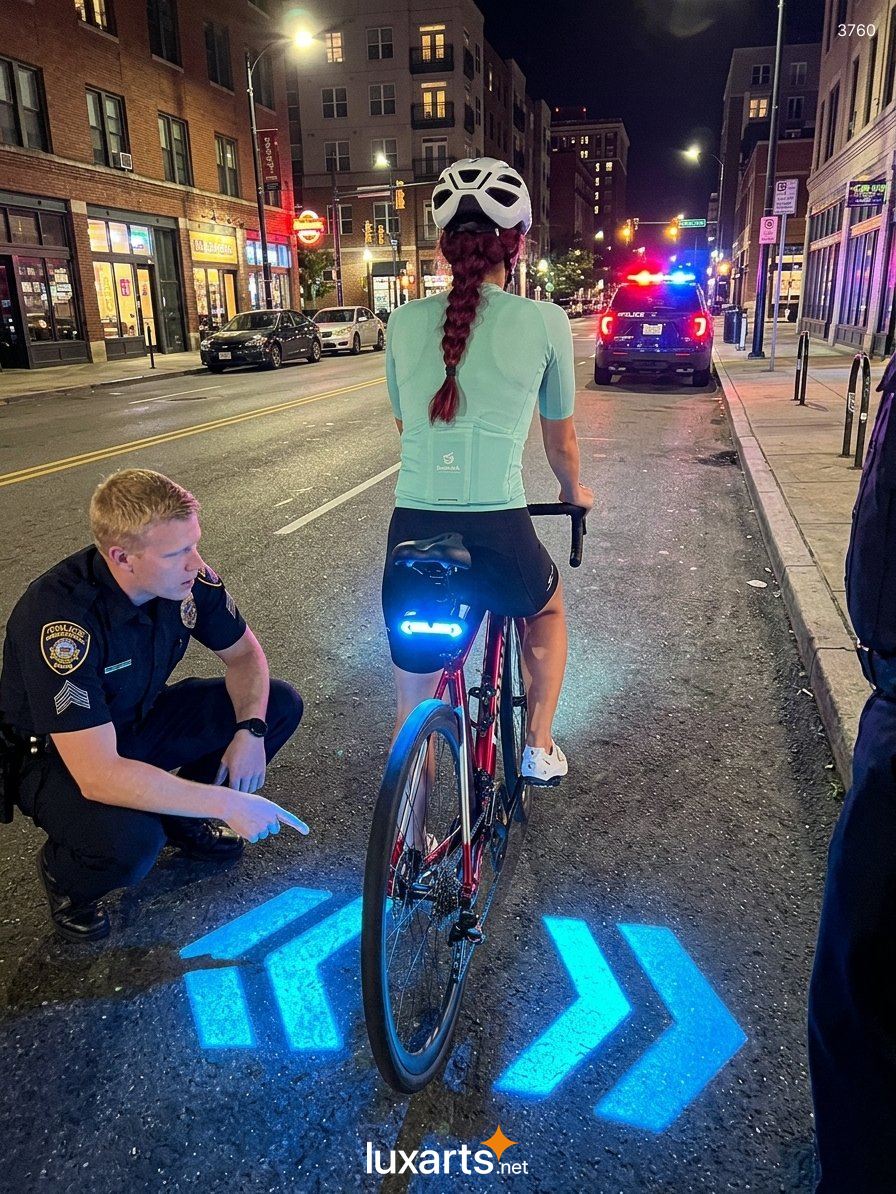
Some projectors can switch from wings to arrow shapes. In the photo below, a cyclist waits at night beside a police officer, and the glowing blue chevrons on the road are the first thing the eye lands on. Chevrons that point in the direction of travel show following drivers where the rider is heading, and units with separate left and right arrows can supplement a turn indication.
These projections do not replace hand signals, which remain the standard way of communicating a turn in most places. Think of arrows as an extra layer that makes a rider’s intention more obvious, especially on dark streets with mixed traffic.
Mounting and Setup Tips for the Best Results
A well-chosen Universal Laser Wing Light can still disappoint if it is fitted carelessly. These steps take only a few minutes and make a visible difference.
- Choose a clear mounting point. The seat post, a rear rack, the back of a scooter deck or a waist belt all work. Keep the lens free of bags, jackets and flapping straps, because anything in front of the beam blocks part of the pattern.
- Set the angle in the dark. Daylight hides the pattern, so adjust at night on a flat surface. Aim for wings that open fully on the ground a short distance behind the rider without squeezing under the wheel.
- Tighten and shake-test. Hold the bike or scooter and give the unit a firm tap. If the pattern jumps, tighten the bracket or add a rubber spacer for grip.
- Match the mode to the ride. A steady pattern is easier on the eyes of other people on shared paths, while a gentle pulse can help on dark roads with no other light sources.
- Charge before longer rides. A light that dies halfway home is worse than no light, because the rider assumes protection that is no longer there.
Responsible Use: Eye Safety, Local Rules and Courtesy
Any device that projects a concentrated beam deserves respect. Never point the unit toward anyone’s face, and teach children never to look directly into the lens. Look for products that state compliance with recognised laser safety limits, and avoid units with no clear information about the beam class. A light that sits low and angles toward the ground, as these projectors are designed to do, should never cross the eye level of a person standing nearby.
Local rules matter too. Many regions require a white front light, a red rear light and reflectors on bicycles, and a projector does not replace any of them. Some places also reserve certain colours or flashing patterns for emergency vehicles, so check what is allowed on public roads before choosing blue or red projections. Finally, consider courtesy on shared paths: a pattern that is bright enough to be seen is plenty, and a pattern that dazzles walkers or dogs is not.
Care and Maintenance
The Universal Laser Wing Light needs very little attention, but a few habits keep it performing well. Wipe the lens with a soft cloth after rides, since dust and road film scatter the beam and dull the wings. Check the manufacturer’s water resistance rating before riding in rain, and dry the unit after wet outings. Store it away from heat, charge it regularly even in off-season months, and inspect the mount for cracks or loosening every few weeks. If the pattern looks patchy or faint, clean the lens first, then check the battery level before assuming something is broken.
Frequently Asked Questions
Does the Universal Laser Wing Light replace a normal tail light?
No. It is designed to work alongside a standard rear light, front lamp and reflectors. The projected wings add width and attention, while the regular lights meet legal and practical basics.
Will the wings show up in daylight?
Not clearly. Ground projections are strongest at dusk, at night and in shaded or tunnel conditions. In full sun the pattern washes out, so the unit is mainly an after-dark accessory.
Can it be used in the rain?
That depends on the unit’s stated water resistance. Wet pavement can reflect the glow in attractive ways, but heavy rain and spray may scatter the pattern, so keep expectations modest in storms.
Is it suitable for children?
Yes, with adult supervision. Mount the unit securely out of the child’s reach, explain that the beam should never be aimed at faces, and check the pattern angle before each ride.
Does the road surface change how it looks?
Very much. Dark, smooth asphalt shows the sharpest wings. Light concrete, cobbles or strong streetlights reduce contrast and soften the image.
Final Thoughts on the Universal Laser Wing Light
Being seen is the first step toward being safe, and the Universal Laser Wing Light gives riders and runners a new way to take that step. By projecting a wide, moving pattern onto the ground, it adds the width, motion and visual interest that a single small light cannot provide. Children enjoy it, commuters appreciate the extra presence on dark paths, and runners gain a signal that cyclists and scooters can pick up from far behind.
The best results come from sensible use: a secure mount, a carefully set angle, a pattern that suits the ride, and standard lights and reflective clothing kept in place. Respect for eye safety and local rules keeps the glow friendly to everyone else on the path. Used that way, the Universal Laser Wing Light turns an ordinary evening ride, scooter trip or jog into one where other people notice you in time and see more of you than a lone red dot.
NOTE: All images in this post are AI-generated and intended solely for inspiration. These are not real products available for sale, and we do not operate any online store or website for purchases.