Smart Programmable LED Curtain Lights: App Controlled 3D Animated Window Display
Walk past a lit window on a winter evening and you usually expect a string of warm bulbs or a wreath hanging on the glass. What you do not expect is a steam train puffing smoke across the pane, or a dragon breathing fire above a mountain range. That is the kind of scene Smart Programmable LED Curtain Lights can paint. Instead of one strand wrapped around a frame, hundreds of light points hang in vertical lines, and every point can be told to glow a chosen color at a chosen moment through a phone app. Together they behave like a giant, low-resolution screen made of light, hung exactly where people can see it.
This guide explains how these displays work, why a window is such a good place for them, what the app side really lets you do, and how to plan scenes that look deliberate instead of cluttered. The photos throughout, from a train rolling toward a hilltop castle to a gingerbread house with candy canes, show how wide the creative range is on a single curtain.
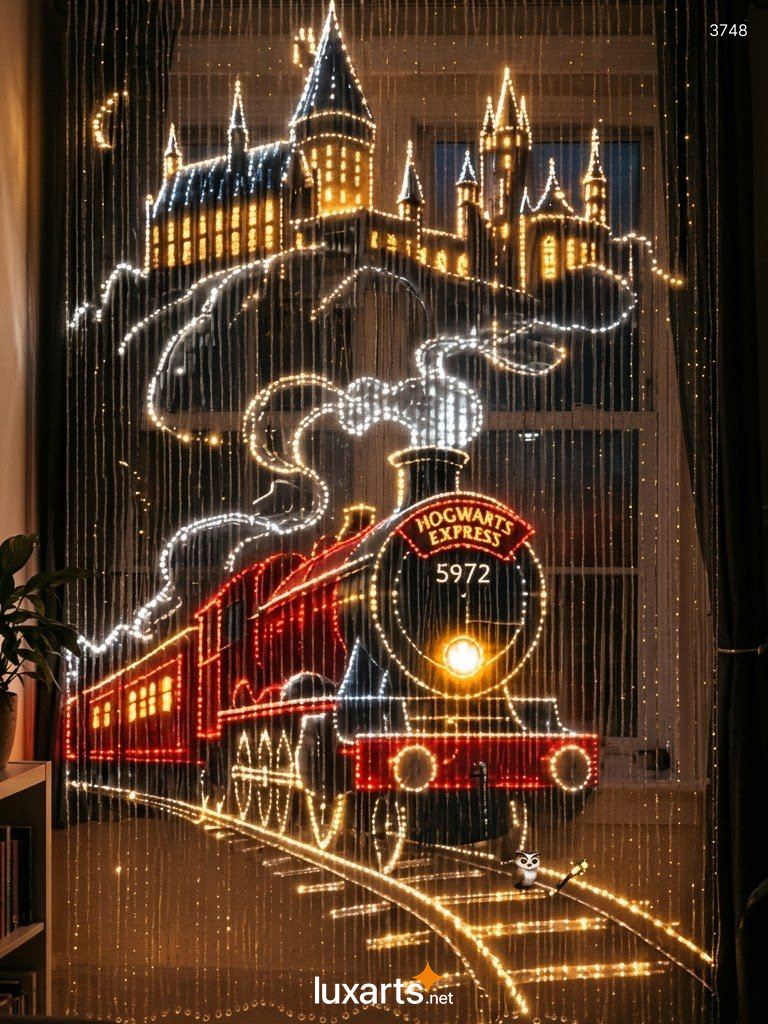
What Smart Programmable LED Curtain Lights Really Are
A traditional curtain light is a row of vertical strands hanging from a single header cable. Each strand carries small LEDs, and in older versions all of them do the same thing together: glow steady, flash, or fade in unison. Smart Programmable LED Curtain Lights keep the familiar hanging shape but change what happens inside the strands. Each LED, or each tiny cluster of LEDs, is individually addressable, which means a controller can send a separate instruction to every point on the curtain.
Once every point answers to its own command, the curtain stops being a simple decoration and becomes a grid. Picture a sheet of graph paper hanging in the air, where each intersection can light up red, white, amber or green. Draw a shape on that grid and the shape appears on the window. Change the shape many times per second and it begins to move.
The word “smart” describes how the grid is driven. Instead of a handheld remote with a few mode buttons, a small controller pairs with a phone over Bluetooth or Wi-Fi, and an app handles the artwork, timing and brightness. The word “programmable” means the pictures are not locked in at the factory. You can pick from a built-in library, edit a preset, or load an original design, so the same curtain can show a snowman on Monday and a spaceship on Friday.
How the Technology Works Behind the Glass
Three parts do almost all of the work: the strands, the controller and the app. Understanding each one makes it easier to judge what a display can and cannot do.
Strands and Addressable LEDs
Each strand is a thin, flexible wire with tiny LED chips spaced along it. Because the chips are addressable, they pass data down the line like runners in a relay. The controller sends a long stream of color values, the first chip keeps its own value and forwards the rest, and the next chip repeats the process. That is how hundreds of points can hold different colors without hundreds of separate wires running back to the box.
Spacing decides how much detail a picture can carry. Tight spacing and many strands give a sharper image, the same way a screen with more pixels does. Wider spacing gives a softer, more impressionistic glow. The castle scene below shows the sharper end of the range, with individual windows, pointed towers and an arched bridge all readable even though the picture is built from nothing but vertical lines of light.
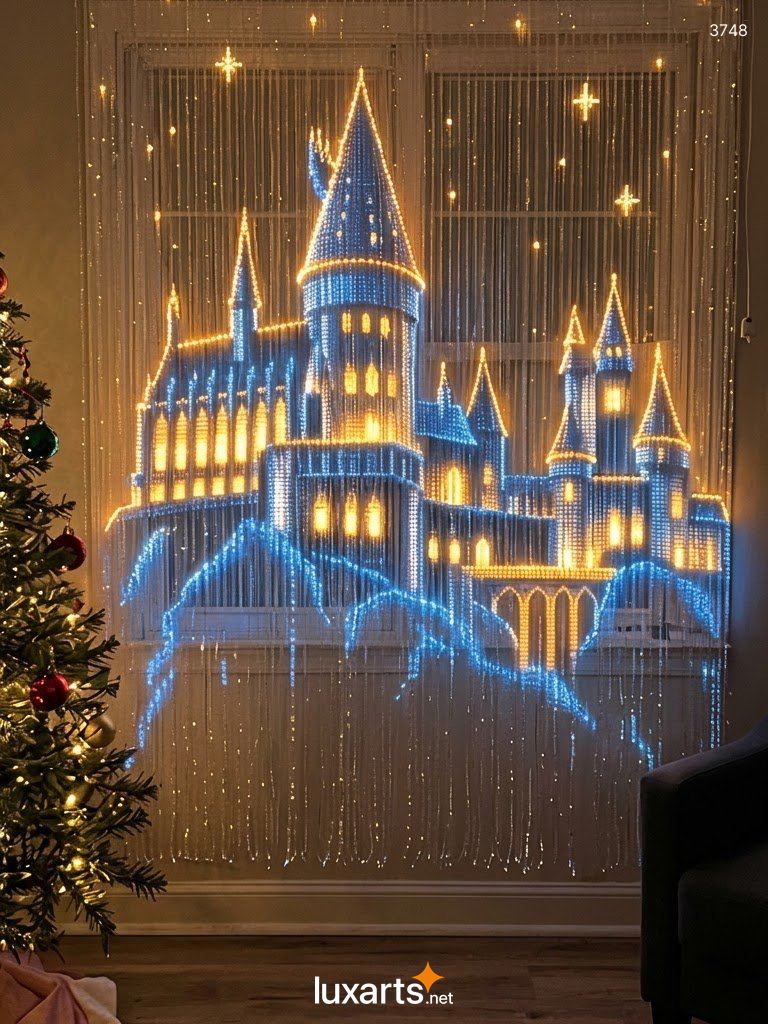
The Controller Box
The controller is usually a small box near the top of the curtain. It receives power through a low-voltage adapter or USB source, stores the animations, and translates app commands into the data stream the strands understand. Many controllers also include a built-in microphone so the lights can react to music or room noise, and some keep an internal clock so scenes can switch on and off by themselves.
The Companion App
The app is where the creative work happens. It usually offers a scene library, brightness and speed sliders, color pickers, a timer, and a drawing or upload tool. Because the controller stores the finished scene, many setups only need the phone nearby while editing. Once the design is saved, the curtain can run on its own.
Why a Window Makes the Perfect Canvas
A window suits this kind of display for reasons that go beyond decoration. Glass already acts as a natural frame, the room behind it is usually darker than the lights at night, and the curtain hangs a short distance from the surface, which gives the picture real physical depth instead of a flat, printed look.
Daylight is the main limit. A display built from LEDs competes with the sun, so these scenes shine after dusk, when the contrast between a dark room and the glowing points is strongest. In the evening a window becomes the brightest object in the room, which makes it a natural focal point for a living room, a bedroom or a children’s play corner.
A sheer fabric layer behind the strands adds another benefit. It catches stray light, hides the window frame and blinds, and gives the scene a soft, misty backdrop. Several of the Christmas scenes in this article use that trick, with a white drape glowing quietly behind the main artwork. Without the fabric, the strands stand alone against the glass and the picture feels lighter and more airy, closer to the dragon scene in the next section.
The 3D Animated Effect Explained
Calling a curtain display “3D” can sound like marketing language, so it helps to say exactly where the depth comes from. There is no special lens or pair of glasses involved. The effect comes from four ordinary things working together.
- Physical separation. Strands hang in front of the window or the fabric, so the light sits in real space instead of being painted on a flat surface.
- Layered brightness. Foreground objects glow strongly while distant ones stay dim. In the dragon scene, the creature and the golden moon are vivid, while the mountains and the tiny castle at the bottom recede into a cooler haze.
- Motion. A flame that flickers outward, smoke that drifts upward or a sleigh that slides across the pane tells the eye which parts are near and which are far away.
- Viewer movement. When someone walks past, the hanging strands shift slightly against the background, creating a gentle parallax that a flat screen cannot copy.
Animation is what ties these together. A static picture made of lights is pretty, but a looping one holds attention. Stars that blink in a staggered order, snow that falls from top to bottom, or a wing that slowly rises and drops are all simple loops, yet they make a window feel alive for the entire evening.
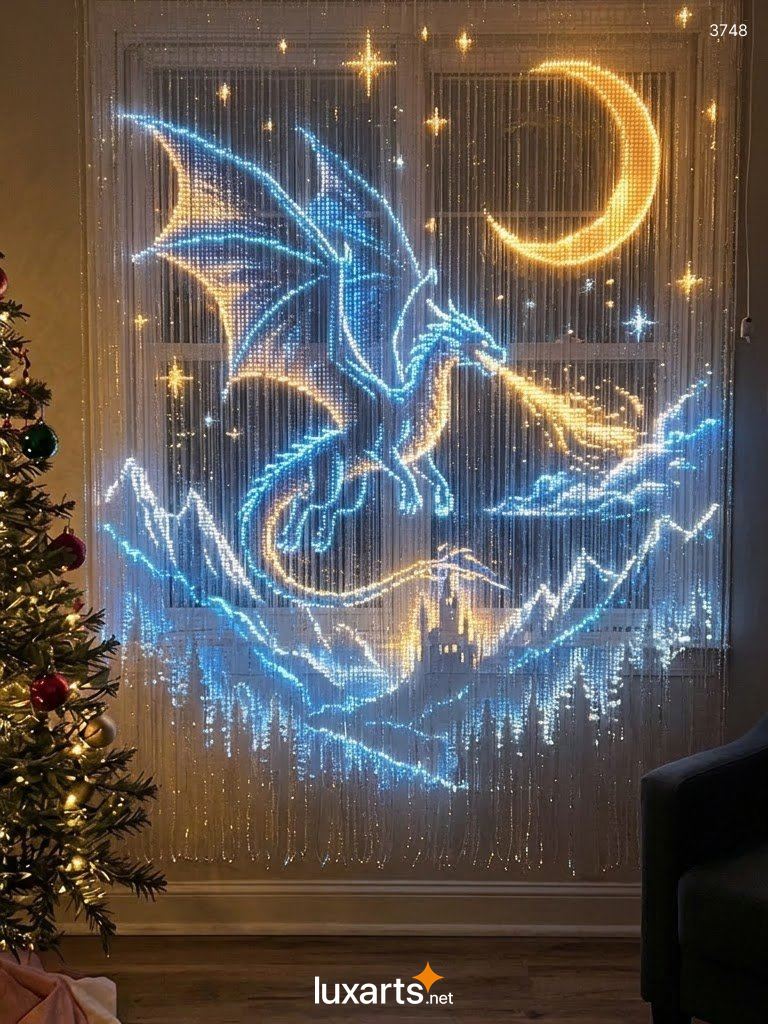
App Control: From Presets to Your Own Designs
Control is what separates a curtain light that is fun for a week from one that stays interesting all season. A well-designed app offers several layers of control, from one-tap scenes to point-by-point editing.
Ready-made scenes. Most apps ship with a library of themed pictures and animations. Pick one, adjust the speed, and the curtain updates within seconds. This is the easiest way to start, and it already covers the common holiday and fantasy subjects.
Timers and schedules. A schedule lets the display switch on at sunset and off at bedtime without anyone touching a phone. It also keeps the lights from burning through the night, which is kind to the equipment and to the neighbors.
Music and sound reaction. In sound mode, the colors pulse with the beat or the volume of the room. It turns a window into a party backdrop and works well for birthdays, game nights and small gatherings.
Custom artwork. Better apps include a drawing grid or an image import tool. You sketch a simple shape, choose colors, and assign motion to each part. Even a basic drawing, such as a star with a trailing tail, looks sharp when it is bold and uncluttered.
Voice and smart home links. Some systems connect to common voice assistants, so a spoken command can start a scene or dim the display. Availability depends on the model and app, so it is worth checking the supported features before planning around them.
The soft forest scene below shows what color control can achieve. Lavender castle towers, green leaves with golden vines, amber mushrooms, purple flowers and a pale blue deer all share one curtain, yet nothing fights for attention because each color sits in its own zone.
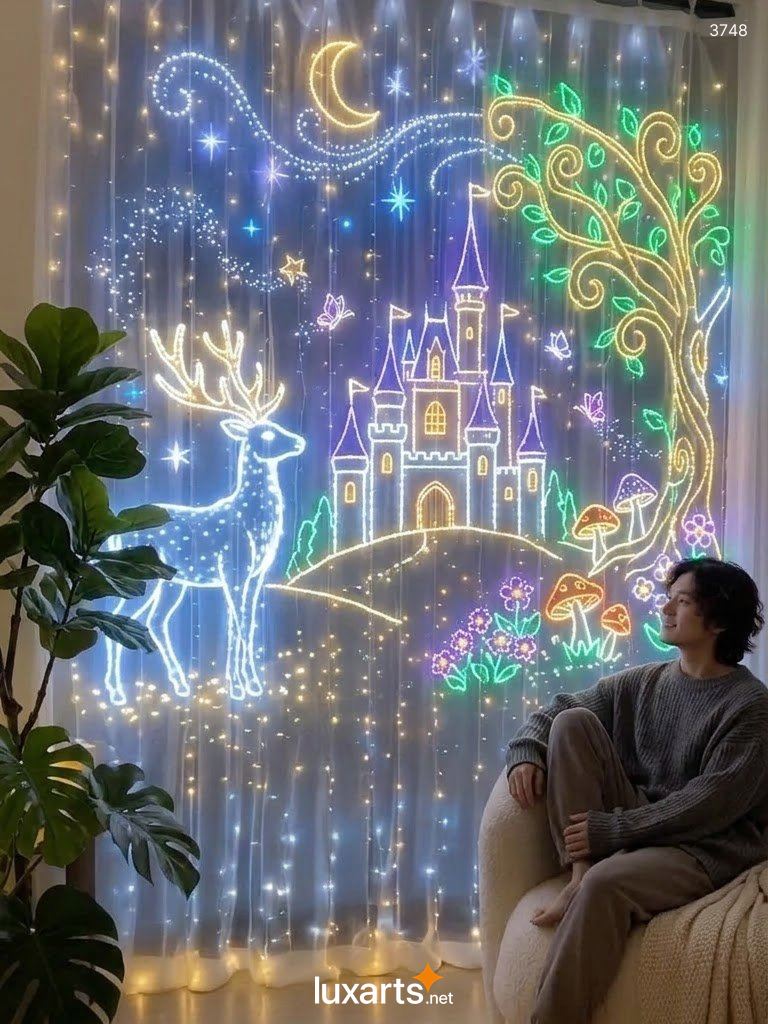
Holiday Scenes That Fill an Entire Room
Winter holidays remain the most popular use for animated curtain displays, mostly because the subject matter is already built from simple, bold shapes: stars, snowflakes, triangles for pine trees, rectangles for cabins. Those shapes survive the low resolution of a light grid very well.
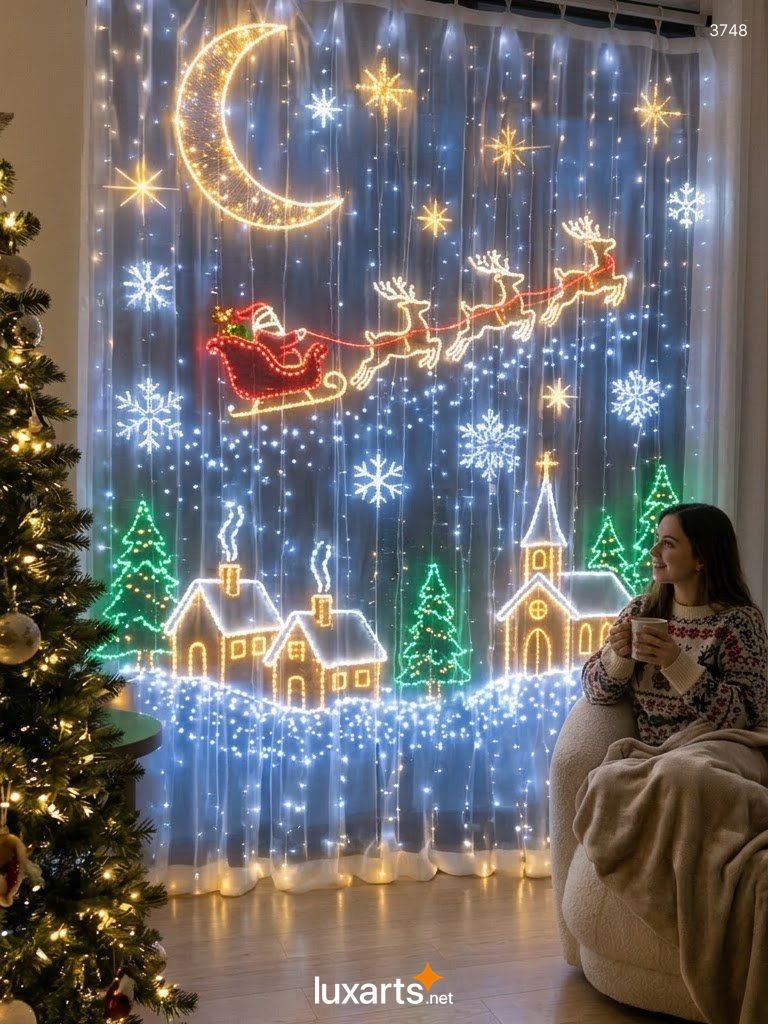
The sleigh scene with a crescent moon is a good lesson in composition. Santa and the reindeer cross the upper half of the curtain, snowflakes drift below them, and a row of small houses with chimney smoke, a church steeple and glowing pines fills the bottom third. A band of icy blue dots reads as snowy ground, so the eye understands where the sky ends and the village begins without any outline.
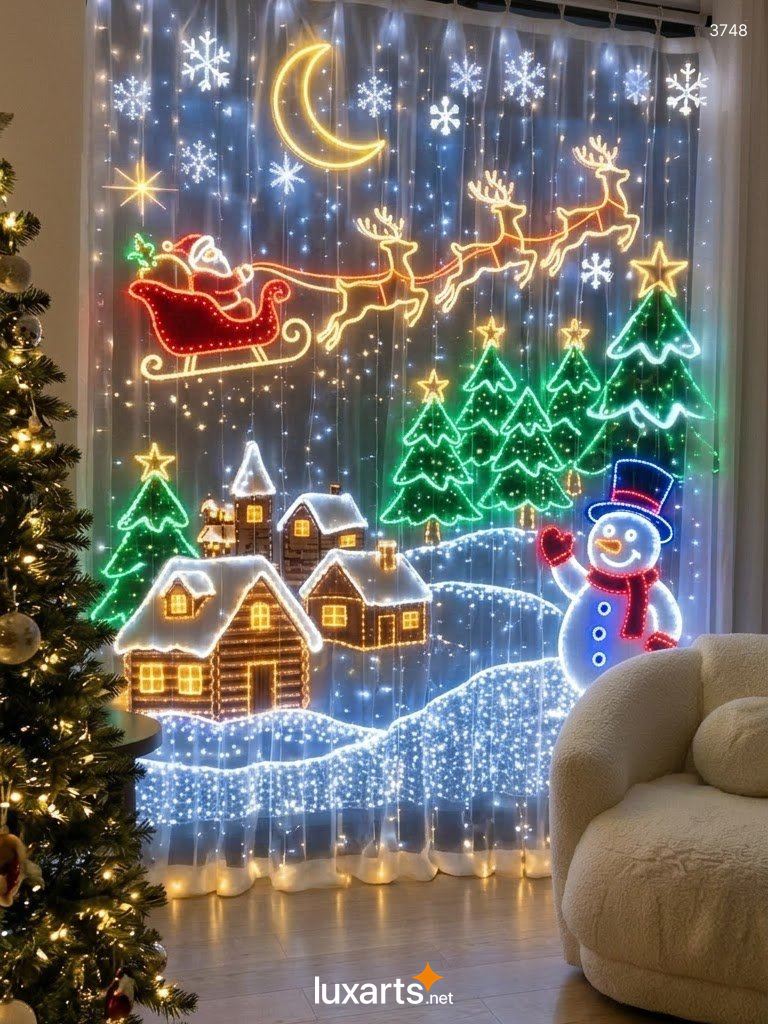
A second version shifts the balance. The pines grow taller and wear star toppers, a cheerful snowman waves from the right edge, and log cabins with lit windows sit on rolling drifts. Because the trees and the snowman use saturated green, blue and red, they pop forward from the pale snow behind them. Animation can then add a twinkle to each star topper or let the reindeer appear to gallop along their line.
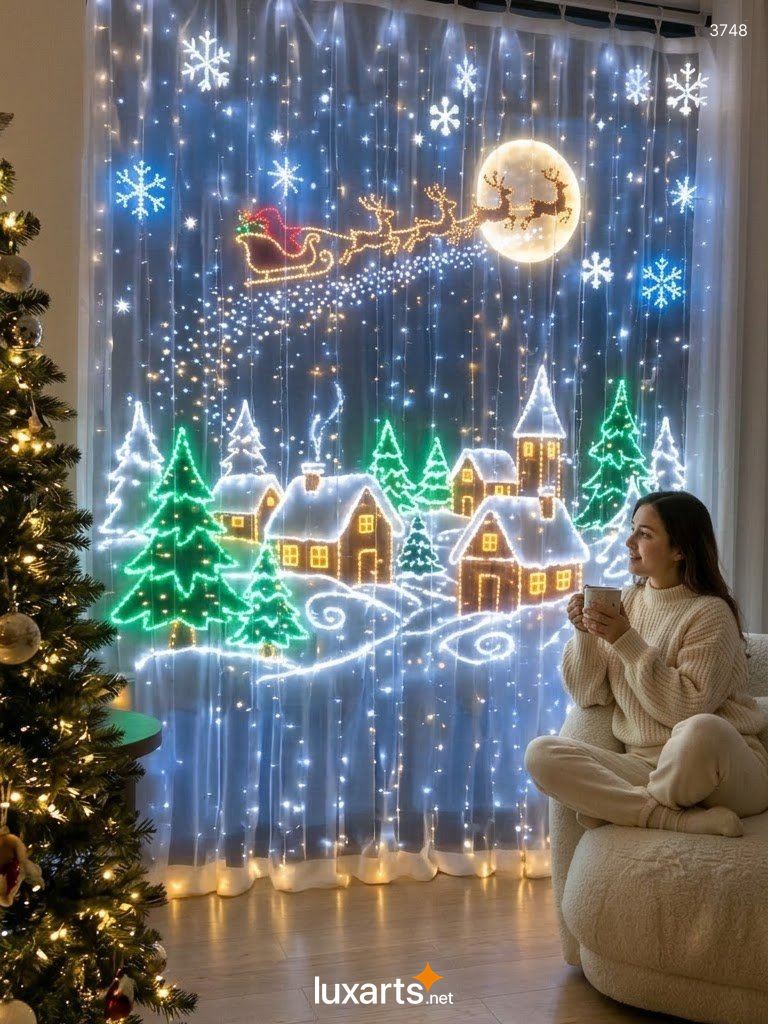
Night-sky versions work differently. In the next scene, a large full moon sits behind a distant sleigh, white and blue snowflakes fill the upper area, and the village is tucked low with swirling snow paths curling between the houses. Making the sleigh smaller gives the picture a feeling of distance that bigger characters would lose.
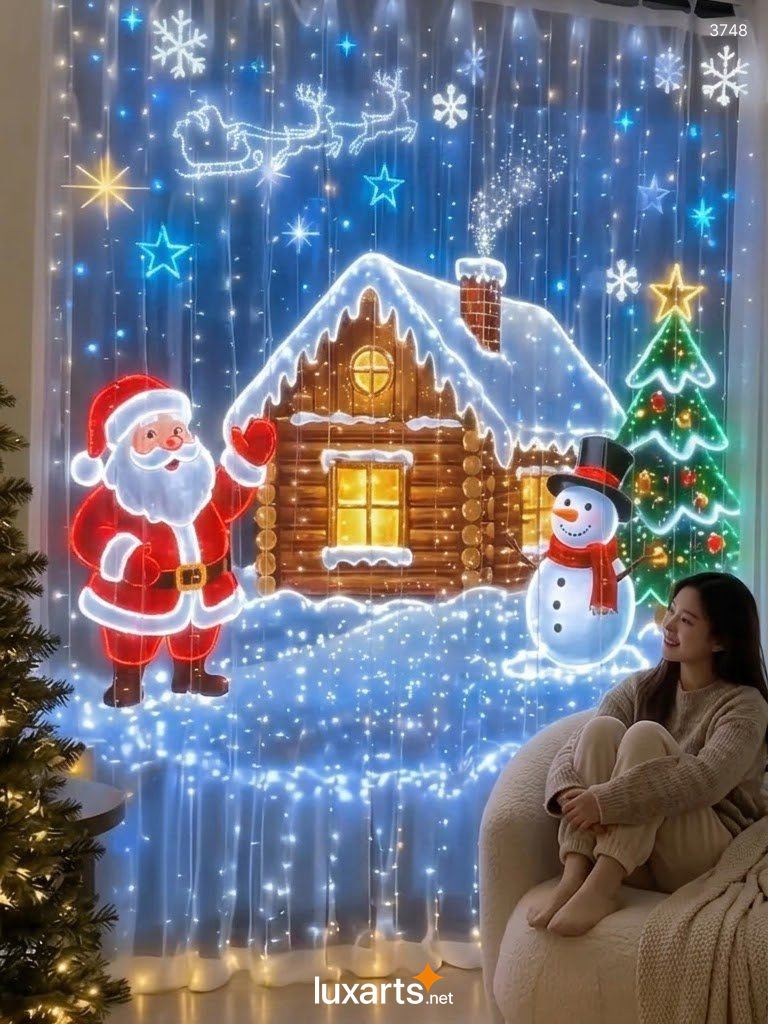
Character-driven scenes are the warmest. A waving Santa on the left, a glowing log cabin in the center and a snowman on the right make the window feel like the cover of a storybook. Small details, such as sparkles rising from the chimney, a golden window and a decorated tree with tiny red ornaments, are what make people stop and look closer.
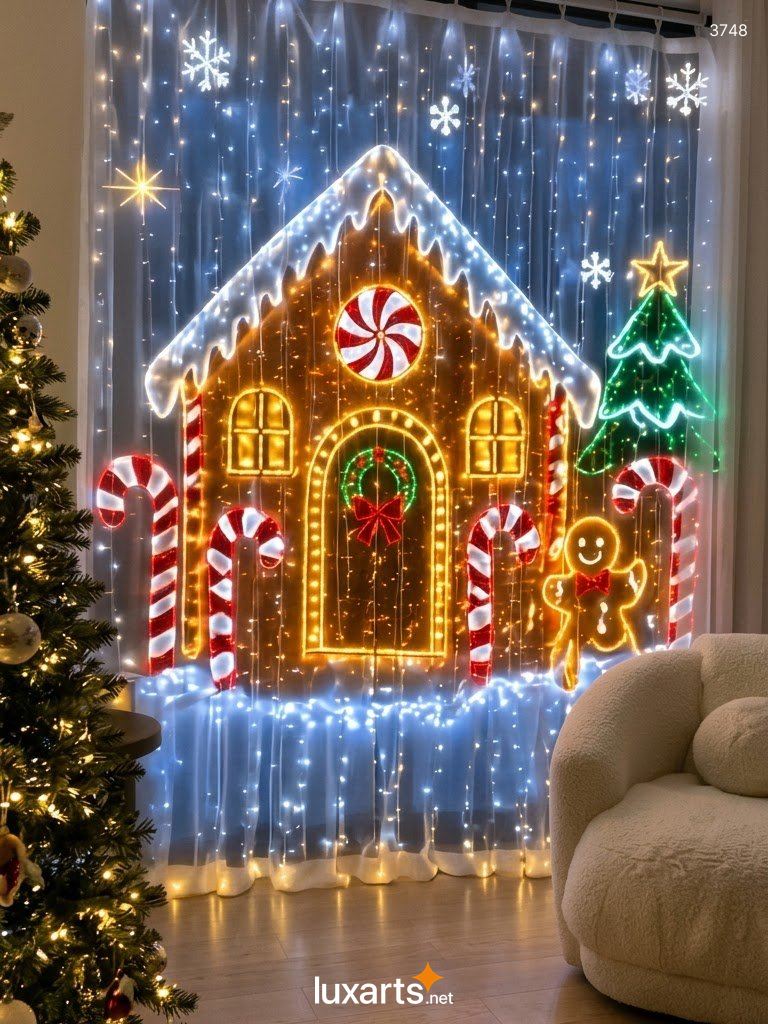
The gingerbread house takes a sweeter route. Candy canes in red and white stripes frame the door, a peppermint swirl sits above it, a wreath with a bow hangs at the entrance, and a little gingerbread man waves from the corner. Warm amber tones fill the house itself, while cool white outlines the icing along the roof. Mixing warm and cool light this way keeps a busy scene readable.
Fantasy, Space and Storytelling Displays
Seasonal scenes are only the beginning. Because the curtain is a blank grid, any picture that can be simplified into clear shapes can be shown. Fantasy and space themes are especially popular in kids’ rooms, game rooms and teen bedrooms, where the display can stay up all year.
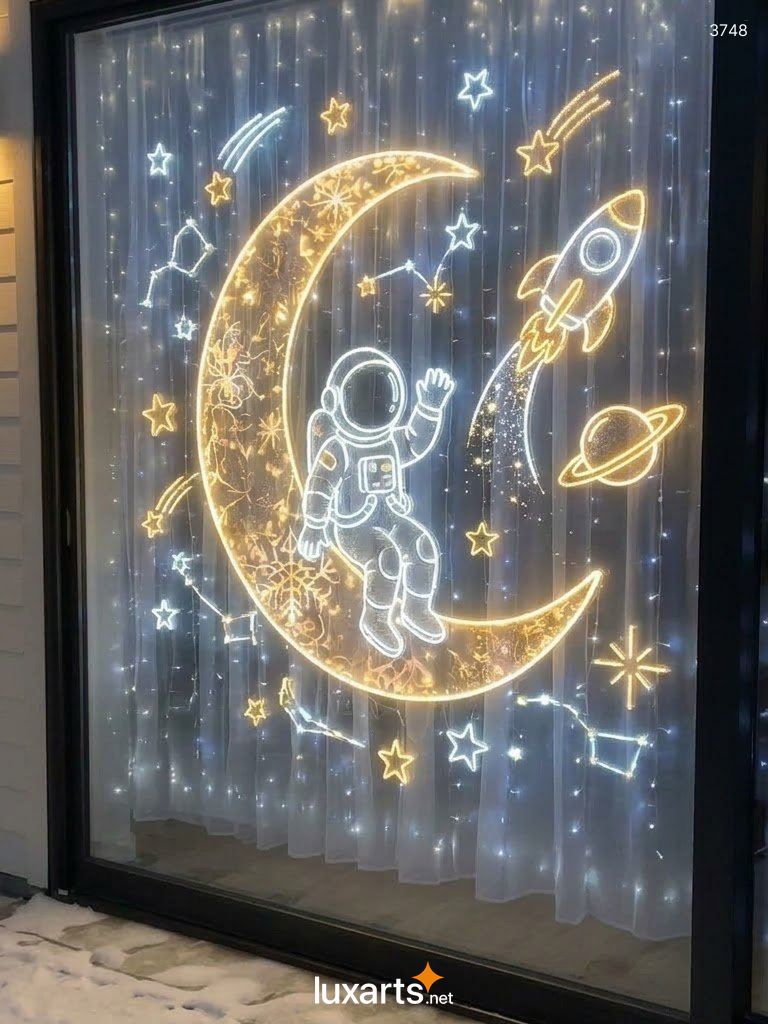
The astronaut scene is a clean example. A figure waves from a golden crescent moon, with a small rocket, a ringed planet, shooting stars and constellation lines scattered around. Gold and white are the only two main colors, so the whole picture feels calm and unified. A slow animation that makes the stars blink one after another gives the room a bedtime-story atmosphere.
Story scenes can be bigger. The train picture at the top of this article features a locomotive with a glowing headlight, a red carriage and smoke curling upward toward a castle on a hill. The red of the engine, the white of the smoke and the gold of the castle windows each get their own zone, so the eye follows the train from the foreground to the background. Animated smoke and a pulsing headlight would give that scene a slow, cinematic rhythm.
Facing the Street: Displays Meant for Passersby
Many people hang a curtain display for the people outside rather than the people inside. A large window facing a front path or a quiet street turns into a small public gallery after dark. The photo below shows a family stopping in the snow to look at a big snowman in a red hat, with a lit tree beside him. The child pointing at the glass is the whole reason a display like this exists.

When the audience is outside, keep the artwork large, bold and simple. Passersby see it from a distance and for only a few seconds, so one clear character reads better than a dense village. Use bright white or warm yellow for faces and outlines, and leave generous dark space around the figure. Also check that the glow does not spill into a neighbor’s window. Lower the brightness after bedtime and use a schedule so the display shuts off at a sensible hour.
Planning the Layout Before You Hang Anything
A little preparation saves a lot of untangling later. Start with measurements, not with the scene you want to show.
Measure the Window and the Hanging Space
Record the width and height of the glass, then decide whether the curtain should cover the entire pane or only the center. Strands that are too long pool on the floor or the windowsill and break the lower edge of the picture, so leave a small gap at the bottom. A curtain that matches the width of the window usually looks the most intentional.
Choose a Hanging Method
Most installations use a curtain rod, a tension rod or a row of small removable hooks along the top of the frame. Pick the method that will not damage paint or trim. Make sure the strands hang straight and parallel, because slightly crooked strands distort the picture. The app assumes a neat grid, and the artwork only looks right when the real curtain matches it.
Plan the Power Route
Place the controller where the cable can reach an outlet without crossing a walkway. Use cable clips along the frame and avoid pulling the power lead tight against the strands. If the window is far from a socket, a properly rated extension lead is better than a stretched adapter cable. Keep every connection dry and away from water.
Test Before Committing
Many apps ask for the number of strands and points on the curtain. Entering the right figures lets the artwork fit the grid. Run a simple pattern such as a rainbow sweep first. Any dead strand or reversed section shows immediately, and it is far easier to fix before the scene is chosen.
Design Tips for Scenes That Read Clearly
- Limit the palette. Three or four main colors give a cleaner picture than a rainbow. The astronaut scene works because it sticks to gold and white.
- Give each subject breathing room. Dark gaps between objects act like outlines. Crowded scenes blur into a glittering mass.
- Choose one focal point. Make one element, such as the moon, the dragon or the headlight, the brightest part of the picture. Everything else supports it.
- Match speed to mood. Slow fades suit quiet evenings and bedrooms. Quicker sparkles and pulses suit parties.
- Mix warm and cool light. Warm amber for windows and fire, cool blue and white for snow and sky. The contrast creates depth without extra effort.
- Keep the background quiet. If the curtain already carries scattered sparkles, avoid adding a second busy effect over the artwork.
Care, Safety and Storage
Most curtain light systems run on low voltage, but they still deserve sensible handling. Follow the maker’s rating for indoor or outdoor use, since a set made for indoor windows should not hang in rain. Keep strands away from candles, heaters and anything else that gets hot. Avoid covering the controller with fabric, because it can trap heat during long evenings of use. Turn the display off or set a timer when nobody is home.
At the end of the season, resist the urge to stuff the strands into a box. Wrap each one loosely around a piece of cardboard or a reel, secure the ends, and store the controller and adapter in the same container. Wipe off dust with a dry, soft cloth. Before the next season, open the app and check for updates, so the first evening of display goes smoothly.
Frequently Asked Questions
Can these lights be seen in a bright room during the day?
They are designed for contrast, so they look best in the evening or in a dim room. In strong daylight the picture fades, although the curtain still looks pleasant as a sparkling veil.
Is Wi-Fi needed all the time?
Not usually. Many controllers keep the chosen scene in their own memory, so a phone connection is mainly needed for editing or switching scenes. Details vary by model, so check the app’s instructions.
Can I create my own scene instead of using presets?
Yes, if the app includes a drawing or import tool. Begin with a simple shape, such as a star, a moon or a single tree, and add motion once the shape looks right on the curtain.
Do these displays only suit Christmas?
No. The same curtain can show dragons, planets, castles and abstract color waves. Birthday parties, weddings, cafés, game rooms and photo backdrops all make good use of it.
Final Thoughts
Smart Programmable LED Curtain Lights sit somewhere between a decoration and a tiny light screen. The hardware is simple: vertical strands, a controller and an app. What it produces is surprisingly rich, from a snowman waving at a family on the sidewalk to a dragon crossing a moonlit sky. The best results come from restraint rather than complexity, with bold shapes, a small palette, a clear focal point and a sensible schedule.
Treat the window as a stage, plan the layout with a tape measure, and let the app handle the performance. With a bit of patience, one curtain can tell a different story every night of the year.
NOTE: All images in this post are AI-generated and intended solely for inspiration. These are not real products available for sale, and we do not operate any online store or website for purchases.