Magic Wand Christmas Tree – Pre-Lit Flocked Tree with Wand Remote Control
Every December brings the same familiar scene. The storage box comes down, the branches get fluffed one by one, and somebody discovers that last year’s lights are tangled beyond rescue. A Magic wand Christmas tree is made for people who would rather skip that part. The lights are already woven into the branches, the tips carry a frosty layer of flocking, and a small wand takes the place of the bulky foot pedal or the stray remote that always disappears into the couch cushions. Point it at the tree and the whole room changes mood.

This guide looks closely at what a pre-lit flocked tree with a wand remote control really offers. You will find notes on how the flocking behaves in a real living room, how the wiring and sections fit together, what the wand does, how the color modes look in practice, and how to decorate and look after the tree so it stays in good shape for many seasons. The photos along the way show the tree in ordinary homes, from a quiet warm white glow to a full rainbow gradient.
What Is a Magic Wand Christmas Tree?
A Magic wand Christmas tree is an artificial tree that brings three features together: lights installed at the factory, a snowy flocked finish, and a handheld wand that controls the lighting. Instead of a plain switch tucked near the trunk, the wand works as the remote. Aim it at the tree and you can move between lighting modes, shift the colors, or change how the lights travel across the branches.
The idea sounds playful, and it is, but it also solves a practical problem. Anyone who has knelt behind a tree to hunt for a power button while holding a tray of ornaments knows how awkward the usual setup can be. A remote that sits comfortably in the hand, and happens to look like a prop from a fantasy film, puts control exactly where you are standing. Wand designs vary. Some are carved with scrollwork and a tiny glowing tip, while others have a smooth, twisted black finish and arrive in a presentation box of their own. The job stays the same either way.
Pre-lighting and flocking also remove the two longest steps of traditional decorating. Nobody has to string lights from the top down, and nobody has to coat the branches with artificial snow. What remains is the enjoyable part: shaping the branches, hanging favorite ornaments, and choosing how the tree should glow each evening.
The Flocked Finish: A Snowy Look Without the Mess
Flocking is the soft, powdery white coating applied to branch tips so the tree looks as if it just came in from a snowfall. On a Magic wand Christmas tree it does a second job that is easy to miss: it spreads the light. Pale, textured surfaces catch each bulb’s glow and scatter it across a wider area, so a light looks like a soft wash of color instead of one hard dot. That is why color-changing modes look so rich on a flocked tree. Blue light on dark green needles looks deep and muted, while the same blue on frosted tips makes the entire branch seem to glow from within.
The branches in these photos show how much texture a good flocked tree carries. Some tips are thick and fluffy, while the inner needles stay green and lightly frosted, which gives the tree depth instead of a flat white look. In daylight it reads as a calm, wintry silhouette. After dark, with the lights on, the same surface turns into a canvas for color.
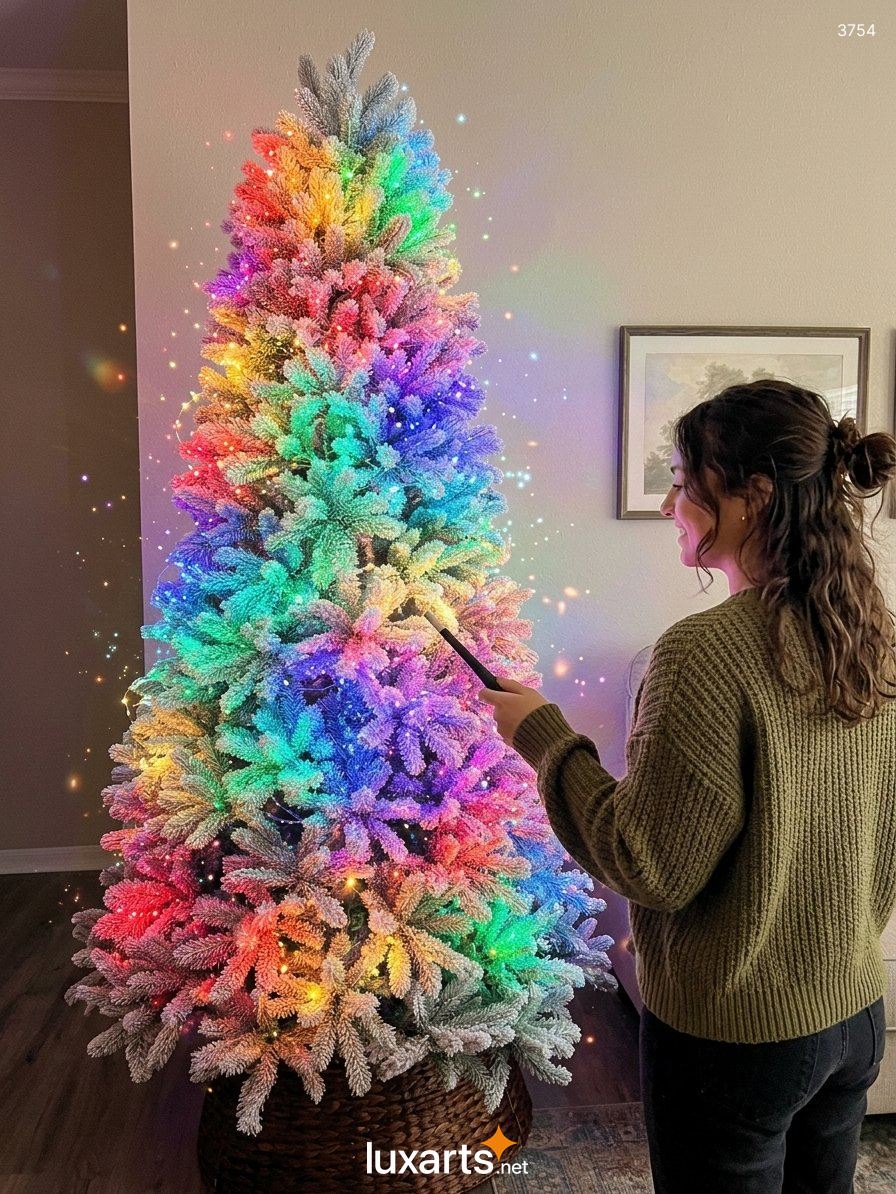
A few habits keep the flocking looking its best. Handle branches with clean, dry hands or thin cotton gloves, the way the woman in the opening photo does. Expect a few flakes on the floor during the first season, since loose flocking sheds a little while the branches settle. A woven basket or tree skirt around the base catches most of it, and a vacuum with a soft brush attachment handles the rest.
Pre-Lit Design: Lights Built Into the Branches
Pre-lit simply means the light strands are attached to the branches before the tree leaves the factory. The wiring follows the structure of the tree, so the spacing stays even from the base to the tip. There are none of the gaps, clumps, or sagging loops that tend to appear when strings are wrapped around a tree by hand, and no hunt for the one section that looks thinner than the rest.
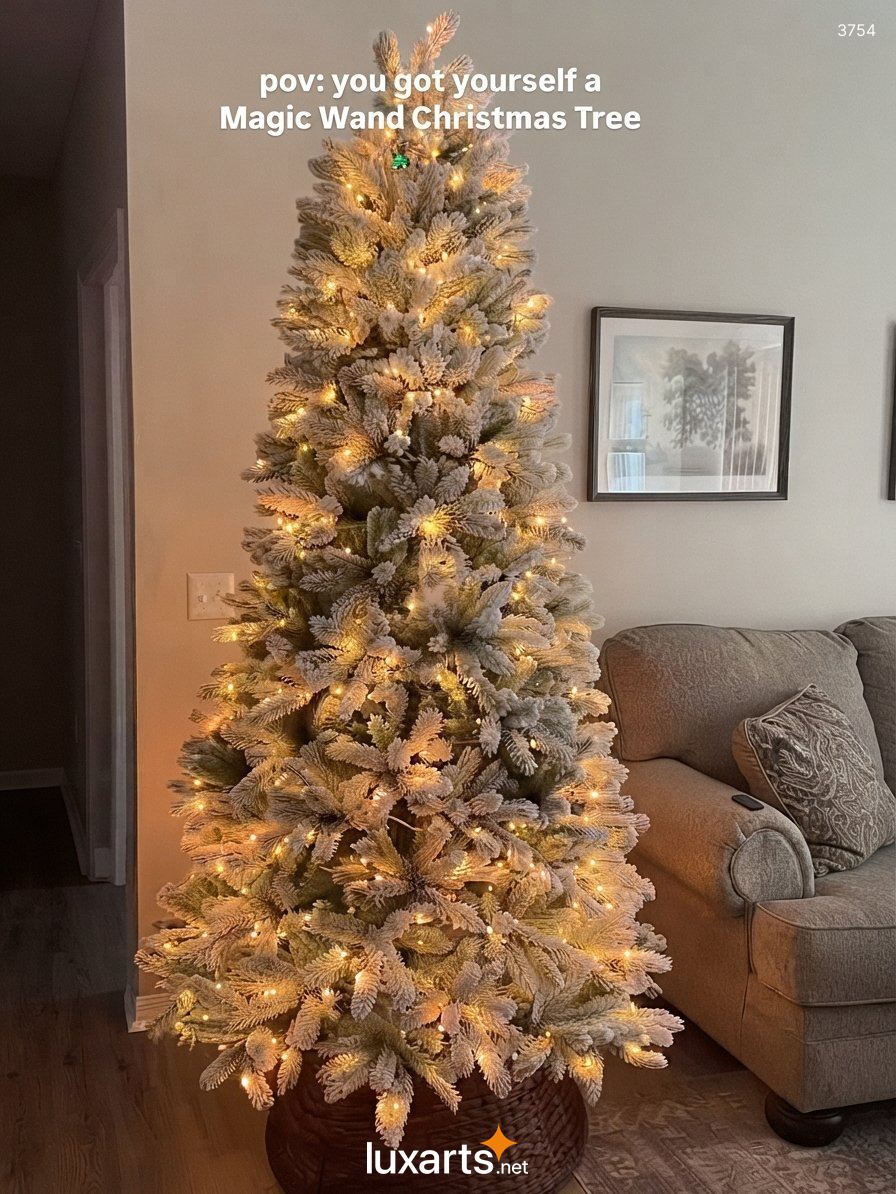
Warm white is the mode many households leave running for most of the season, and the photo above shows why. The glow settles into the flocking and turns the frosted tips a soft amber, which suits wood floors, neutral sofas, and framed landscape prints. The slim, tapered shape of this tree also fits comfortably beside furniture, so it works in the corner of a small living room as well as in the center of a larger one.
Because the lights are part of the tree, decorators can spend their energy on ornaments, ribbon, and the topper. Nothing needs to be threaded through the branches, and the lighting looks finished even before the first ornament goes up.
How the Wand Remote Control Works
Most wand remotes work at short range, so you either point the wand toward the tree or stand within a few steps of it. Buttons or touch points on the handle usually cover the essentials: power, brightness, color selection, and a choice of lighting effects. Exact controls differ from model to model, so the instruction sheet that comes with the tree is the best reference for the button layout.

The photo above captures a moment many owners will recognize: the top section lit up inside its shipping carton while the wand rests on it. Checking the lights this early is a smart habit. A carved, wood-toned wand with gold scrollwork and a glowing tip looks like something from a magic shop, and it feels more like a toy than a tool, which is a big part of the appeal for children and adults alike.
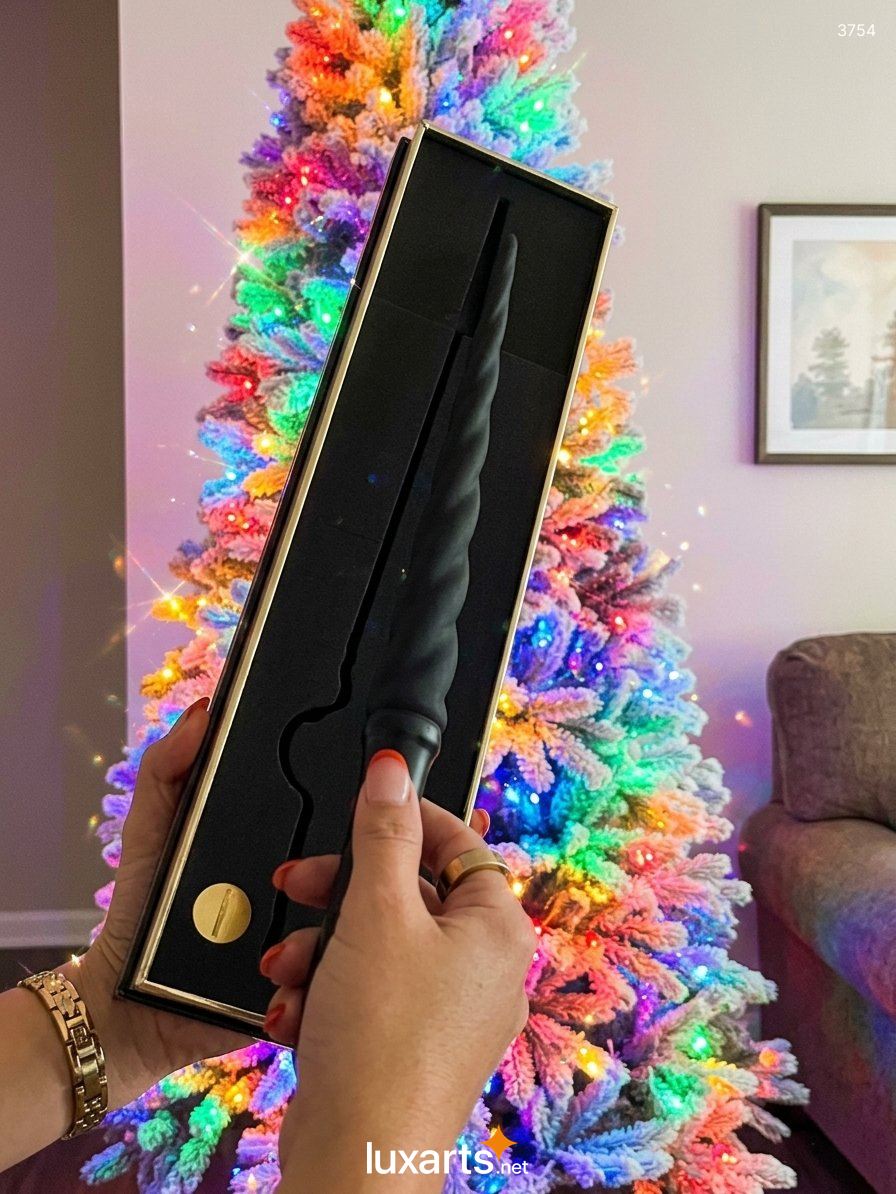
Other wands lean toward a sleek, modern look. The black twisted design shown here sits in a gold-trimmed box lined with foam, and it is easy to see why some people display it between holidays. Whatever the style, the wand keeps the controls in your hand. You can stand across the room, switch from warm white to a color gradient when guests arrive, and dim everything down again at bedtime without touching the tree.
A few practical tips make the wand more reliable. Give it a permanent resting place so it does not get lost among wrapping paper. If it uses replaceable batteries, put in a fresh set before the season starts. If the tree stops responding, move a little closer and check the manual for where the receiver sits, since angle and distance can affect how well a remote signal arrives.
Color Modes and Lighting Effects
Warm white is the classic, but the color modes are where a wand-controlled tree shows its personality. In the photos below, you can see bands of red, orange, yellow, green, blue, and purple sweeping across different sections of the tree, while other areas rest in a cool, silvery white. The colors do not sit still. They travel and blend, so at any moment you may find a patch of orange near the top, a green wave through the middle, and a purple glow near the base.
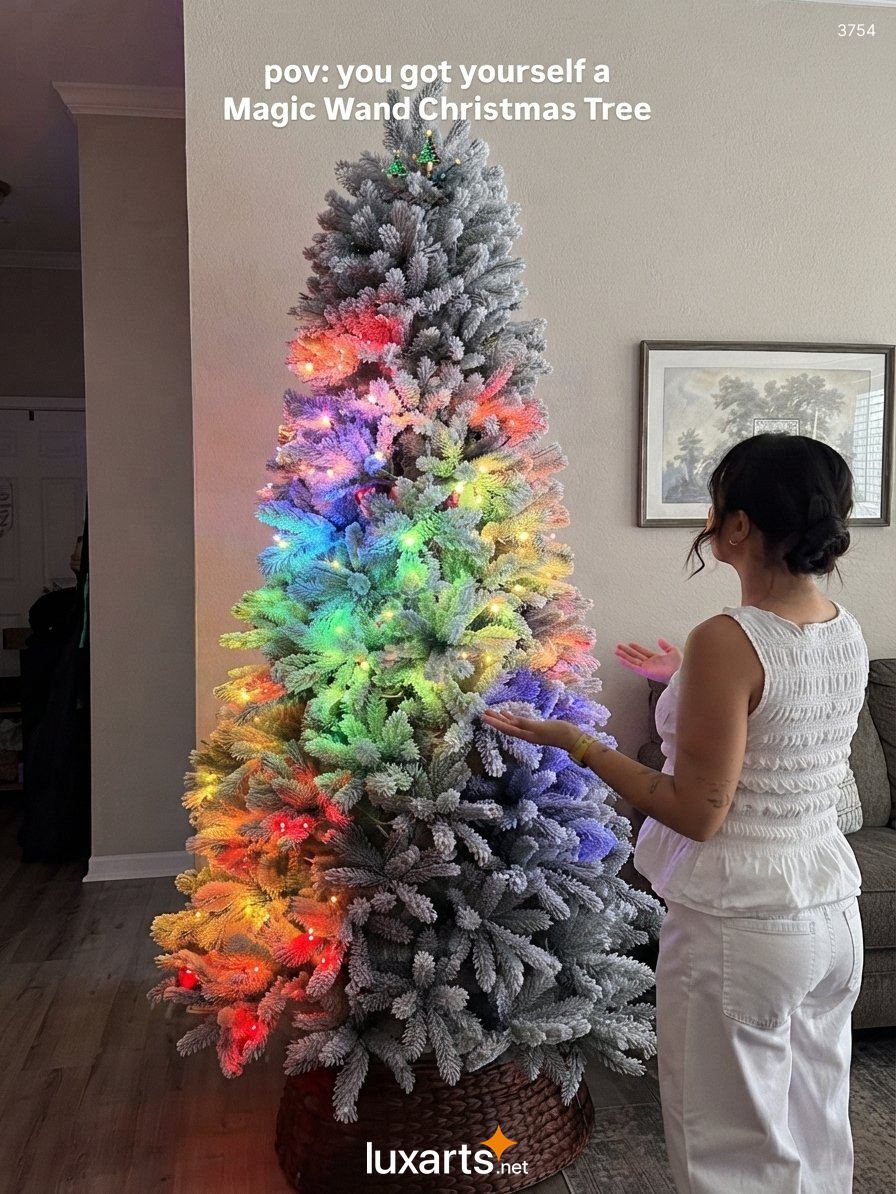
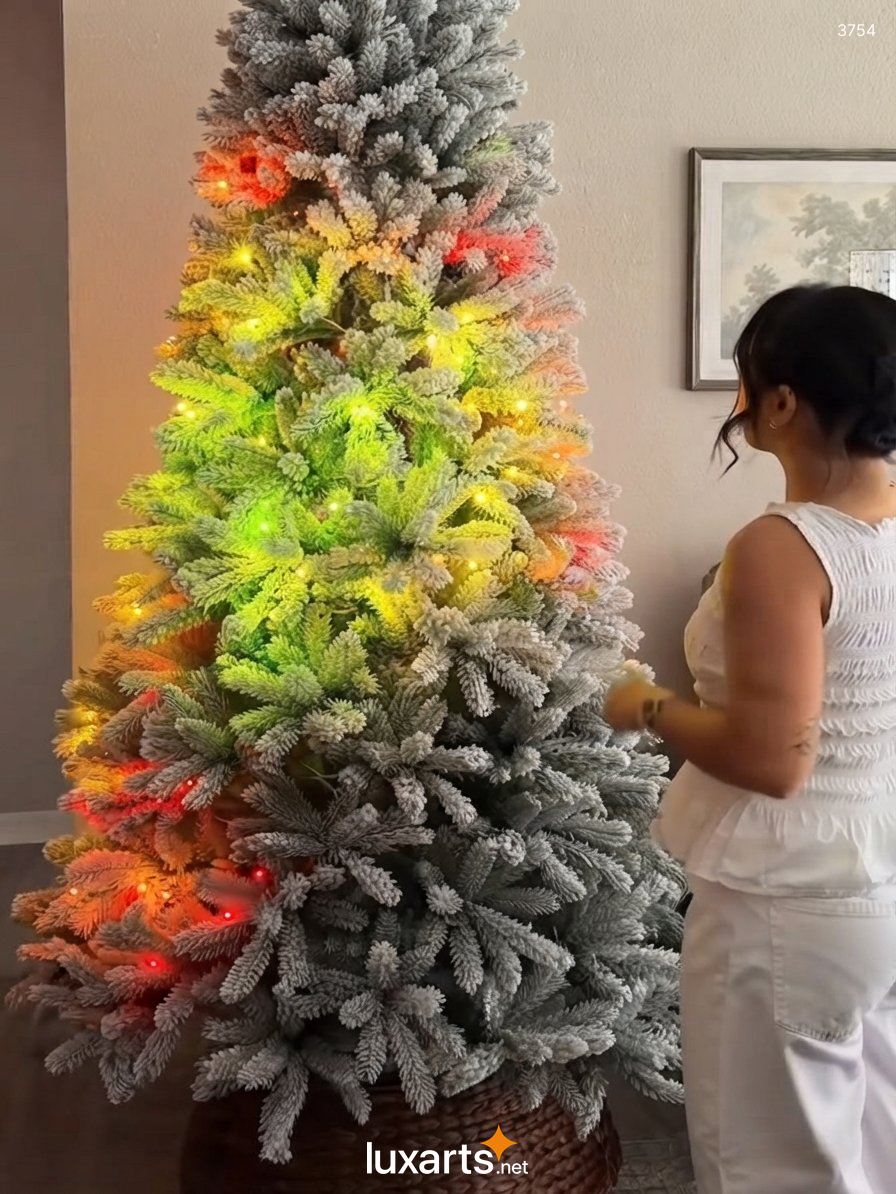
The second photo catches another moment of the same effect, with green and yellow dominating the center and red creeping in along the edges. Because the flocked tips diffuse the light, the transitions look like soft gradients rather than sharp switches from one color to the next.
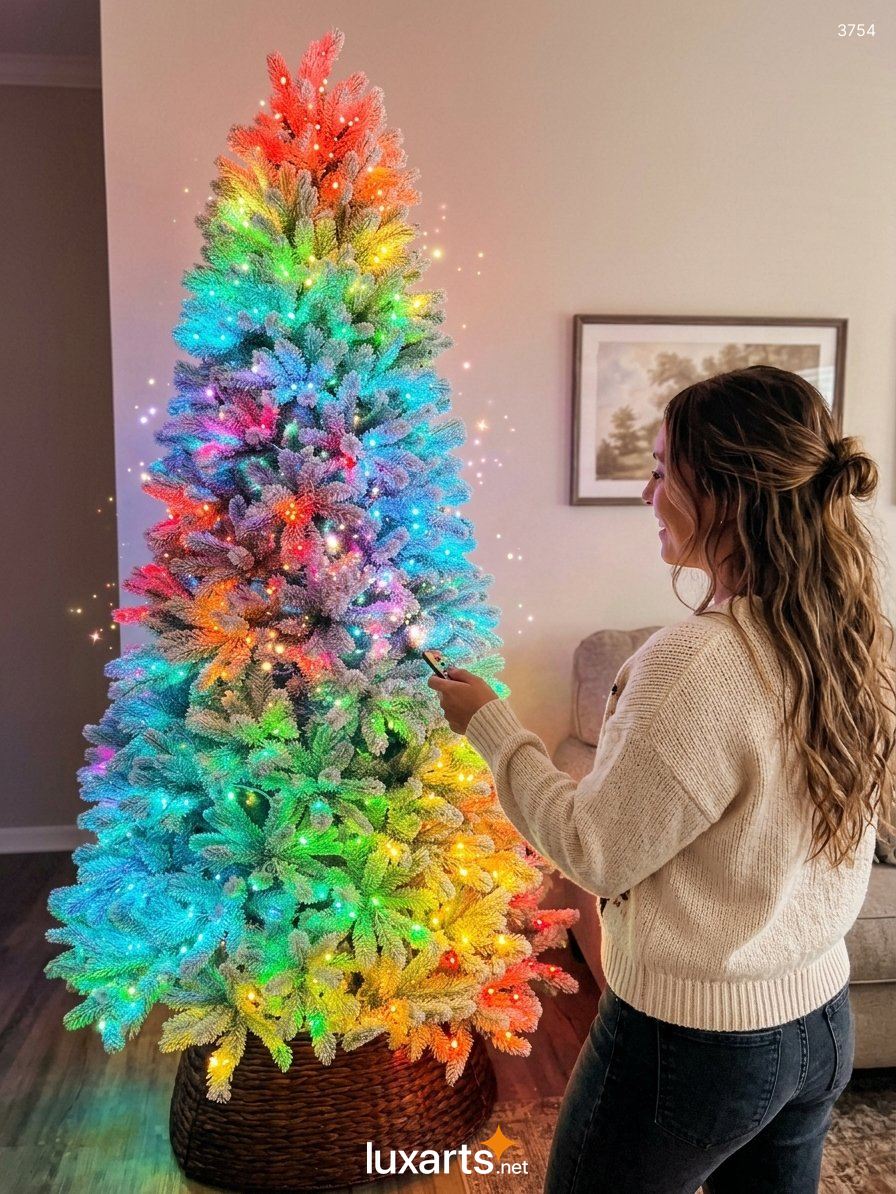
At its fullest, the effect covers the entire tree. Here the colors run from red at the very top through yellow and green, into blue and violet around the middle, then back through cyan, green, and yellow near the base. Small points of light twinkle across the surface, and the whole tree gives the room a glow that can be seen from the next doorway.
Matching the mode to the moment makes a real difference. A slow gradient suits a dinner or a quiet evening with the television on. Faster, brighter effects work well for a children’s party or a family photo session. Warm white is the right choice for late nights and for rooms where people read or sleep nearby. Having the wand in hand makes it easy to change the setting as the evening changes.
Assembly: Putting the Tree Together Section by Section
Setting up a Magic wand Christmas tree takes less effort than most people expect, mostly because the lighting work is already finished. The tree comes in stacked sections that slot into one another, starting with the bottom piece and ending at the top. It helps to unbox the sections in the room where the tree will stand, so there is no need to carry a tall, branchy piece through a doorway.

The first step is to open the metal stand and set it on a flat, level patch of floor. As the photo above shows, the bottom section drops into the center column of the stand, and its trunk should sit firmly before you let go. Tighten the stand’s bolts if the model has them, and check that the tree stands straight from a few different angles.
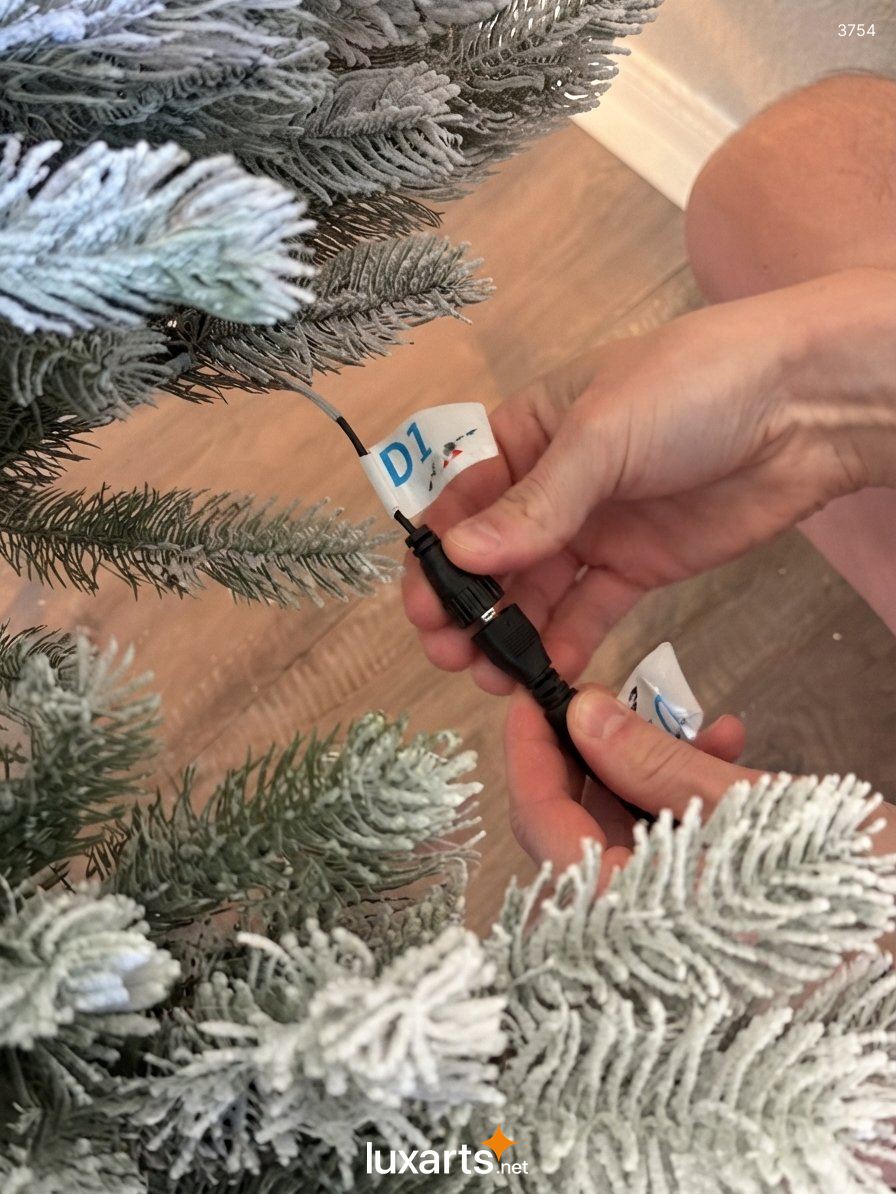
Each section carries a cable that must be joined to the next one, and this is where the small labels matter. The close-up above shows a tag marked D1 on a connector, which tells you exactly which plug belongs with which socket. Push the connectors together until they sit snugly, tighten any threaded collar by hand, and leave the labels attached for next year. Before you add the next section, plug the tree in and make sure the lights respond. Finding a loose connector at this stage takes seconds, while finding it after the whole tree is fluffed and decorated takes much longer.
Once the sections are stacked, fluff the branches from the bottom upward. Pull each tip outward, separate the small tines, and angle neighboring branches in slightly different directions so no gaps show through. Flocked tips need a light touch, so go gently and avoid tugging hard on the coated ends. Fluffing is the step that turns a tidy cone into a full, natural-looking evergreen, so it deserves a little patience.
Decorating a Flocked, Color-Changing Tree
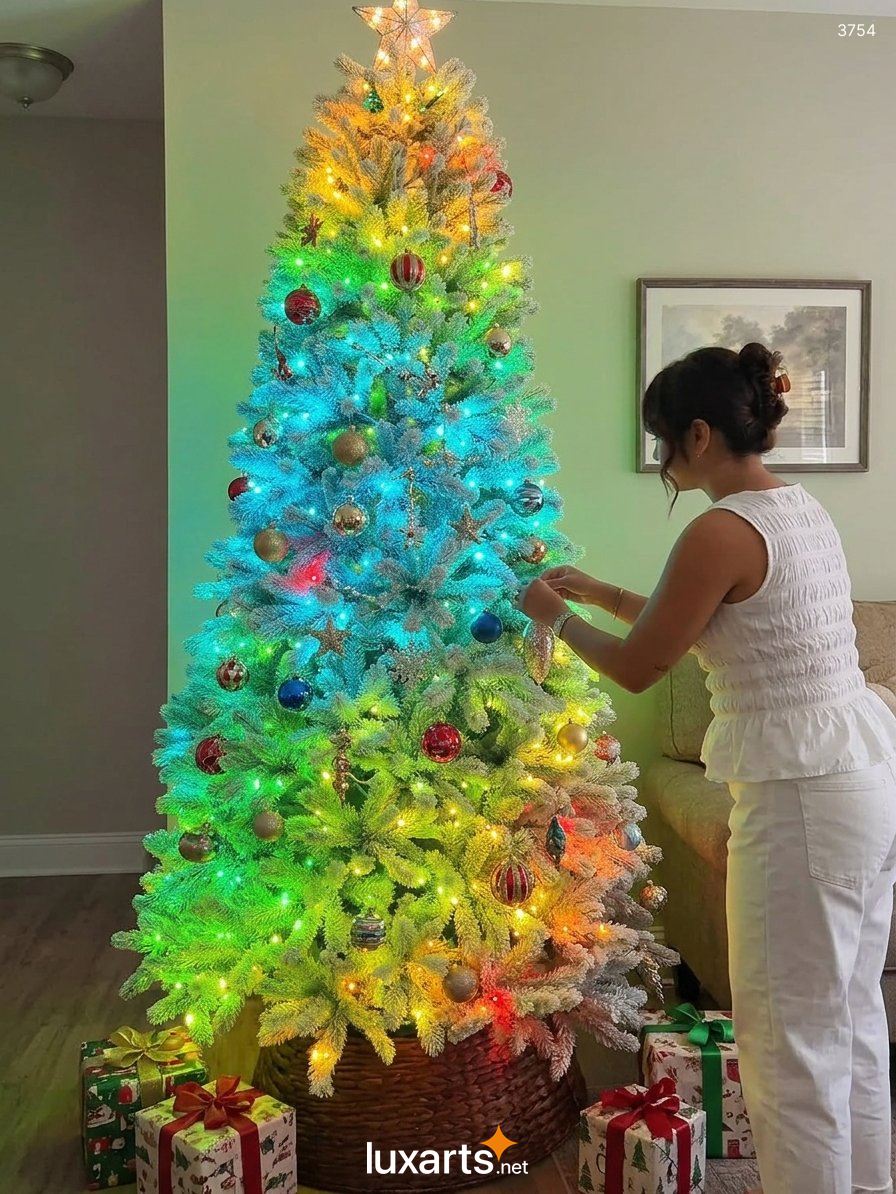
A tree that changes color asks for slightly different decorating decisions than a tree that stays one shade. The photo above shows a fully dressed example: a star topper, glass ornaments in red, gold, blue, and silver, striped baubles, and wrapped gifts with red and green ribbon at the base. The ornaments stand out clearly even while the lights shift between orange, green, and aqua.
Metallic and clear glass ornaments are the safest choices. Gold, silver, and mirrored finishes reflect whichever color is passing by, so they always look intentional. Deeply saturated ornaments behave differently. A bright red ball glows under warm light but can look nearly black under blue, so a mix of finishes keeps the tree balanced no matter which mode is running.
Place heavier ornaments close to the trunk where the branches are strongest, and use lighter pieces toward the tips so the flocked branches do not droop. Go easy on thick garland, because it can hide the lights that make the tree special. A lightweight topper is also better than a heavy one, since the top section has the thinnest branches. A woven basket or a fabric skirt around the base hides the stand and gives the gifts a natural place to sit.
Choosing the Right Spot and Keeping Things Safe
Measure the ceiling height and the floor space before you set up, and leave a gap of a few inches between the branches and the wall so you can fluff the back of the tree. Place it near an outlet to avoid long extension cords running across walkways. Keep the tree away from fireplaces, radiators, heating vents, and any other source of direct heat, since heat can damage the flocking and the wiring over time.
Check cords and connectors at the start of each season, and turn the lights off when the house is empty or when everyone has gone to bed. The wand makes this easy, because you can switch off from across the room. Position the tree where it will not be bumped by playing children or pets, and where its glow can be seen from the main seating area. The tree in these photos sits beside a sofa and a framed print, which shows how naturally it blends with everyday living room furniture.
Care and Storage Between Seasons
Taking the tree down carefully pays off the following December. Unplug it, disconnect the sections from the top down, and gently fold the branches back toward the trunk. Store each section in its original box or in a sturdy tree bag, and keep the connectors tidy, with their labels still attached. A cool, dry spot such as a closet, a space under a bed, or a garage shelf away from damp is better than an attic that swings between extreme heat and cold.
Wrap the wand separately in soft cloth and, if it takes batteries, remove them before storing it to prevent leaks. Keep the instruction sheet in the same box. When the tree comes out again, give it a few minutes to relax before fluffing, then test every section before you begin decorating.
Simple Fixes for Common Problems
If one section stays dark, the first thing to check is the connector between it and the section below. Unplug it, plug it back in firmly, and watch whether the lights return. If the wand does not respond, try fresh batteries and stand closer to the tree. If the flocking leaves small flakes on the floor, collect them with a soft brush instead of scrubbing. Branches that look flat after storage usually need nothing more than a patient round of fluffing by hand.
Who Will Enjoy This Kind of Tree Most
Families with young children tend to enjoy the wand most, because it turns the tree into an interactive centerpiece. People who host gatherings appreciate being able to change the lighting to suit the moment. Apartment dwellers like the slim shape and the fact that no extra light strands need to be stored. Anyone who has ever fought a knotted string of bulbs will understand the relief of a tree that is ready as soon as the sections are connected.
Final Thoughts
A Magic wand Christmas tree blends traditional holiday comfort with small, modern conveniences. The flocked branches deliver the snowy look people love, the built-in lights remove the most tedious part of decorating, and the wand puts control of the entire display in the palm of your hand. Whether the tree glows in soft warm white for a quiet night or sweeps through a full rainbow for a lively gathering, it adapts to the room and the people in it.
Set it up with care, test each section as you build it, choose ornaments that look good in changing light, and store everything properly when the season ends. Do that, and the tree will be a reliable centerpiece for many holidays to come.
NOTE: All images in this post are AI-generated and intended solely for inspiration. These are not real products available for sale, and we do not operate any online store or website for purchases.