Anti-Splash Full Coverage Umbrella: Staying Dry From Shoulders to Shoes on Wet City Streets
Anyone who has crossed a busy street in a downpour knows the routine. You hold a standard umbrella above your head, and within a couple of minutes your trousers are soaked below the knee, your shoes are squelching, and a passing taxi has thrown a sheet of gutter water across your coat. The umbrella did its job on top, yet the rest of you paid for it. The anti-splash full coverage umbrella was designed around exactly that frustration.
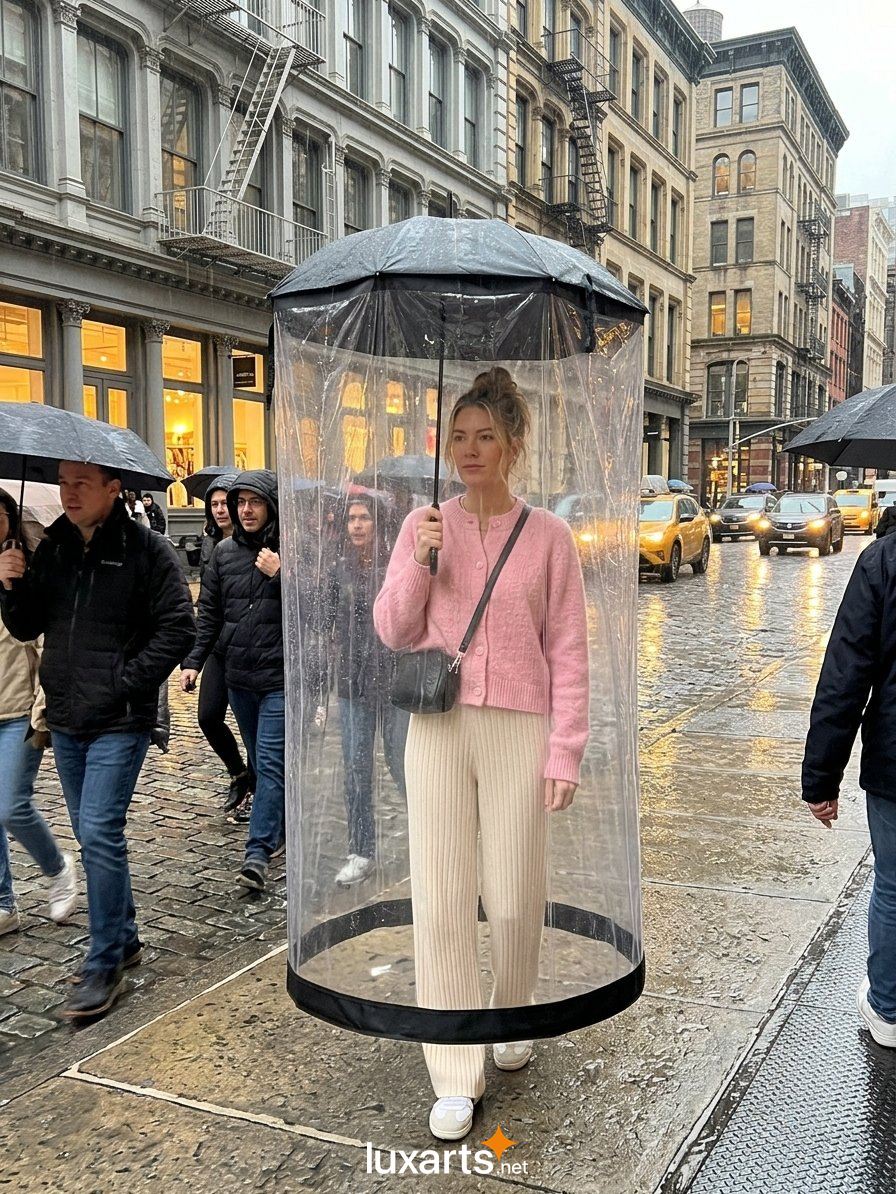
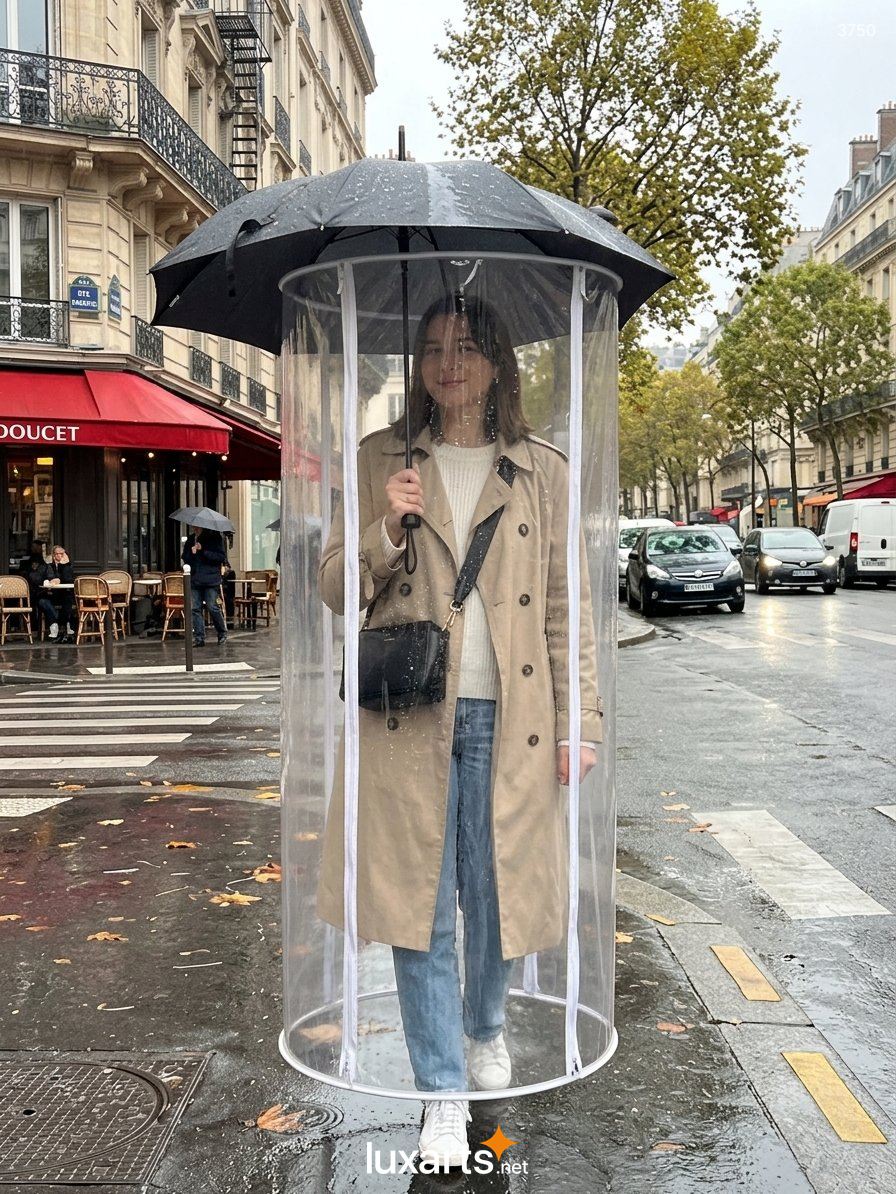
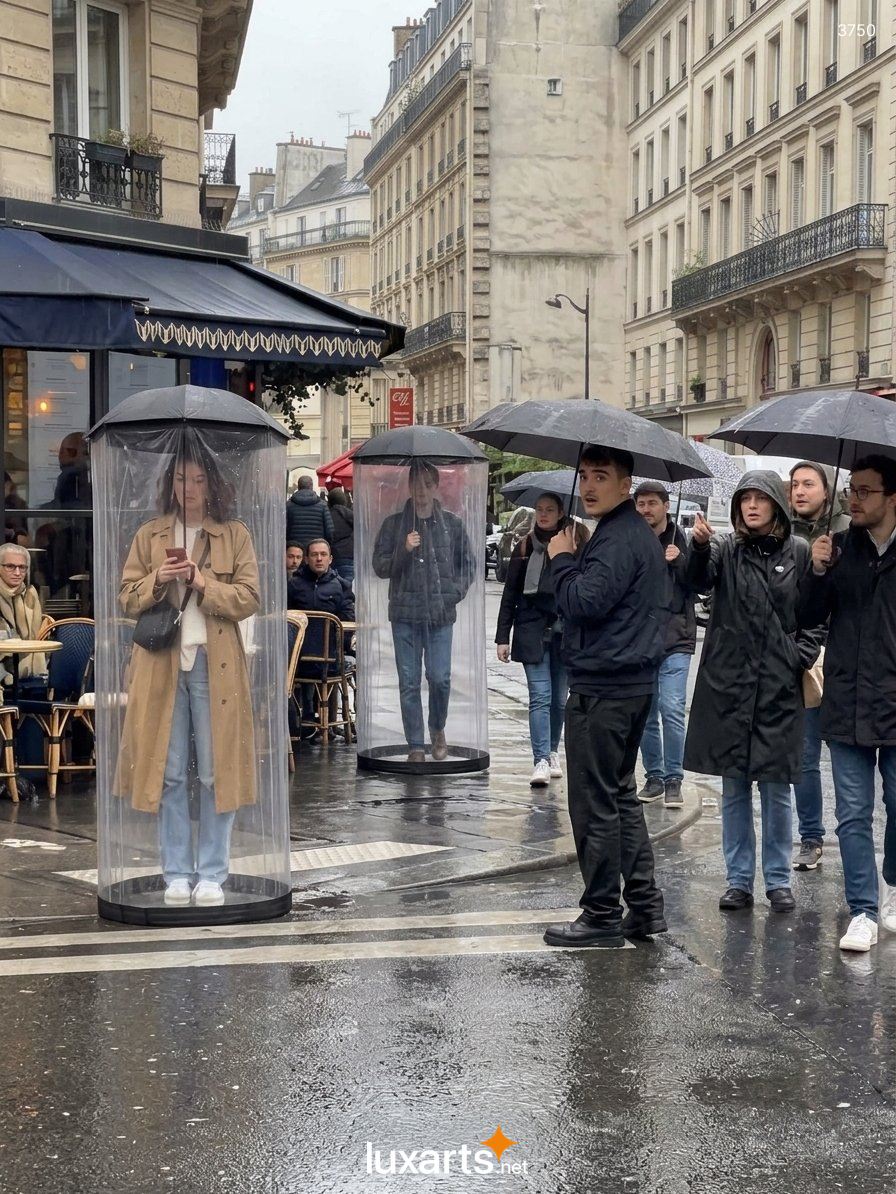
Instead of a single canopy floating over your head, this style adds a clear cylindrical wall that hangs from the canopy and wraps around your upper body. In many versions it reaches nearly to the ground. The photographs that inspired this article show the idea clearly: a black dome on top, a transparent tube below, and a person standing comfortably inside while rain runs down the outside and a crowd with ordinary umbrellas walks past. This guide explains how an anti-splash full coverage umbrella works, where it performs best, what to wear with it, and how to handle the practical side of walking inside one.
What Is an Anti-Splash Full Coverage Umbrella?
An anti-splash full coverage umbrella is a rain shelter that combines a conventional umbrella canopy with a transparent vertical shield. The canopy sits on a central shaft and handle, just like the umbrellas most people already own. Hanging from the canopy’s edge is a sheet of clear flexible plastic that forms a wide tube. At the bottom, a reinforced hem, usually finished in black fabric or a rigid ring, keeps the plastic open and stops it from flapping against your legs.
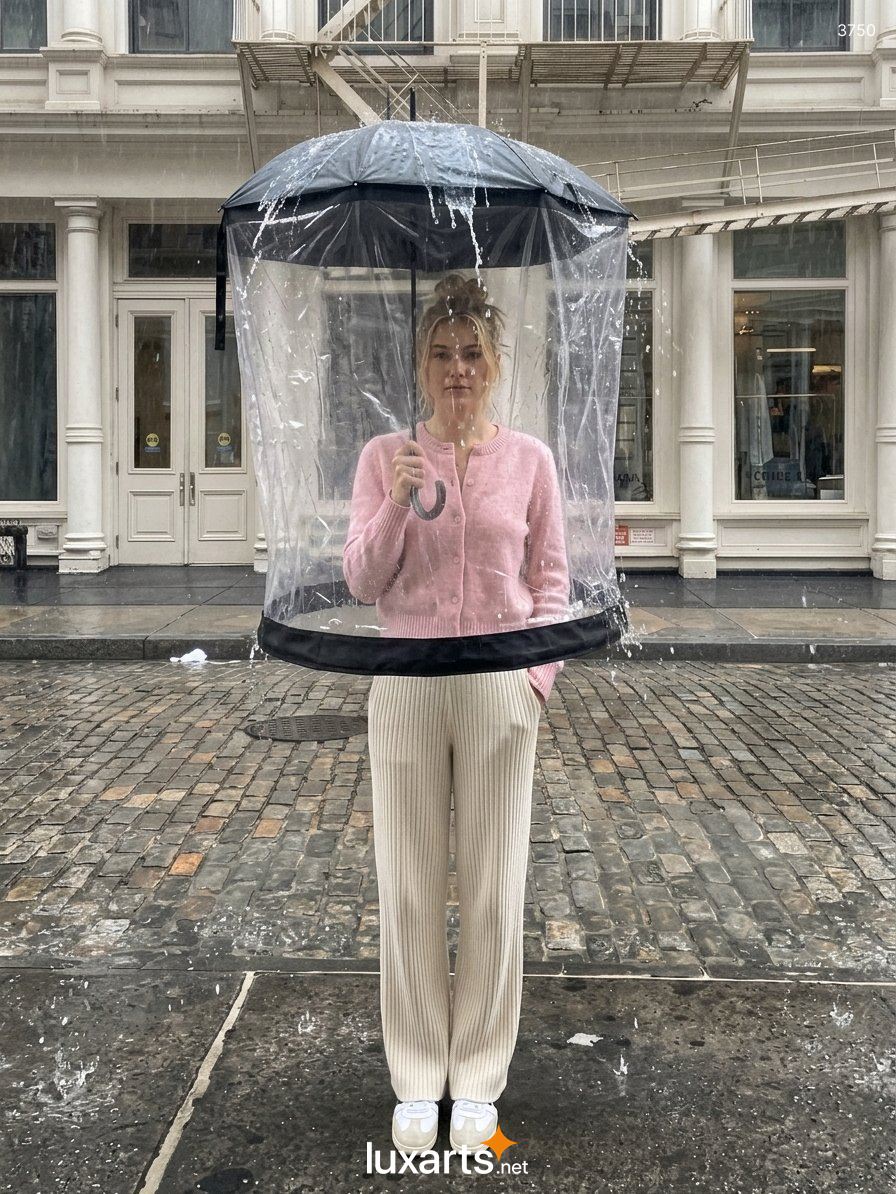
The result is closer to a portable room than a rain cover. In the images, the wearer holds the handle at chest height, the clear wall stands a comfortable distance from the body on every side, and the arms, bag, coat and trousers all remain inside the dry space. Some models, like the shorter dome style seen in one of the SoHo photographs, stop around hip level. Others run down to the ankles. What they share is the principle behind the name: the vertical wall catches the splash that a normal umbrella leaves exposed.
Why Traditional Umbrellas Leave You Wet
The Geometry Problem
A standard umbrella is a roof, and a roof only protects what sits directly beneath it. Rain rarely falls straight down in a city. It arrives at a slant, it swirls around corners between buildings, and it bounces off hard surfaces. A canopy about a metre wide protects the head and shoulders when the rain is vertical, but the moment the angle changes, the lower body becomes the target. Hems, cuffs and shoes are usually the first things to get wet and the last to dry.
Splash-Back and Passing Traffic
Splash is a separate problem from rain. Drops hitting pavement burst upward and sideways, and on a hard surface the rebound can reach well above the ankle. Add puddles at crossings, gutters running along the curb, and vehicles driving through standing water, and a pedestrian gets hit from below as well as from above. A raised canopy cannot stop any of that. A vertical wall can, because the water meets plastic instead of fabric.
Wind and Its Side Effects
Gusts add a third issue. An open canopy behaves like a sail, and wind that gets underneath can twist the frame or pull it out of your hand. A cylindrical shield changes how air moves around the body, though it brings its own handling needs, which are covered in the practical tips below.
How the Cylindrical Design Works
The Canopy
The top of the unit looks like an ordinary black umbrella, with ribs, a shaft and a handle. In the close-up photo where water streams off the dome, the runoff falls on the outside of the plastic wall rather than inside it. That detail matters. The canopy edge needs to extend slightly past the top of the clear wall so that water drips away from the dry zone instead of running down the inner surface.
The Clear Body
The wall is made of transparent flexible sheeting. Clarity matters for two reasons: the user needs to see traffic, signs and other pedestrians, and the people around the user need to see them too. Thin film is light but tends to ripple and crinkle, as seen in the shorter dome photograph. Heavier film holds its shape and looks smoother, like the more rigid cylinders in the Paris and Tokyo street scenes.
The Weighted Hem
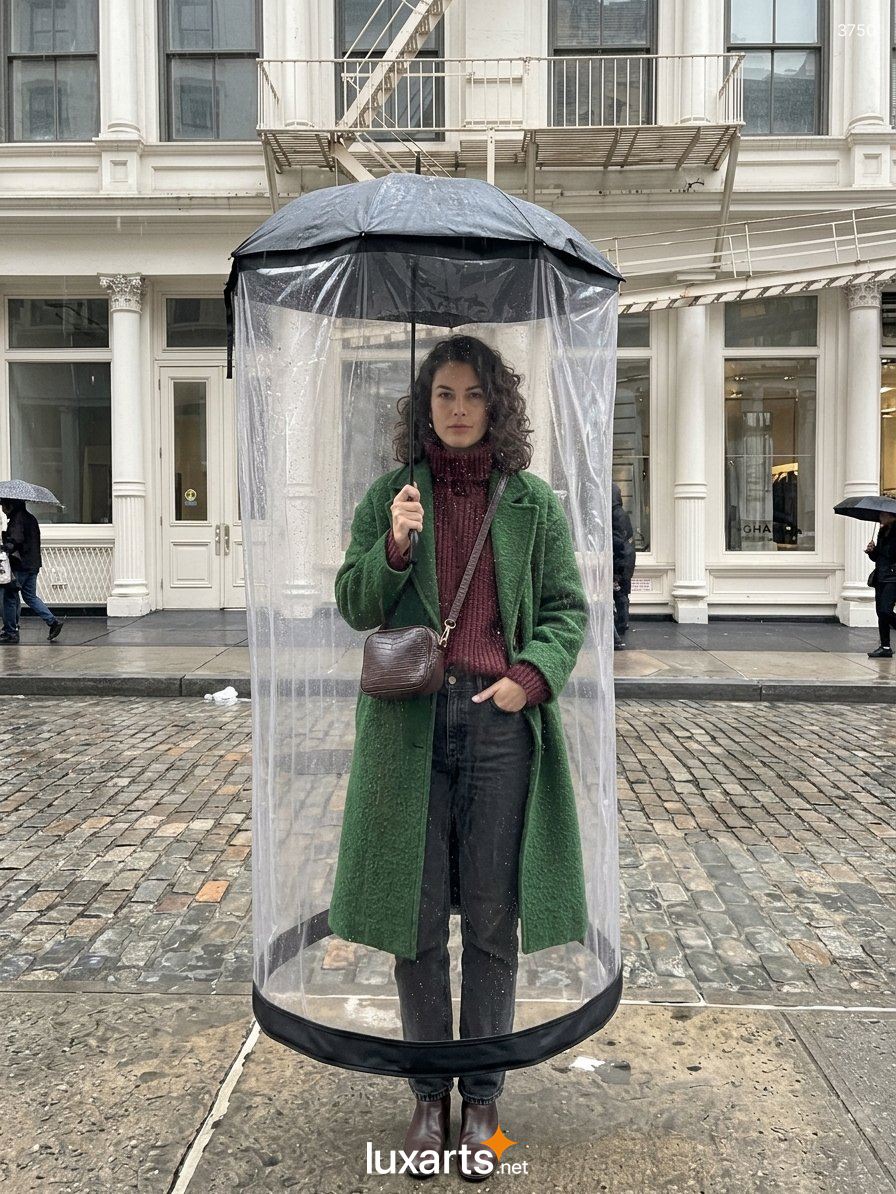
At the base, a band of black fabric or a rigid white ring keeps the wall round. This structure does real work. Without it, the clear sheet would cling to your legs in wind and collapse inward. The hem also lets the shield swing gently as you walk instead of dragging against your clothes.
Zippers and Entry Points
Several of the units in the photos show white vertical seams running the full height of the plastic, which appear to be zipper closures. An opening like that lets the user step into the cylinder or reach out without lifting the whole structure over the head. Models without a zipper are usually put on by raising the canopy and stepping underneath. That is quick, but it takes a little practice the first time.
Short Dome or Full-Length Cylinder?
Two main shapes appear in the photographs, and the right one depends on how and where you walk.
| Feature | Short Dome Style | Full-Length Cylinder |
|---|---|---|
| Coverage | Head, shoulders and torso to about hip level | Entire body down to the ankles |
| Leg protection from splash | Limited | Strong |
| Ease of walking | Easier, with a free stride | Needs a slightly shorter, steadier step |
| Handling in crowds | Narrower footprint | Wider, takes more space |
| Best suited to | Light rain, short trips, commuting on foot | Heavy rain, standing at crossings, long waits outdoors |
The dome style is the better pick when you want protection for your upper body and bag but still need freedom of movement. The full-length cylinder is the stronger answer to puddles and traffic spray, because nothing below the canopy is left unprotected. Both rely on the same idea, and both keep you much drier than a canopy alone.
Seeing and Being Seen Inside a Clear Shield
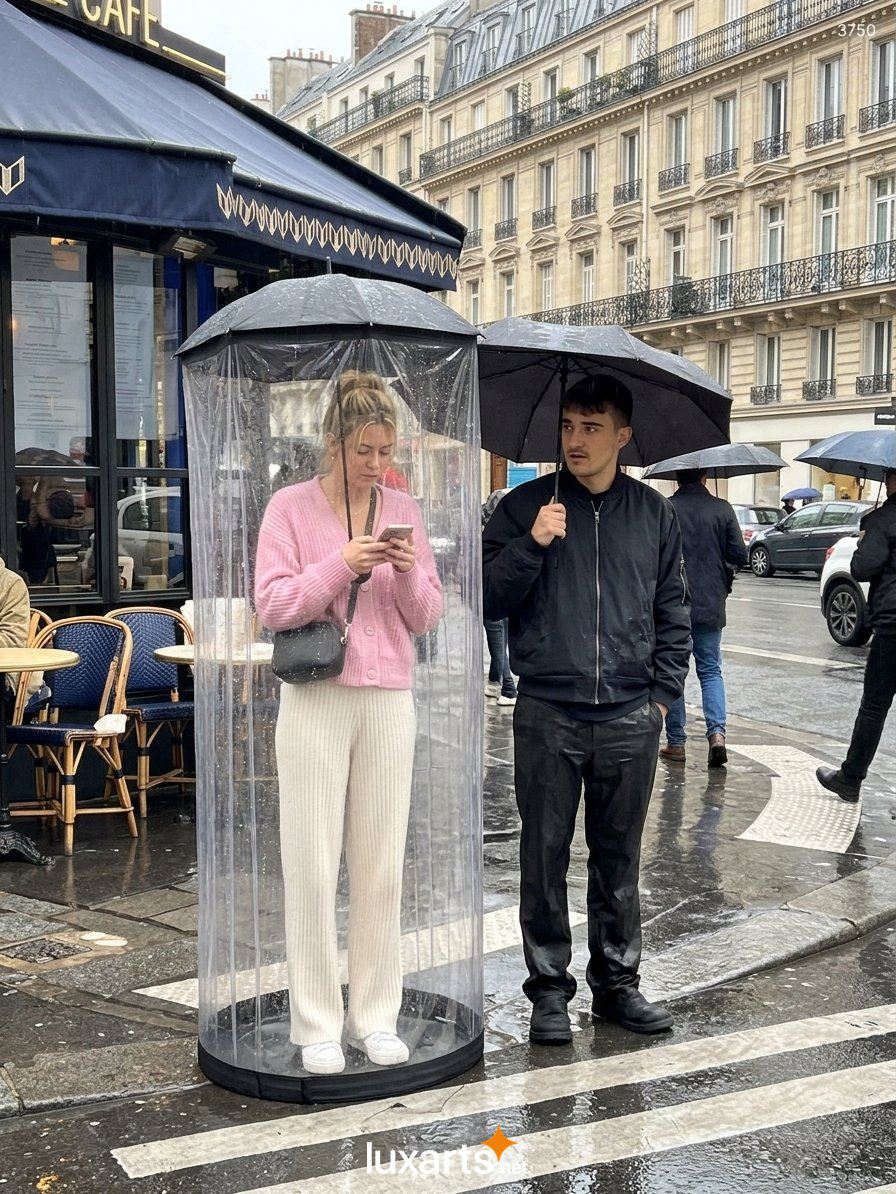
The first question most people ask about a clear cylinder is whether it feels enclosed. The photographs suggest the opposite. Faces are fully visible, and so are expressions, posture and gestures. One image shows a person checking a phone inside the cylinder at a café corner, and the screen, hands and bag all sit within easy reach. Another shows a person standing quietly beside a woman with a regular umbrella, and neither seems cramped.
Visibility also supports safety. A bright coat or cardigan reads clearly through the plastic, which helps drivers and cyclists notice you in low light. Raindrops on the outer surface scatter light, but the center of the wall usually stays readable. Cleaning the inside of the plastic with a soft cloth before a long walk helps if your breath or body heat has fogged it.
Where It Works Best: Scenes From Three Cities
Cobblestone Streets in New York
Uneven stone paving is a good test for any rain gear. Water collects in the gaps between cobbles, and every footstep can launch a small spray upward. In the SoHo photographs, the cylinder keeps trousers and shoes protected even while the street surface shines with standing water. Wide, flat sidewalks in front of tall cast-iron buildings give the shield room to move without brushing doorways.
Neon-Lit Tokyo Sidewalks
Tokyo’s narrow shopping streets are crowded, and nearly everyone carries an umbrella. The Tokyo image shows how a wide cylinder fits into that rhythm: the wearer stands in the open space near a curb, with vending signs and shopfronts glowing behind the plastic. Clear material lets the colors of the street pass through, so the surroundings are still visible instead of being hidden behind an opaque wall.
Parisian Boulevards and Café Corners
The Paris photographs show the most dramatic use. One scene has two cylinders on the same corner, side by side with a café terrace, while onlookers with traditional umbrellas pause to watch. Paris has frequent drizzle, long walks between metro stops, and plenty of café seating where you may want to stop. A full-length shield lets you pause at a crossing or wait for a friend without worrying about wet cuffs.
What to Wear Underneath
The clear wall changes how you think about rainy-day outfits. With a normal umbrella, you dress for the worst case: water-resistant shoes, dark trousers that hide splashes, a coat with a hood. Inside a full-length cylinder, the weather barely touches you, so clothing choices open up.
The photographs show a range of options that would struggle in rain without a shield:
- Soft knitwear. A pink cardigan and a ribbed turtleneck stay fluffy and dry, since wool and similar fibers hold moisture for a long time once wet.
- Light-colored trousers. Cream, ribbed wide-leg pants look clean at the end of a walk because no street water reaches them.
- Classic outerwear. A beige trench coat or a green wool coat keeps its shape and color without dark rain spots.
- Everyday footwear. White sneakers and leather boots stay protected from puddles, which is rare in a downpour.
- Crossbody bags. Leather and suede-style bags are safe inside the dry zone, with no need for a separate rain cover.
Keep in mind that the plastic wall adds a little extra warmth by blocking wind, so layers that feel right in the open air may feel slightly warmer inside. A removable layer, such as a cardigan or light coat, handles that well.
Practical Tips for Walking Inside One
Moving with a cylinder around you is different from carrying a handheld umbrella. A few habits make the experience smooth from the first walk.
- Shorten your stride. A slightly smaller step keeps the hem from catching on your knees or shoes, particularly with a full-length model.
- Hold the handle close to your chest. The canopy stays balanced, and the wall hangs evenly on all sides.
- Look ahead for doorways. Standard door frames are narrower than the shield, so plan to step out, close the unit, or turn sideways.
- Give other people room. The shape is wider than a normal umbrella, so crowded sidewalks need a bit more patience and space.
- Take care at curbs and stairs. The lower edge hides your feet from view for people nearby, and you may not see the edge of a step clearly through water droplets. Slow down, and lift the hem slightly if needed.
- Face into strong wind carefully. A large wall can catch gusts, so angle your body slightly and keep a firm grip on the handle. In severe storms, shelter instead of walking.
- Allow airflow. If the model has zippers, open the bottom a few centimetres in mild weather to reduce fogging and heat build-up.
Care, Cleaning and Storage
Clear plastic needs gentle handling. After use, shake the canopy outward, then let the unit air dry fully before folding. Trapped moisture can leave cloudy marks or a musty smell on the inside of the wall. For dirt and street grime, wipe the surface with a soft cloth and mild soapy water, and avoid abrasive pads or harsh solvents that can scratch or haze the film.
Store the umbrella loosely, away from heat and direct sunlight, which can make plastic brittle over time. Sharp creases are the main enemy of clarity, so fold along the same lines each time and avoid pressing heavy objects on top. Check zippers and seams occasionally, and wipe a little dirt from the teeth so they continue to slide easily.
Frequently Asked Questions
Does an anti-splash full coverage umbrella work in strong wind?
It performs best in rain with light to moderate wind. The wall is a larger surface than a normal canopy, so strong gusts can push it. Follow the maker’s guidance and move to proper shelter in storms.
Can I use my phone inside the cylinder?
Yes. As one of the street photos shows, a phone sits comfortably within the dry space, and there is room to hold it at chest height while standing still. Keep an eye on your surroundings when walking.
Is it comfortable for long periods?
Most people find it comfortable for walks and waits, as long as there is some airflow. In warm humid weather, partially opening a zipper helps prevent fogging and heat.
Is it suitable for crowded areas?
It works well on wide sidewalks, plazas and café corners. In very tight spaces, a short dome model or a handheld umbrella may be easier to manage.
Does the clear material affect how I see the street?
Droplets can blur the view slightly, but the overall visibility is good. Wiping the inside before you go keeps the picture clear.
Final Thoughts
The anti-splash full coverage umbrella answers a problem that regular umbrellas have never solved: rain does not only come from above. Water rises from puddles, sprays from tires, and blows in from the side. By adding a clear cylindrical wall to a familiar canopy, this design protects the parts of the body that usually take the hit, and it does so without hiding the wearer from the world around them.
The photographs from New York, Tokyo and Paris show how naturally the idea fits into real streets. People wear knitwear, trench coats and light-colored trousers inside it, check their phones, wait at crossings, and stand next to friends with ordinary umbrellas. Choose the dome style for freedom of movement or the full-length cylinder for the strongest splash protection, learn a few habits for walking inside it, and rainy days become much easier to enjoy.
NOTE: All images in this post are AI-generated and intended solely for inspiration. These are not real products available for sale, and we do not operate any online store or website for purchases.