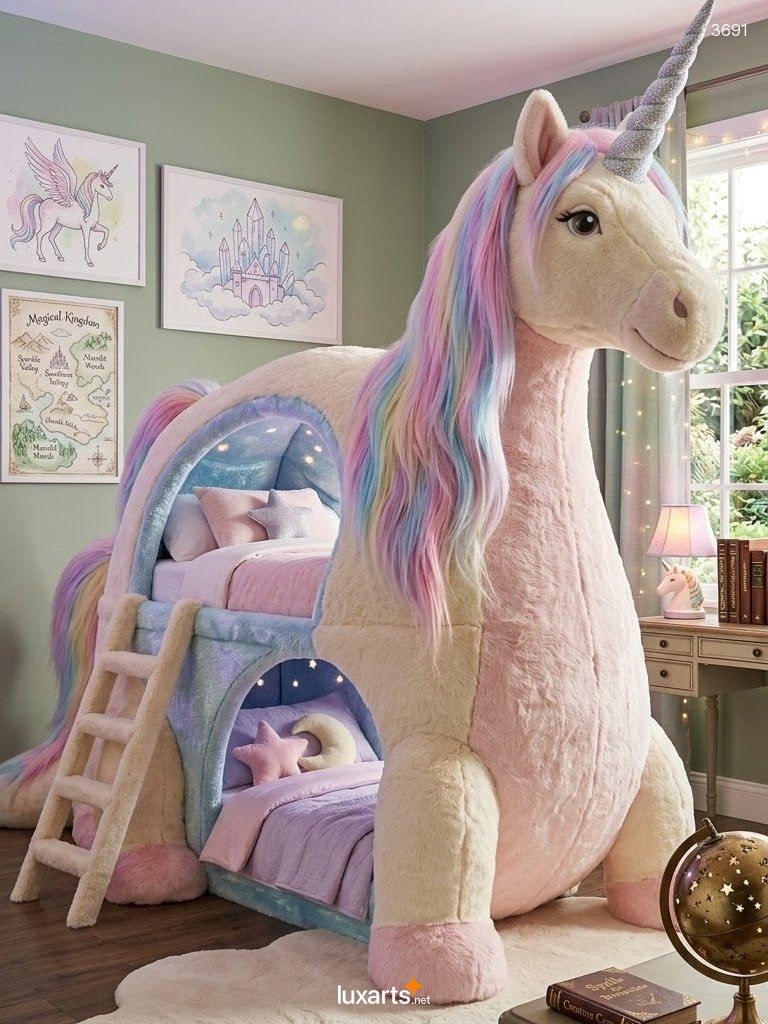
A bedroom for a young child is rarely just a place to sleep. It’s a stage for pretend games, a quiet corner for storytime, and often the first room a kid feels is truly theirs. A unicorn bunk bed changes the entire feel of that space by turning ordinary furniture into a character. Instead of a plain wooden frame tucked against the wall, the bed itself becomes a giant plush creature with a flowing mane, a soft muzzle, and a horn that catches the light. Children don’t just climb into bed at night — they climb into a small world built specifically for them.
A Furniture Piece Built Around a Story
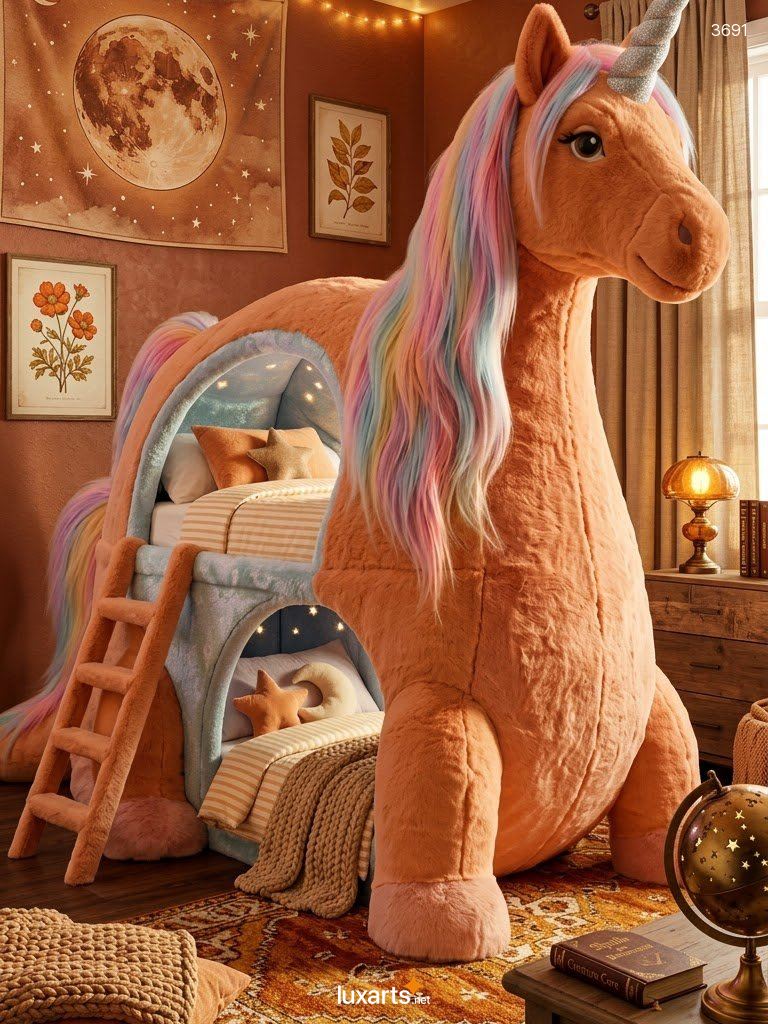
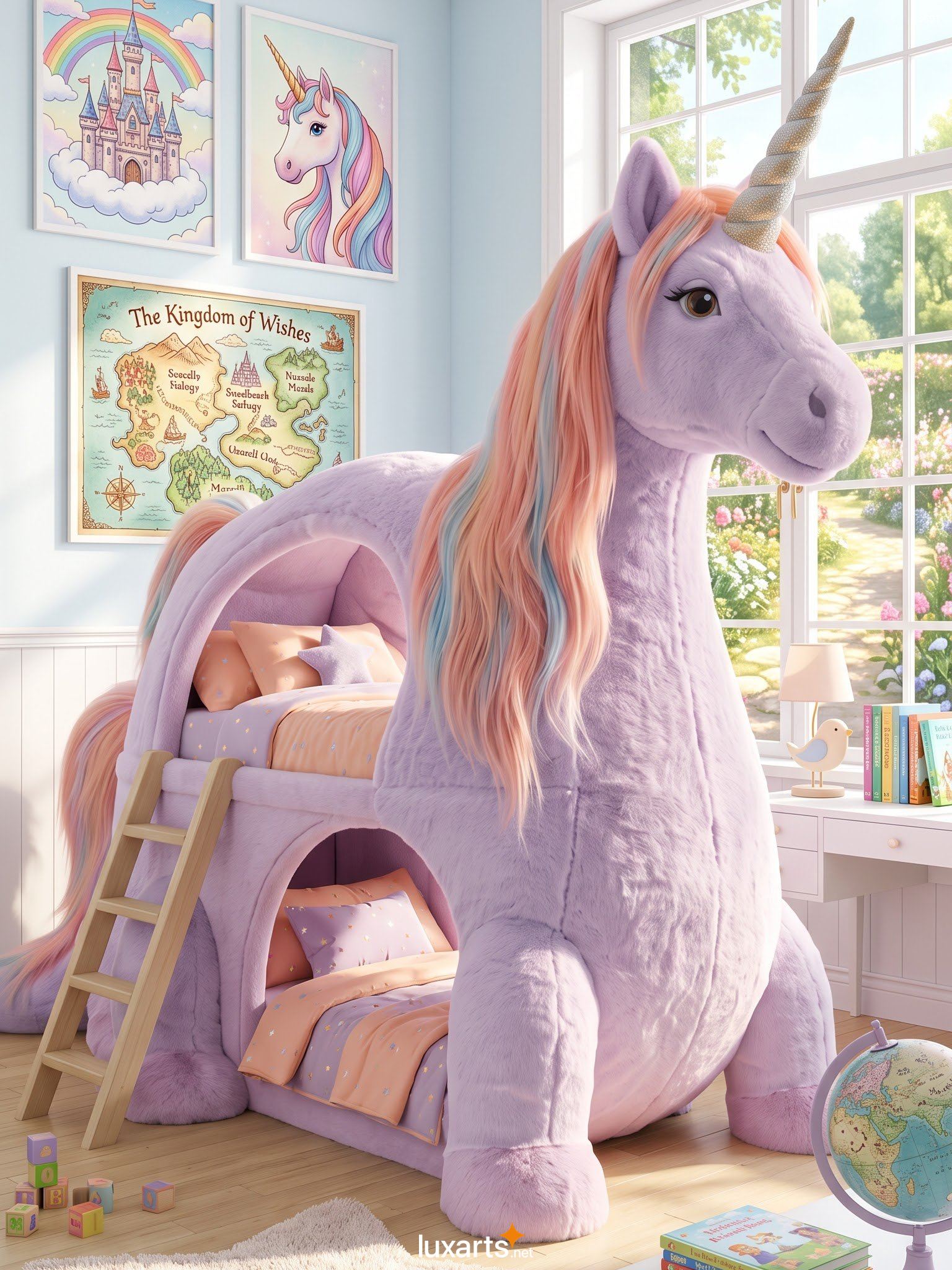
Most bunk beds are designed around function first: two mattresses, a ladder, a safety rail. A unicorn bunk bed starts from a different question — what if the bed frame looked like it belonged in the same story as the child sleeping in it? The body of the unicorn wraps around the bunk structure, with its legs planted on the floor and its head raised as though it just walked into the room. The lower bunk sits inside the unicorn’s belly like a den, framed by an arched opening that looks almost like the entrance to a cave. The upper bunk rests along its back, tucked beneath a curved canopy shaped from the same soft material as the body.
This kind of storytelling detail is what separates a themed bed from a themed bedspread. A poster or a printed comforter references a character; a unicorn bunk bed becomes one. The mane runs down the neck and along the spine in long layered strands, usually blended from two or three pastel tones so it moves like real hair rather than a flat printed pattern. Small touches — a stitched brow line above the eyes, a rounded muzzle, a spiral horn wrapped in glittering fabric — keep the design from feeling cartoonish and give it a slightly more lifelike, gentle expression.
Two Cozy Nooks Instead of One Ordinary Bunk
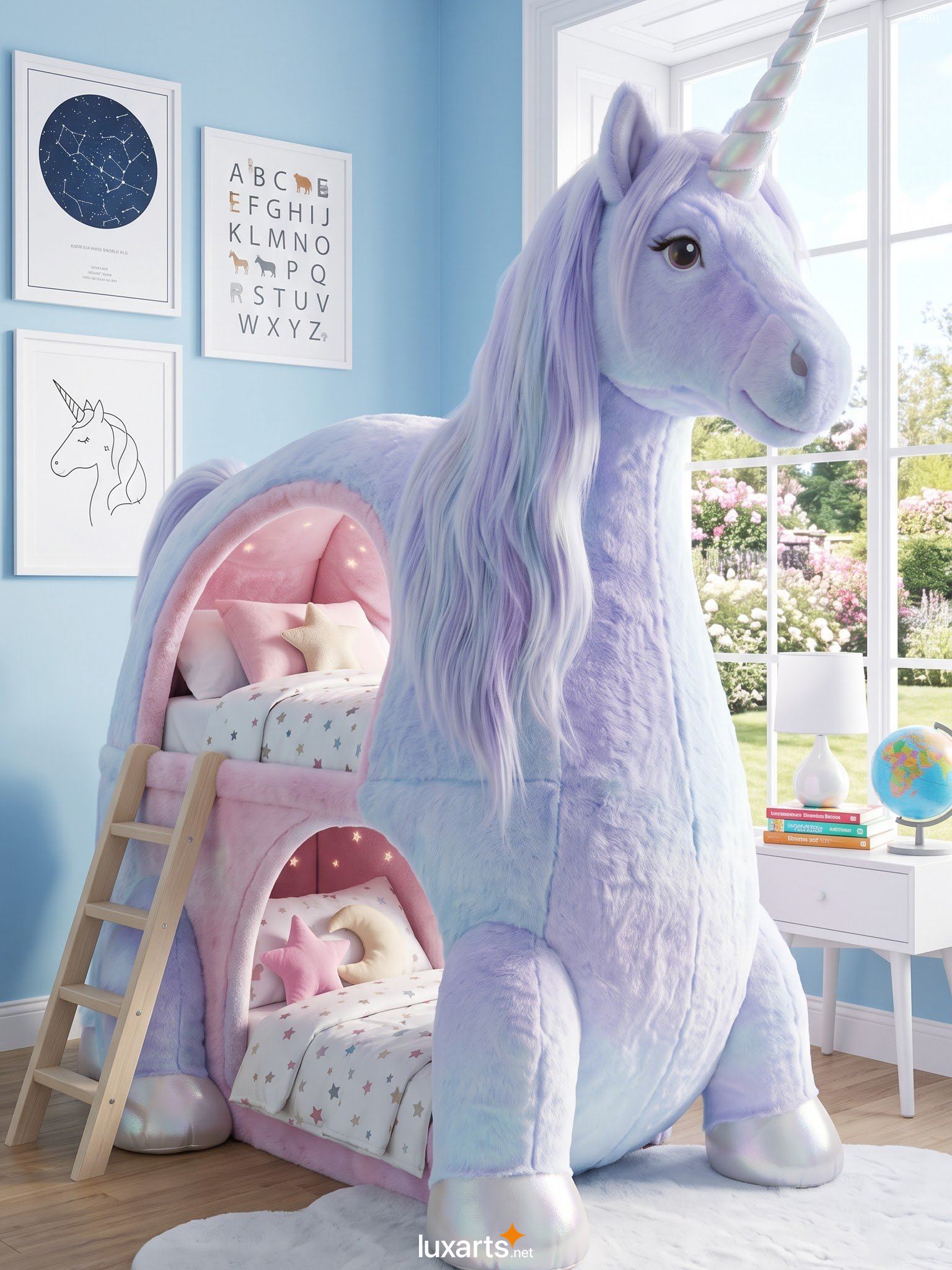
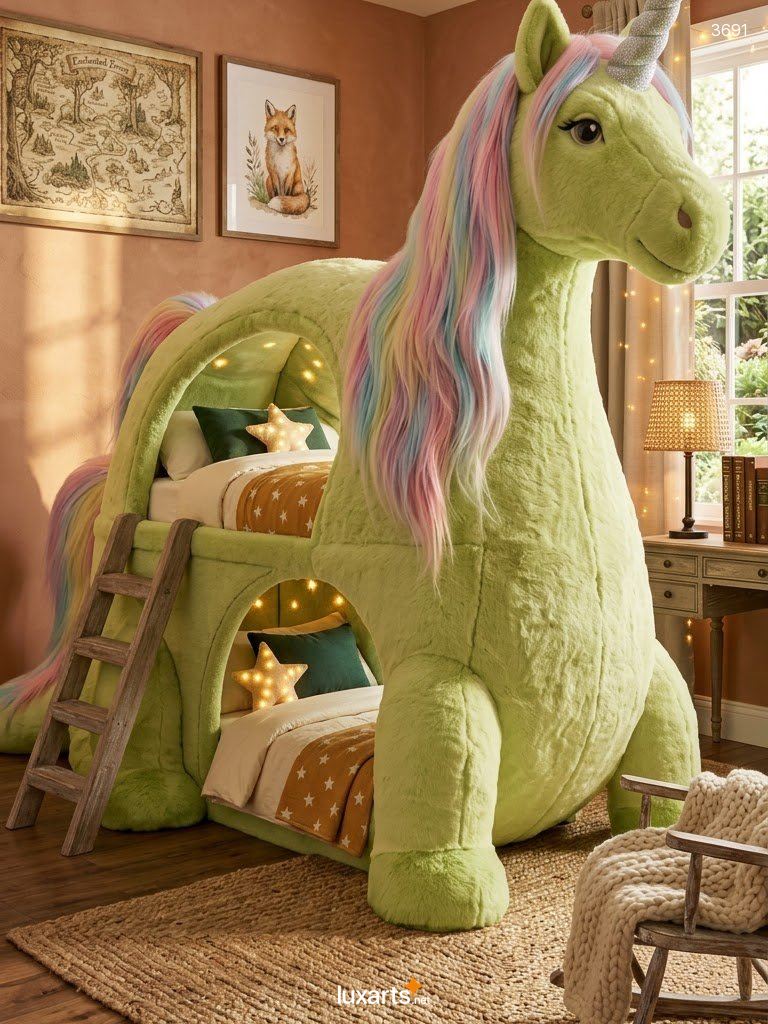
The sleeping areas themselves are designed as much for daytime play as for nighttime rest. The lower bunk sits inside an enclosed nook, shaped like a small cave or tent, which gives a child a sense of privacy that a standard open bunk doesn’t offer. Star-shaped and moon-shaped throw pillows are common inside these nooks, paired with printed sheets in soft dot or rainbow patterns. Strings of warm LED lights are often tucked along the inside curve of the arch, so the space glows gently rather than staying dark once the main light is off.
The upper bunk keeps the same soft canopy shape but sits higher, reached by a short ladder built from wood or a padded, fur-wrapped rail that matches the unicorn’s coat. Climbing up to the top bunk becomes part of the appeal rather than a chore, since the ladder itself is part of the character’s design rather than a plain metal frame. For families with two children sharing a room, this setup gives each child their own defined space — one nestled low inside the cave-like nook, the other tucked higher under the glowing canopy — without needing two separate beds taking up floor space.
A Mane and Coat in Every Color Palette
One of the more interesting aspects of this design is how differently it reads depending on the color chosen for the body. A lavender-toned unicorn bunk bed paired with peach bedding gives a room a soft, dreamy quality, especially next to pale blue walls and framed prints of rainbows and castles. A mint green version with lilac hooves and a pastel rainbow mane feels a little more playful, and pairs naturally with peach or blush wallpaper dotted with stars and moons.
Warmer tones tell a different story. A terracotta or soft apricot coat set against a rust-colored wall, layered with botanical prints and a moon tapestry, gives the same furniture piece an autumn cabin feel rather than a candy-colored one. A pale butter-yellow version works well in a room built around vintage storybook maps and antique-style furniture, while a deep red or burgundy coat threaded with fairy lights through a rainbow mane creates a bolder, jewel-toned look suited to a room with richer wall colors and patterned rugs. Across every color option, the rainbow-streaked mane — usually a mix of blue, pink, peach, and lavender strands — acts as a common thread, tying the piece back to whatever unicorn or fantasy artwork already hangs on the walls.
Why This Design Works So Well for Children
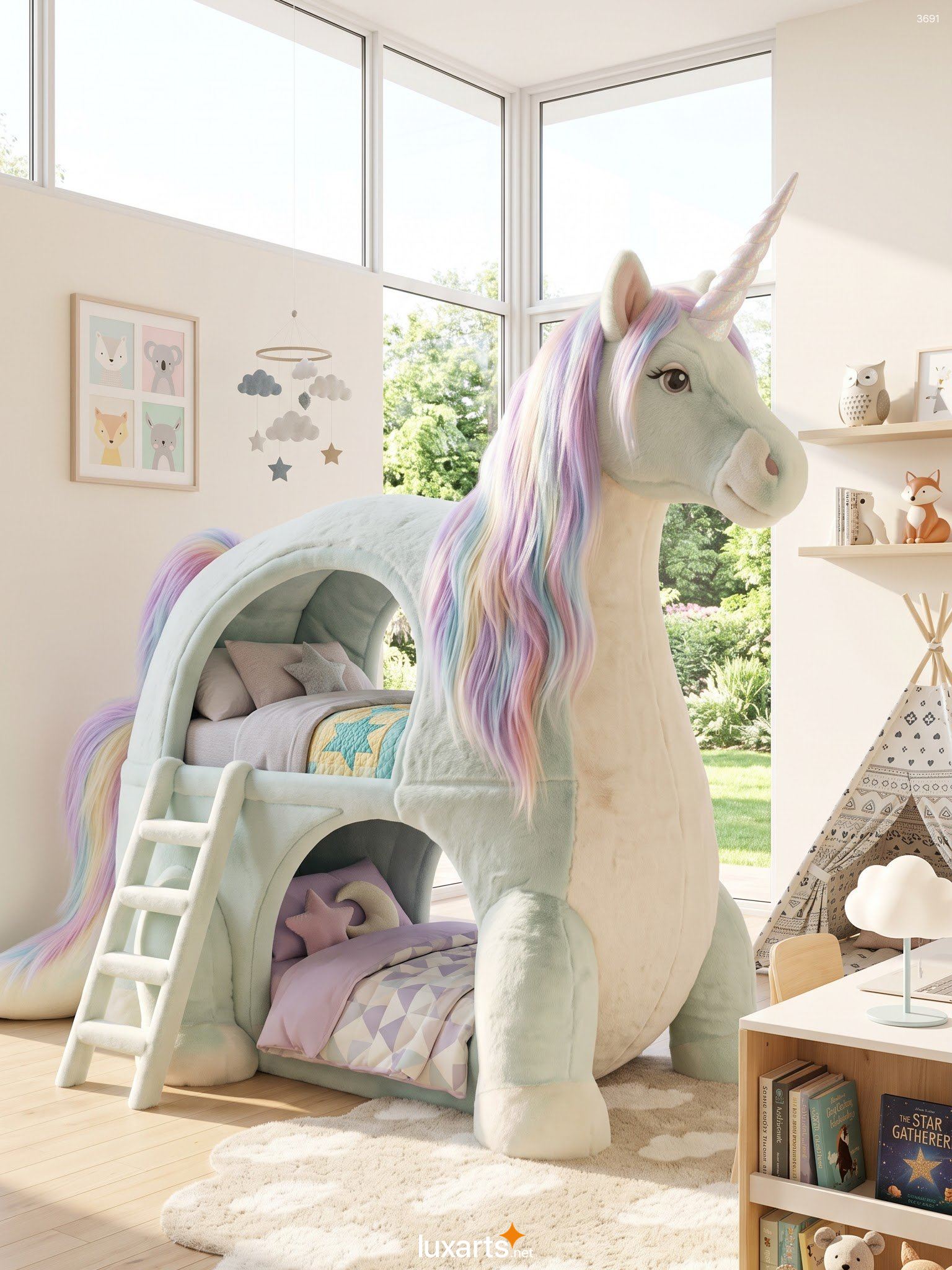
Beyond how it looks, a unicorn bunk bed changes daily routines in small but meaningful ways. Bedtime becomes something a child looks forward to rather than resists, since climbing into a “unicorn’s cave” carries more appeal than simply going to bed. The enclosed lower bunk also doubles as a reading nook or a quiet retreat during the day — somewhere to sit with a book, a stuffed animal, or a favorite toy without needing a separate chair or tent in the room.
The ladder and raised upper bunk give slightly older children a sense of independence, since climbing up on their own becomes part of a nightly ritual rather than something they need help with each time. Because the character itself functions as the main visual anchor of the room, parents often need far fewer additional decorations to make the space feel finished — a few coordinating pillows, a rug, and one or two wall prints usually round out the look without cluttering the room with mismatched themed items.
Making the Most of Small or Shared Bedrooms
Because the sleeping surfaces are stacked rather than placed side by side, a unicorn bunk bed uses considerably less floor space than two twin beds would. This makes it a practical option for smaller bedrooms where floor space is needed for a desk, toy storage, or simply room to play. In shared sibling rooms, the two distinct nooks give each child a bed that feels personal, even though both are built into the same structure.
The design also works outside a child’s main bedroom. A guest room used mainly by visiting grandchildren, a playroom with a designated nap corner, or a finished basement space set up for sleepovers can all make use of the layout. Because the color options range from soft pastels to deeper jewel tones and warm neutrals, a unicorn bunk bed can be matched to rooms with very different existing color schemes — a woodland-themed room with botanical prints, a fairytale-map room with vintage-style furniture, or a bright, airy room built around rainbow and cloud motifs.
Everyday Care to Keep the Coat Looking Fresh
Because a unicorn bunk bed is covered in plush faux fur across most of its frame, it needs a slightly different care routine than a standard wood or metal bunk. Running a vacuum with a soft brush attachment over the coat every week or two helps lift dust and lint out of the fur before it builds up. Spot cleaning is the safest approach for small stains — a cloth dampened with mild soap and water, worked gently into the area and blotted rather than rubbed, usually lifts most marks without soaking the fur or the padding underneath.
The mane and tail benefit from an occasional gentle combing with a wide-tooth comb or a soft brush, which keeps the long strands from tangling or matting the way real hair can. Any LED light strings built into the nook should be checked periodically — battery compartments and connection points are worth a quick look every few months, and cords should be kept away from little hands pulling at them directly. Bedding, sheets, and removable pillow covers can typically be washed on their own following the care label, while the plush body itself is better off air-dried away from direct heat sources such as radiators or heaters, which can affect both the fur texture and the color over time.
Small Styling Touches That Complete the Room
A few simple additions round out the look without overwhelming the space. Star and moon-shaped pillows tucked into each nook echo the shapes already worked into the LED lighting and printed bedding. A soft area rug placed at the base of the ladder gives a warmer landing spot for bare feet first thing in the morning. Framed prints — fantasy maps, storybook illustrations, or simple rainbow and castle artwork — placed on the wall behind or beside the bed extend the same visual world the unicorn already sets up.
A small reading lamp nearby, wooden toy storage, or a globe on a side table add function without pulling attention away from the bed itself. Curtains in a coordinating tone, rather than a competing pattern, usually keep the room feeling calm rather than busy, letting the shape of the unicorn bunk bed remain the clear focal point of the space.
A Bed That Becomes Part of the Story
What makes a unicorn bunk bed stand out isn’t a single feature — it’s the way the shape, the color, the lighting, and the sleeping nooks work together as one connected idea rather than separate decorations layered on top of ordinary furniture. A child doesn’t just have a themed room; they have a bed that looks back at them, a cave to hide inside, and a story that keeps going every time the lights are turned off for the night.
NOTE: All images in this post are AI-generated and intended solely for inspiration. These are not real products available for sale, and we do not operate any online store or website for purchases.