Novelty Sofa Designs That Turn Your Living Room Into a Fantasy Zone
Most living rooms follow the same script: a gray sectional, a coffee table, a television on the wall. It works, and it is also easy to forget. A novelty sofa rewrites that script the moment a guest walks through the door. Instead of a plain block of upholstery, you get a crocodile curled around the rug, a dragon sleeping beside the window, or a caterpillar so long that the whole family fits along its back.
This article explains how these designs work, why they pull people in, and how to build a room around one without the space turning chaotic. We will look at creature-shaped sectionals, cartoon-inspired pieces, the construction details that separate a clever idea from a comfortable one, and the styling choices that make a living room feel like a story instead of a staged photo.
What Exactly Is a Novelty Sofa?
A novelty sofa is a seating piece whose shape, color, or theme comes from somewhere other than traditional furniture design. Instead of the usual rectangle with two arms and a straight back, it borrows the body of an animal, a mythical creature, or a cartoon character and turns that body into a place to sit. The head becomes one end of the sectional, the tail curls around to form the other, and the backrest follows the spine.
What separates a good one from a gimmick is that the seating still has to function. A sofa that looks like a dragon but leaves everyone perched on a ridge of scales is a sculpture, not furniture. Every design shown in this article uses a wide, curved seating bay with a proper backrest, and the creature’s anatomy is wrapped around that bay as a frame. That single decision is what makes these pieces suitable for long movie nights and not just for photographs.
Why a Fantasy Living Room Appeals to Almost Everyone
Adults rarely get permission to play inside their own homes. Work, errands, and routine push most living spaces toward the sensible and neutral. A fantasy-themed room gives that permission back. Sitting inside the coils of a giant creature changes the mood of an ordinary evening, even if you are only scrolling through your phone.
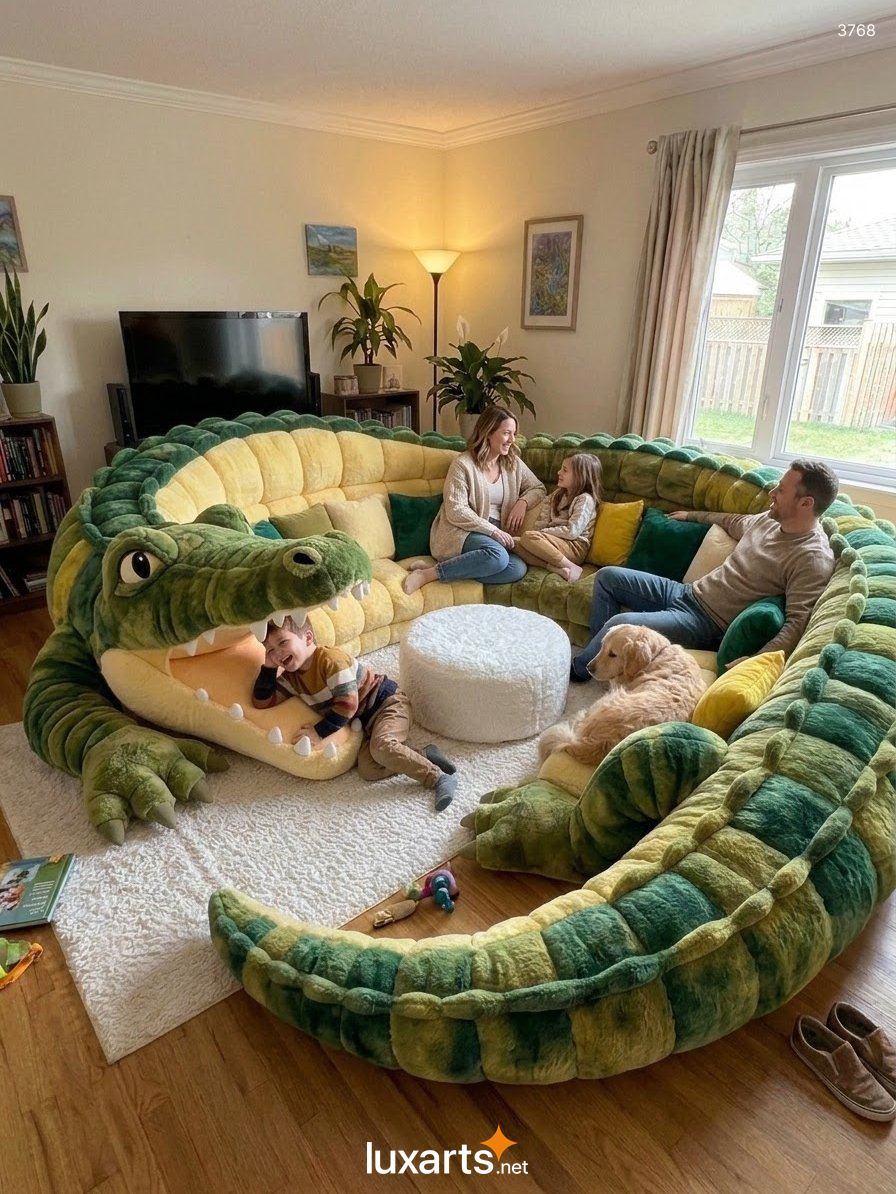
Children respond even faster. In the crocodile photo above, a boy lies inside the open jaws laughing while his parents relax on the scaly back and a golden retriever settles into the cushions. Nobody had to explain the rules of the furniture. The shape itself invites climbing, hiding, reading, and storytelling, which is more than most sofas manage.
There is also a social benefit. Because a novelty sofa usually curves into a half circle or a full ring, people face each other instead of facing a screen. Conversation flows more easily, and the round ottoman in the center becomes a natural gathering point for snacks, board games, and sleepy feet.
Animal-Shaped Sofas That Wrap Around the Room
The Crocodile Sectional
The crocodile design is probably the clearest example of how a creature can become a floor plan. The open mouth, lined with soft white teeth and a pale orange tongue, works as a small den for kids. The yellow belly forms the seat cushions, while the ridged green back rises behind them like a wall of scales. The front claws rest on the rug and the long tail sweeps around the opposite side, closing the circle. Dark green, olive, and mustard throw pillows pick up the tones of the body so the seating area looks planned rather than random.
The Serpentine Dragon
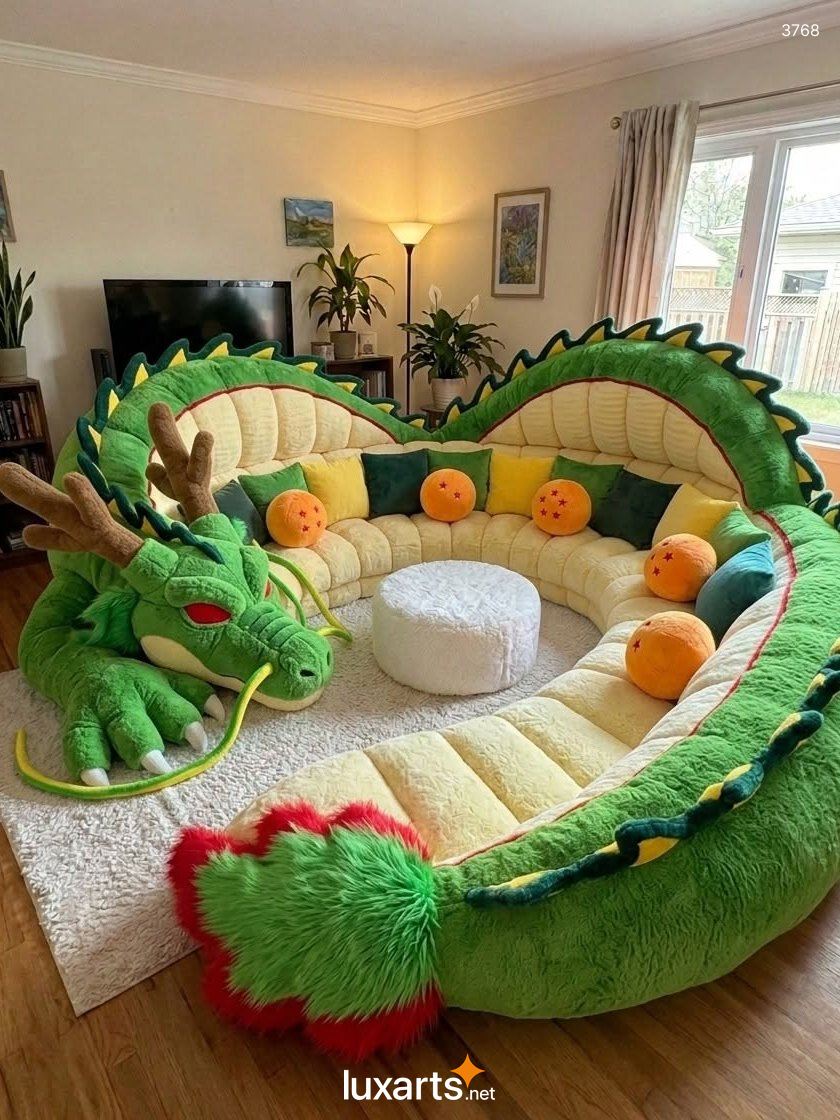
The long green dragon in this photo takes a different approach. Its body is slender and snake-like, with a red-lined edge, yellow-tipped spines, and brown antlers rising from a calm, slightly stern face. Long whiskers trail across the rug. The inside of the curve is a creamy, channel-quilted seating area, and a row of round orange cushions with small star markings sits along the back like treasure collected by the dragon. It is a strong example of how a bright, saturated exterior can wrap around a calm, neutral interior so the seating stays easy on the eyes.
Sleeping Dragons: Wings, Scales, and Quiet Drama
If one creature dominates the genre, it is the dragon, and the reason is practical as well as visual. A dragon has everything a designer needs: a long body for the seating curve, a pair of wings that can double as a tall backrest, a heavy head for an armrest, and a tail with plenty of surface for a dramatic finish.
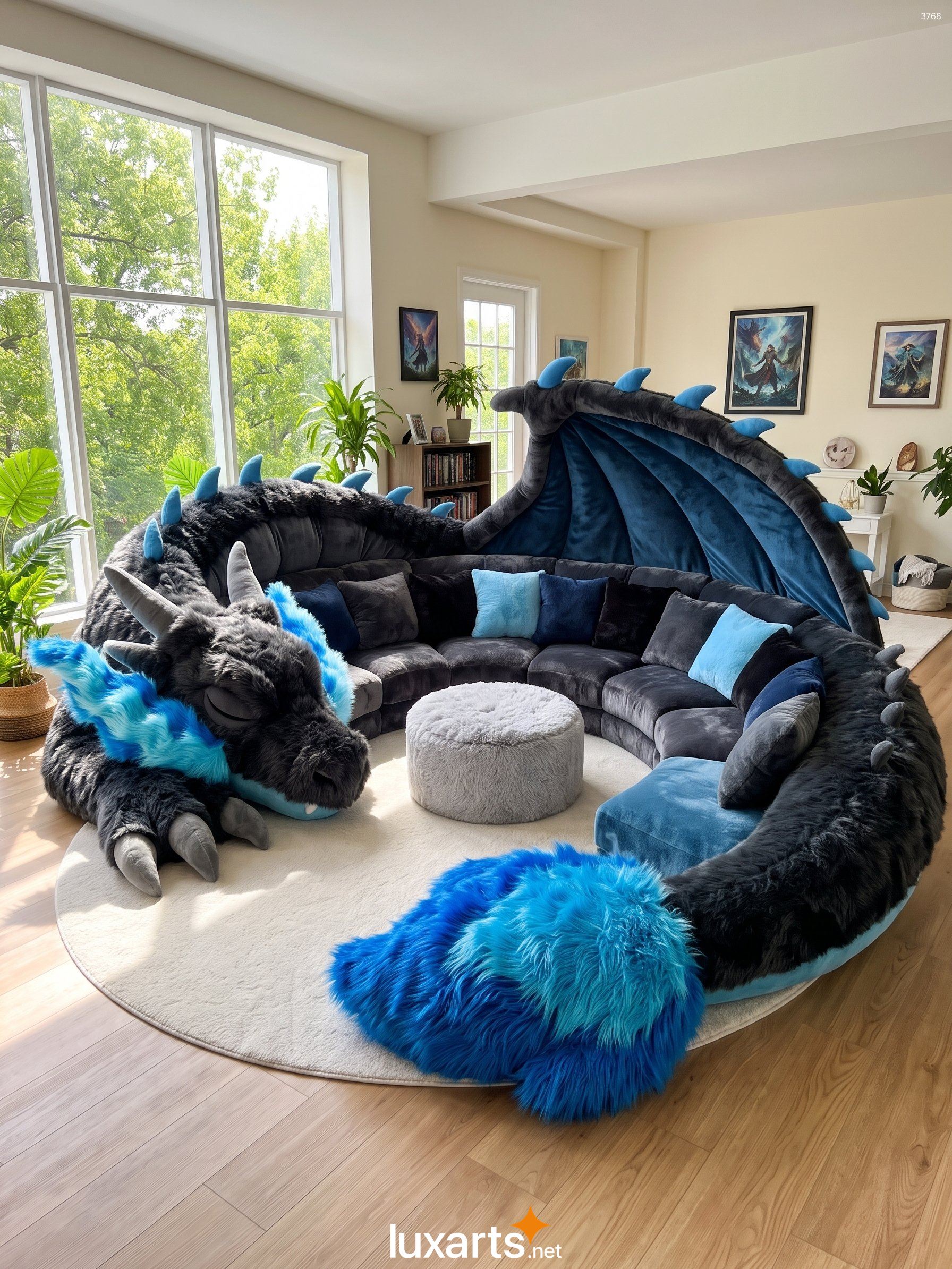
The charcoal dragon here sleeps with its head resting on one clawed foreleg, eyes closed, with bright blue fur flaring from its cheeks. One wing rises behind the seating like a canopy, lined with deep blue velvet ribs, while blue spines run along the back and tail. The seat itself is a dark gray, deep-cushioned sectional with navy, sky blue, and gray pillows. Against big windows and green trees outside, the arrangement feels like a calm lair rather than a loud toy.
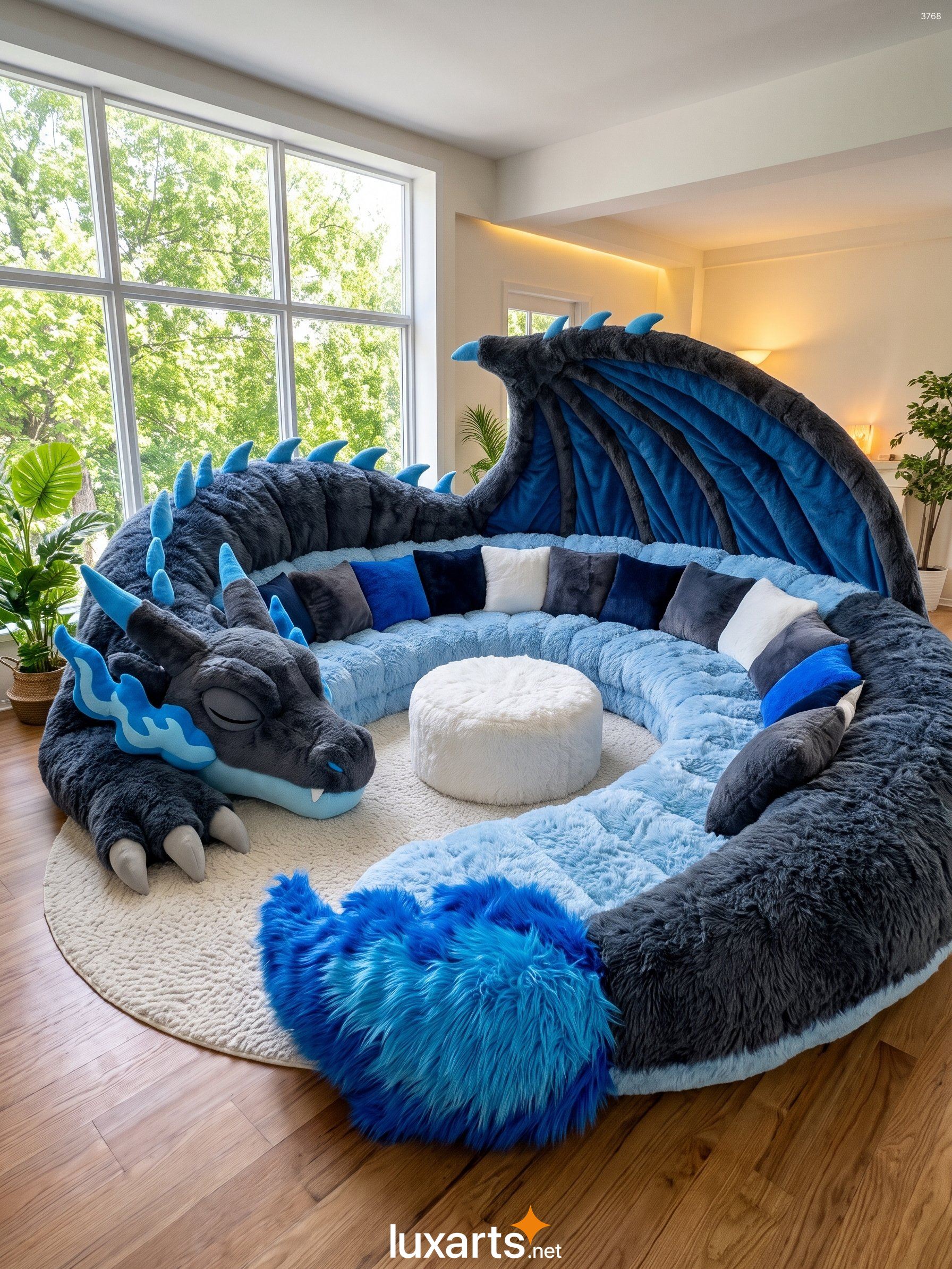
A second version of the same idea flips the palette inside. The exterior stays dark and shaggy, but the seating bay is covered in pale blue faux fur with soft ridges, and the pillows move through white, navy, and royal blue. The result is brighter and cozier, and it shows that one creature can serve two moods depending on the interior fabric. Dark colors give the sofa a mysterious, almost cinematic presence, while the lighter interior keeps it friendly for children.
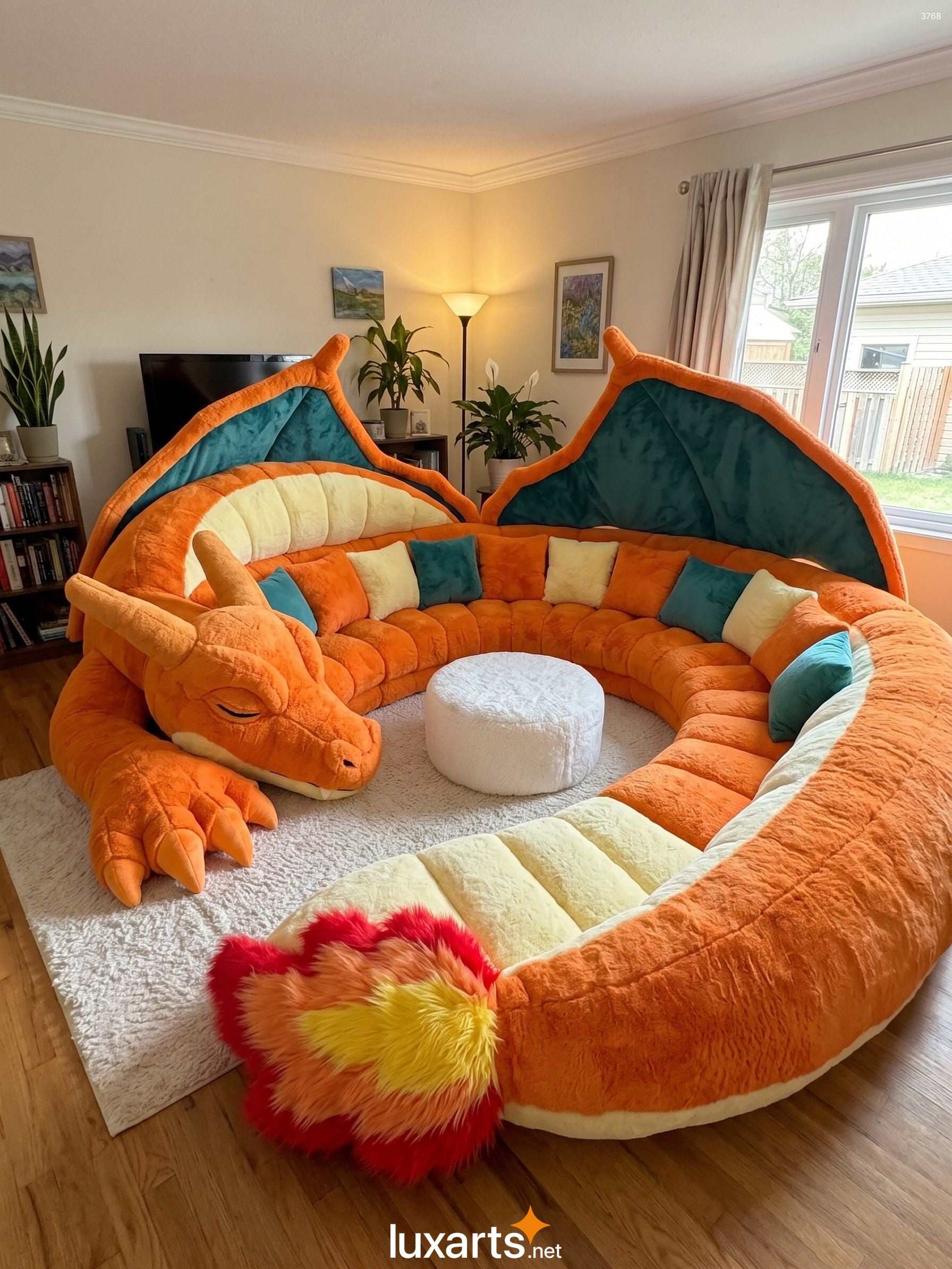
The orange dragon takes the opposite route and leans into warmth. Two teal wings stand behind the seating like a headboard, a cream belly stripe runs along the body, and the tail ends in a fluffy flame of red, orange, and yellow. Teal and cream pillows break up the orange so the eye has somewhere to rest. The sleeping face, with its closed eyes and gently resting claws, gives the piece a sense of calm that balances all that color.
Cartoon Characters That Share the Couch
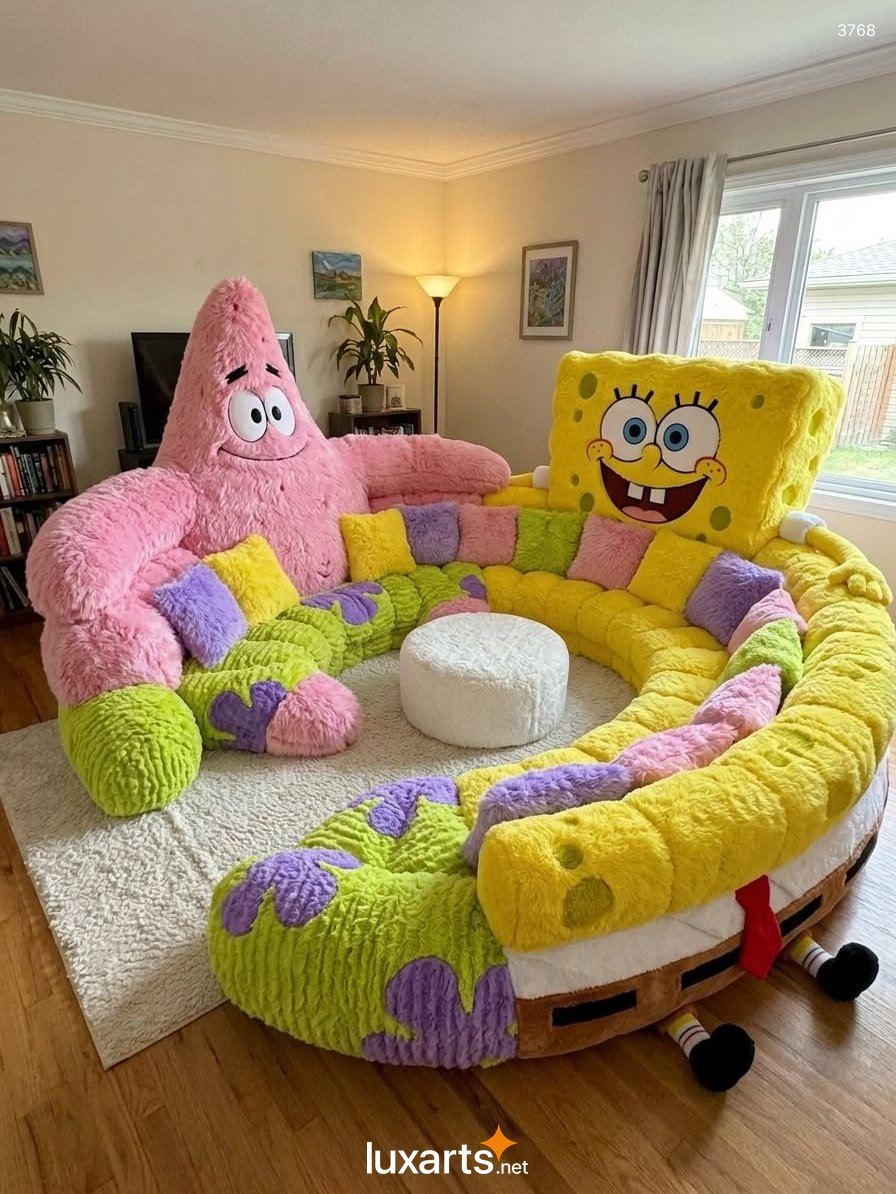
Not every novelty sofa has to be a beast. The sponge-and-starfish design above shows how cartoon characters can anchor a playful room. A pink starfish sits at one end with an arm stretched along the back, while a square yellow sea sponge with a huge grin rises at the other. Between them, the seating is a patchwork of yellow, lime, purple, and pink cushions that echo the bright colors of an animated seabed. Even the little striped legs poking out from the bottom of the sponge’s body add to the joke.
This type of sofa works best in a family room or playroom where humor is the main goal. The faces do the talking, so the rest of the room can stay quiet, with cream walls and a light rug that let the characters stand out.
Garden Bugs: The Caterpillar and the Ladybug
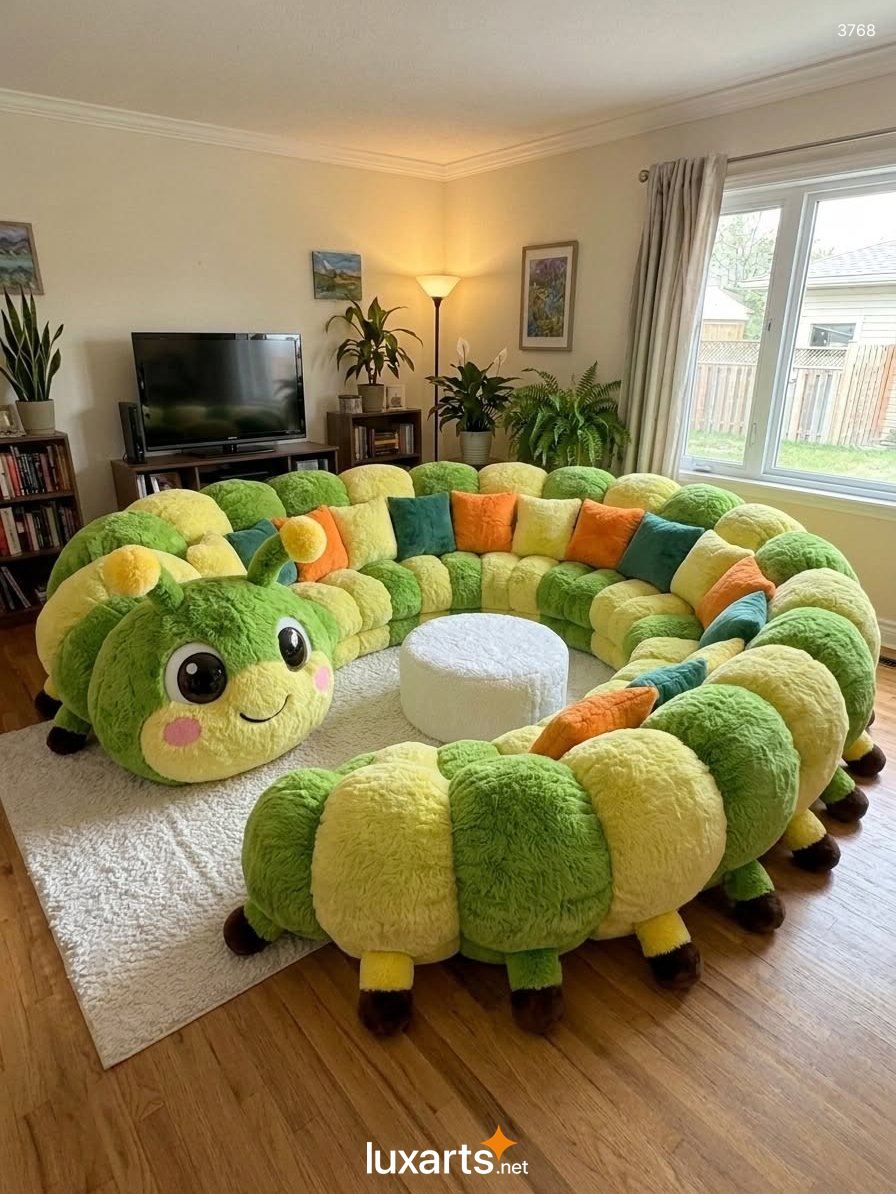
The caterpillar may be the friendliest design in the whole group. Its body is built from alternating round segments in lime green and soft yellow, each one a deep, squishy cushion. The head has big glossy eyes, pink cheeks, and tiny antennae with yellow tips, and little brown feet poke out along the sides. The inner curve is covered with orange, teal, and yellow pillows that look like autumn leaves scattered over grass.
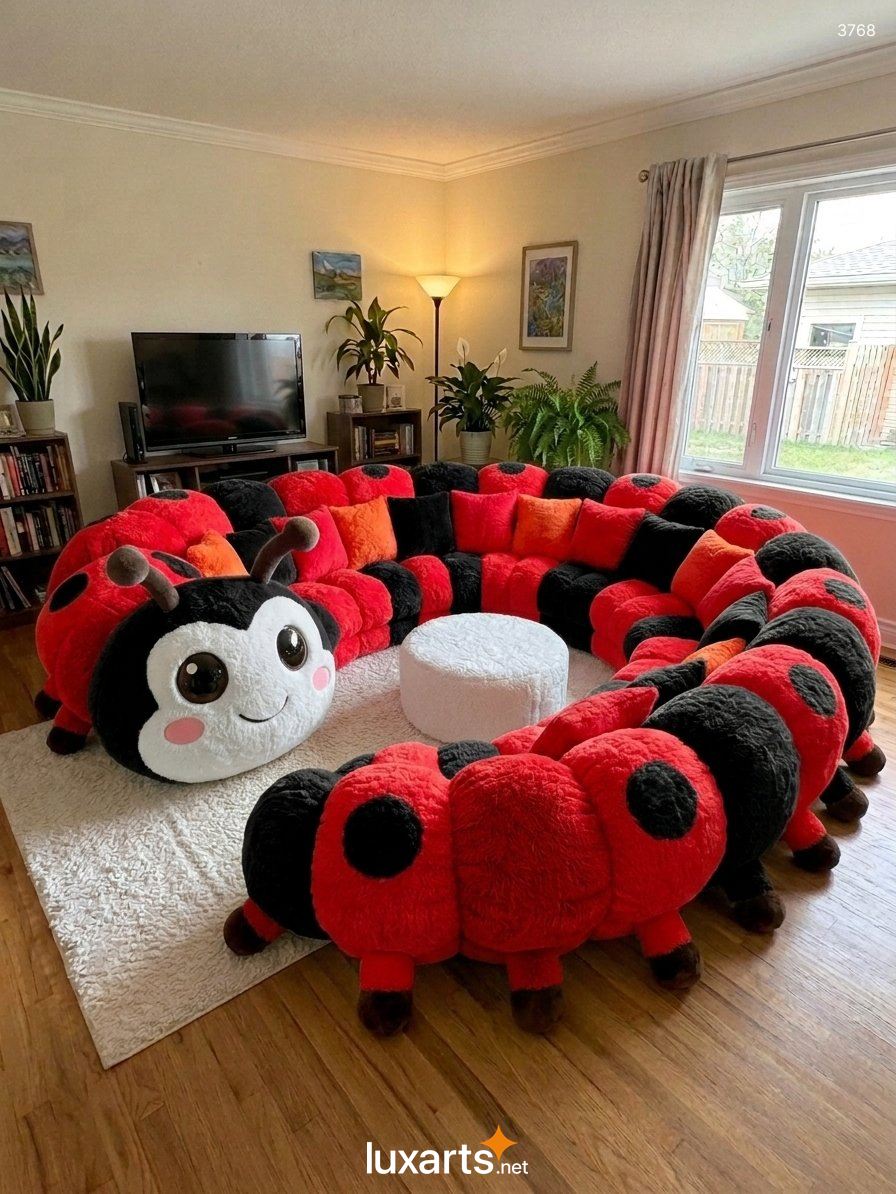
The ladybug-style version uses the same body structure but swaps the palette for bold red, black, and white. Black spots on the red segments, a white face with rosy cheeks, and chocolate brown antennae give it a sharp, graphic look. The same orange and red pillows that suit the caterpillar work here as well, which shows how modular the idea is. One pattern of segmented seating can be dressed as many different insects just by changing the fabric colors.
From the Pond to the Henhouse
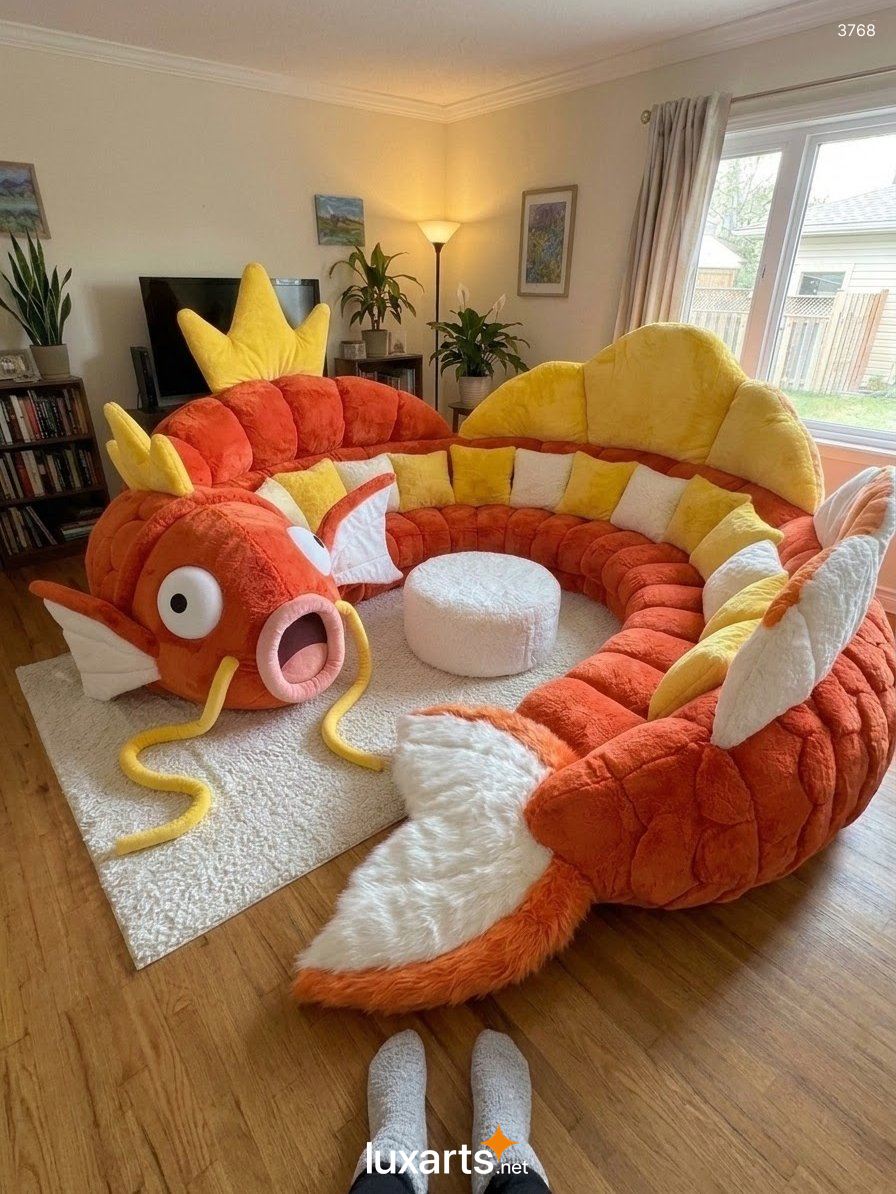
The orange fish curls its body into a crescent, with a wide-eyed face, a pink open mouth, long yellow whiskers, and a fan of yellow fins arching over the back. Scale-shaped quilting runs along the body, and a white and orange tail sweeps across the rug. The yellow and white pillows against the orange seating look cheerful and fresh. Despite the cartoonish face, the quilted scales give the sofa a texture that adults can appreciate as design, not only as a joke.
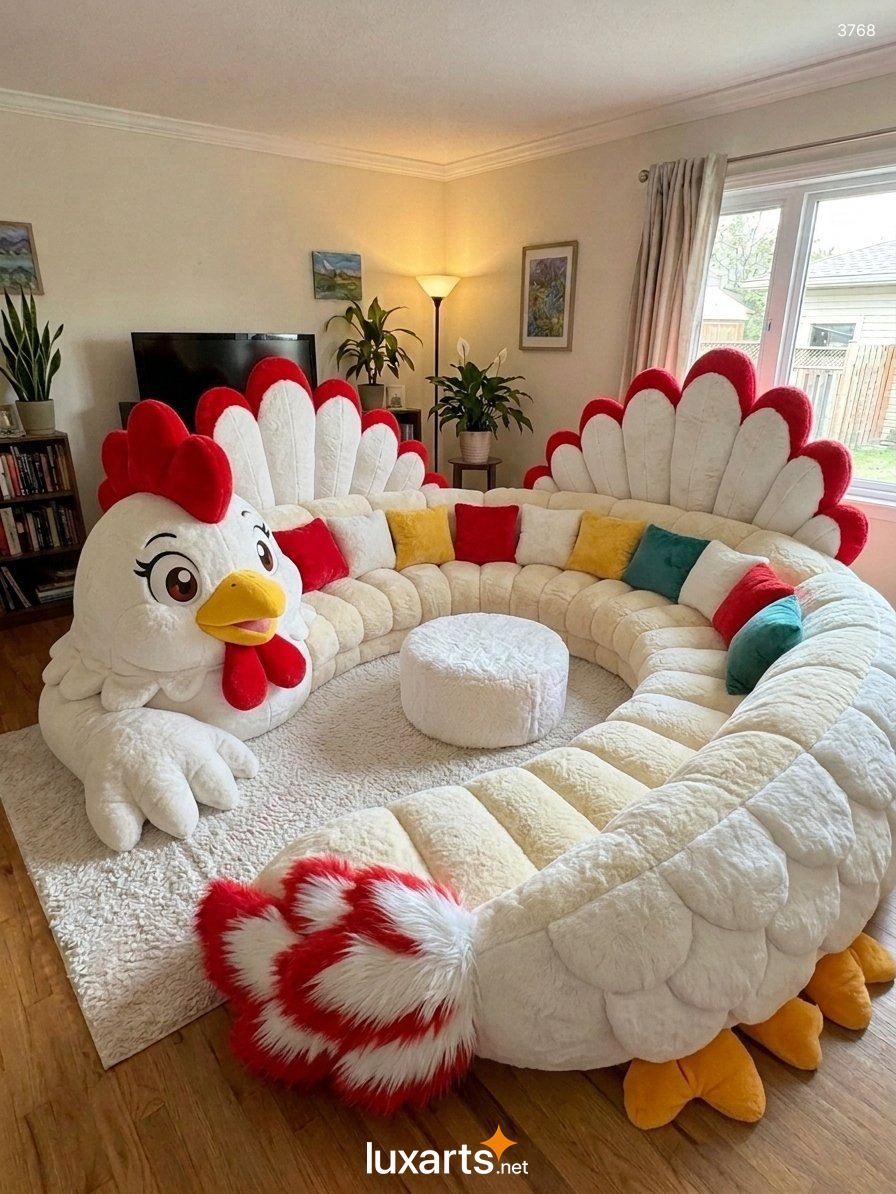
The hen design proves that farm animals can be just as striking. White feathered cushions form the body, a red comb and wattle sit on a big smiling face, and two fans of red-tipped feathers rise behind the seating on both sides like a peacock’s display. Little orange feet peek out from the base, and a red and white tail finishes the ring. The cream interior and red, yellow, and teal pillows tie the palette together in a way that feels like a country kitchen turned into a lounge.
Design Details That Make Fantasy Seating Work
Behind every charming exterior is a set of structural choices that decide whether the sofa is comfortable. A few details repeat across all the examples above.
A Curved Footprint
Almost every design here forms an arc or a ring. A curved layout gives the creature room to show its full length, and it lets people sit angled toward one another. A straight sofa would stretch the animal into an awkward line, while a curve brings the head and tail close together, which reads as a single, coiled body.
The Center Ottoman
Each photo includes a round, fluffy ottoman in the middle of the seating. It works as a footrest, an extra seat, and a low table, and it fills the empty space in the center so the circle feels complete. Its soft white texture also gives the eye a neutral anchor among all the color.
Segmented Cushioning
Channels, tufts, and rounded segments do more than look good. They divide the seating into separate cushions so weight spreads evenly, and they help the fabric keep its shape under use. On the insect designs the segments are the animal’s body, which is the smartest kind of detail, where decoration and function are the same thing.
Texture and Fabric Contrast
Plush faux fur, short-pile velvet, and quilted fleece often appear on the same piece. The shaggy fabric makes the creature look alive, while the smoother velvet used for wings and seating surfaces is easier to sit on. Mixing textures also keeps a large, single-color form from looking flat, both in photographs and in person.
Planning a Room Around a Novelty Sofa
A sofa with this much personality needs the right setting. Start with space. These designs have wide footprints, and the dragons with raised wings need extra height as well. Measure the room, mark the outline on the floor with painter’s tape, and leave a clear walking path around the outside so the room does not feel crowded.
Next, keep the background calm. In every photo the walls are soft cream or warm white, the floors are natural wood, and the artwork is quiet landscape or fantasy illustration. That restraint lets the sofa be the main character. Busy wallpaper or bold paint would compete with the creature and make the room feel cluttered.
Finally, think about the television and the windows. The seating in these examples opens toward a TV or a large window, so the open side of the arc always faces a focal point. Large windows also bring daylight that shows off the textures, although direct sun can fade colored fabrics over time, so a sheer curtain is a sensible companion.
Styling Tips: Pillows, Rugs, Lighting, and Plants
Throw pillows are the easiest way to tie a creature sofa to the rest of the room. Pick two or three colors already present in the creature, then add one neutral. The orange dragon uses teal and cream; the fish uses yellow and white. Repeating the same few colors makes the pillow arrangement look deliberate.
A thick, light-colored rug does two jobs. It softens the floor around the sofa, which matters when children are crawling in and out of the creature’s mouth or tail, and it visually separates the seating zone from the rest of the room. Round rugs echo the circular layout particularly well, as in the dragon photos.
Lighting changes the mood more than people expect. A warm floor lamp in a corner, or a soft wall sconce, turns a cheerful daytime sofa into something quieter at night. Several photos show exactly that glow. Add a few leafy plants nearby, and the green will sit naturally beside the fur and velvet, making the room feel like a small habitat.
Comfort, Safety, and Everyday Care
Because a novelty sofa often becomes a play space, safety deserves attention. Details like claws, horns, antennae, and eyes should be stitched firmly into the fabric rather than glued or attached as loose pieces. A stable base with no sharp edges matters, and tall elements such as wings and feather fans need to be anchored well enough to handle a leaning child.
Maintenance is mostly a matter of routine. Vacuum faux fur with a soft brush attachment, then fluff it with a clean, dry brush to keep the pile from matting. Spot clean spills right away with a damp cloth and mild soap, and check the care label before using anything stronger. Removable pillow covers make life easier, especially in homes with pets. A golden retriever sleeping on the crocodile’s tail is adorable, but pet hair collects quickly on plush fabric, so a lint roller should live nearby.
Rotate cushions regularly so the seating wears evenly, and keep the sofa away from heaters and open flames, since plush synthetic fabric responds poorly to heat.
Who Enjoys a Novelty Sofa the Most?
Families with young children are the obvious audience, but they are not the only one. Teenagers like these pieces for gaming nights because the circular layout puts everyone within reach of the same screen. Readers and hobbyists appreciate the cocoon feeling of sitting inside a creature’s body. People who enjoy fantasy, animation, and collectibles often use a sofa like this as the centerpiece of a themed room, with framed art and shelves of books or figures around it.
Shared spaces can benefit too. A reading corner in a family home, a hobby den, or a playroom in a larger house can all become a destination thanks to a single large sofa. When the furniture is the story, the room does not need much else.
Final Thoughts
A novelty sofa asks for a little courage, but it gives back a room with a personality that no standard layout can match. The best examples balance imagination with comfort: a curved seating bay that really supports a group, soft materials in thoughtful colors, and a creature whose anatomy becomes the frame of the whole space.
Sleeping dragon, giant caterpillar, or smiling hen, the approach is the same. Keep the walls calm, choose pillows that echo the creature’s palette, give the seating room to breathe, and treat the fabric with care. Do that, and an ordinary living room becomes the kind of place where kids build forts, adults linger over coffee, and guests start asking where the tail ends.
NOTE: All images in this post are AI-generated and intended solely for inspiration. These are not real products available for sale, and we do not operate any online store or website for purchases.