Mini Tractor Robot Mows: The Miniature Remote Controlled Tractor Lawn Mower for Backyard Lawns
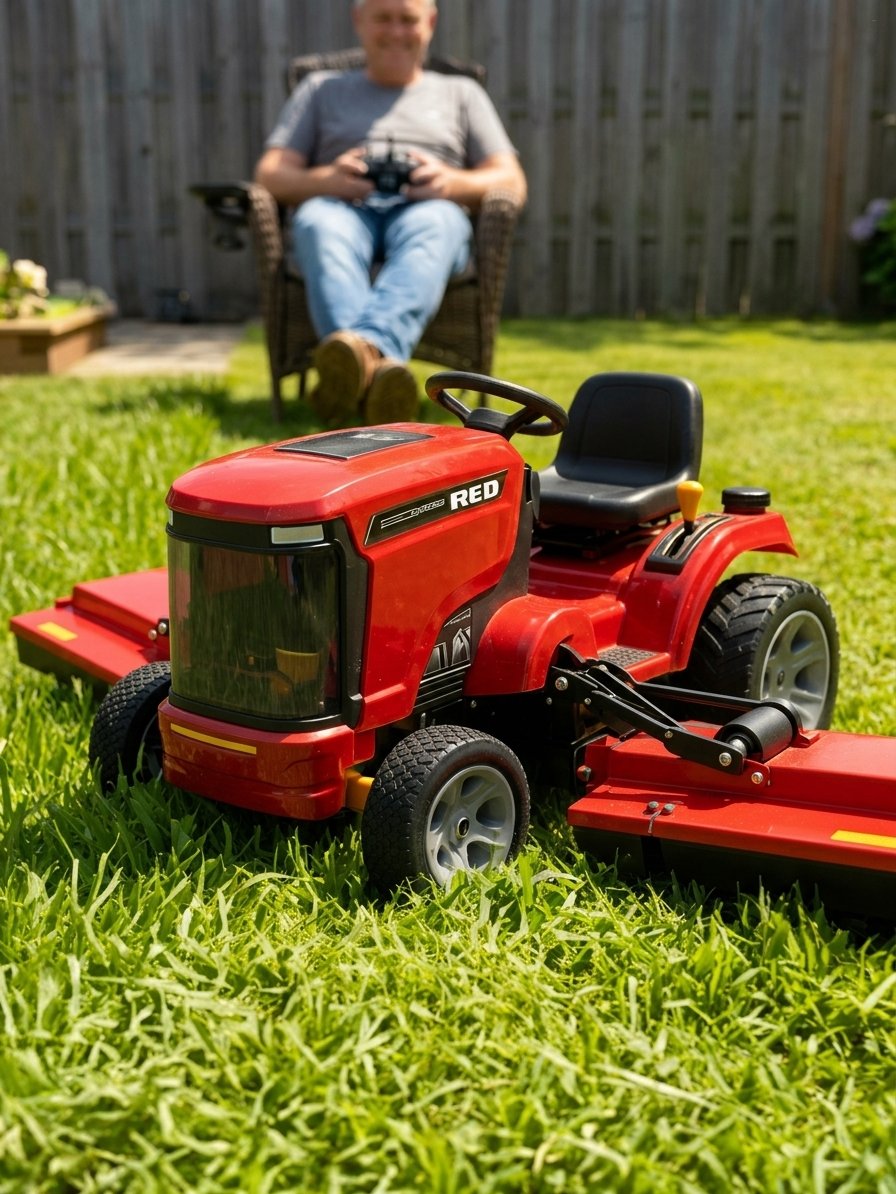
Picture a Saturday afternoon where the lawn gets cut and the person in charge never leaves the shade. That is the whole appeal of Mini Tractor Robot Mows, a miniature remote controlled tractor lawn mower built for backyard grass. It looks like a farm-show collectible, with a hood, a steering wheel and a little seat, yet it carries two wide cutting decks and trims real turf while its owner relaxes in a chair with a transmitter resting in both hands.
The idea keeps spreading through hobby circles for a simple reason. Mowing is repetitive, and plenty of people enjoy machines far more than they enjoy chores. Give them a scaled-down tractor that drives like an RC car and cuts like a garden mower, and the weekly routine starts to feel like a project instead of an obligation.
This guide walks through how these machines are laid out, how to set one up, how to drive it well, how to get clean lines in the grass, and how to look after it afterwards. Everything here is grounded in what the photos in this article show: red and green tractors, folded and extended side decks, a dual-stick transmitter and plenty of fresh clippings.
What Is a Miniature Remote Controlled Tractor Lawn Mower?
A miniature remote controlled tractor lawn mower is a battery-powered, scaled-down tractor body fitted with a cutting system and driven by a handheld radio transmitter. Think of it as the meeting point of three hobbies: RC vehicles, scale farm models and lawn care. The shells in the photos copy the proportions of full-size garden and agricultural tractors, with a sloped hood and a steering wheel on the red versions, and an enclosed glass-style cab on the green ones.
What separates it from an ordinary RC toy is the cutting gear. Instead of a decorative trailer or a plastic scoop, these machines carry side decks that sweep a strip of grass wider than the tractor itself. In the pictures the decks extend from both flanks like wings, so every pass covers the width of the body plus a generous margin on each side.
Mini Tractor Robot Mows is a handy name for the whole experience: a small tractor, a remote and a lawn that gets shorter while you watch. It is not autonomous in the strict robotic sense, because a person still decides where it goes and when it stops. The robot part comes from the fact that nobody is walking behind it, pushing it or sitting on it.
Why Mini Tractor Robot Mows Appeals to Backyard Owners
The first draw is comfort. A traditional push mower asks for noise, fumes, heat and a sweaty hour of walking. A remote tractor moves the work to a quiet machine and leaves the human with a shaded chair and a view of the whole yard. In the photos, the operators are slouched in wicker, canvas and folding chairs, sometimes in slides and white socks, which says a lot about the mood of the hobby.
The second draw is entertainment. Watching a small tractor chew through a strip of tall grass is oddly satisfying. Neighbors lean on the fence to look. Kids want a turn at the sticks. A chore that normally gets postponed becomes something people actually plan around, and that changes how often the lawn gets cut.
The third draw is control. Because the machine is small and the transmitter is precise, you can decide exactly which patch gets mowed next. Narrow side yards, curved borders and spaces tucked behind planters are easy to approach when you can steer a compact tractor with your thumbs.
Understanding the Wing Deck Layout
Look closely at the red tractor in the action shot and you can see how the machine is built. The tractor body sits in the middle on four rubber tires with a deep tread pattern. On each side, a black linkage arm with a small pivot roller connects the body to a flat cutting deck. Those arms let the decks follow the ground instead of staying locked at one height, which matters on lawns that are never perfectly flat.
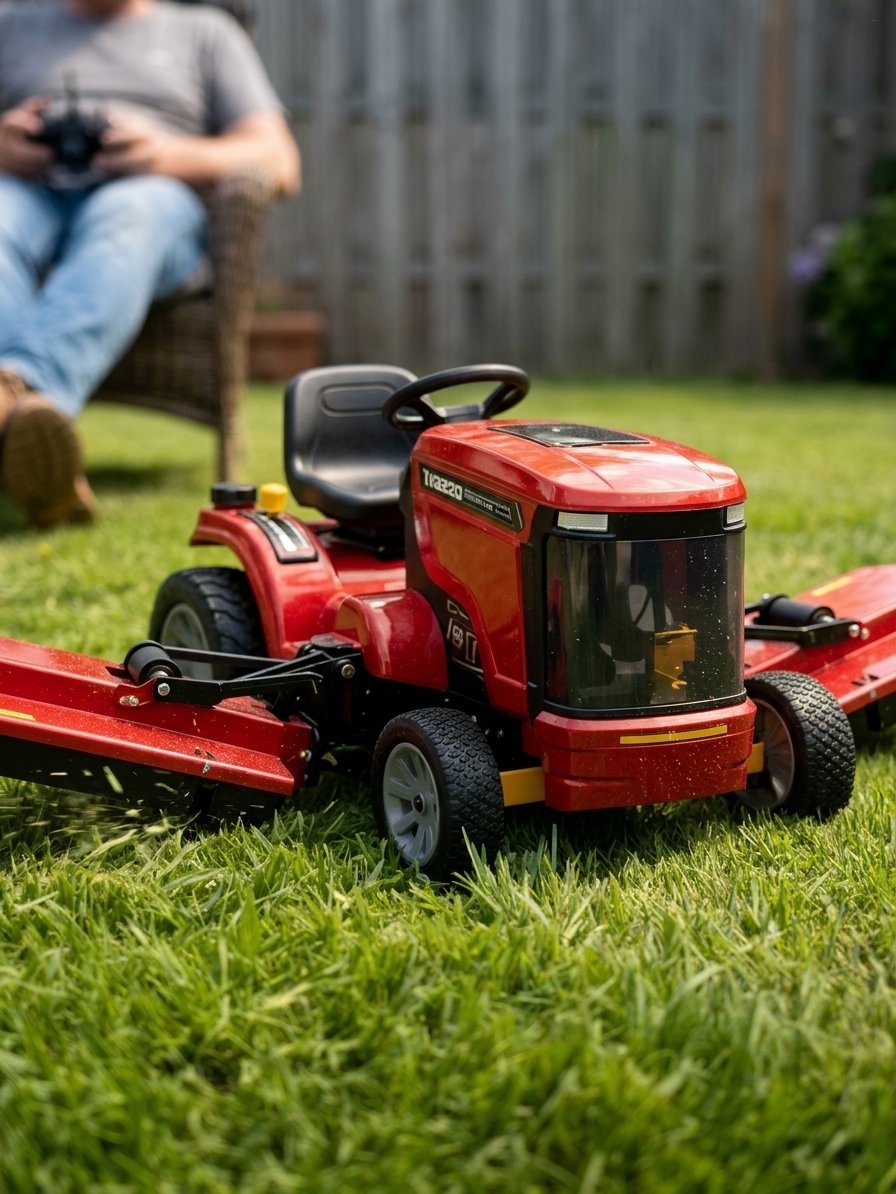
The green model in the close-up with the transmitter shows another detail: a small caster wheel at the outer end of the deck. A wheel like that works as a gauge, keeping the far edge from digging into the turf when the ground rises or dips. It is a small feature, but it is the difference between an even cut and a scalped patch.
Both the red and green designs also leave a thin gap of fresh clippings along the deck edges, a sign that the cutting mechanism is turning where it should be. Depending on the model, the cutting parts may be small blades or discs that spin beneath each wing. The wing layout is the real secret to the machine’s speed, because two decks working together clear far more ground per pass than a single narrow cutter could.
Unboxing and First-Time Setup
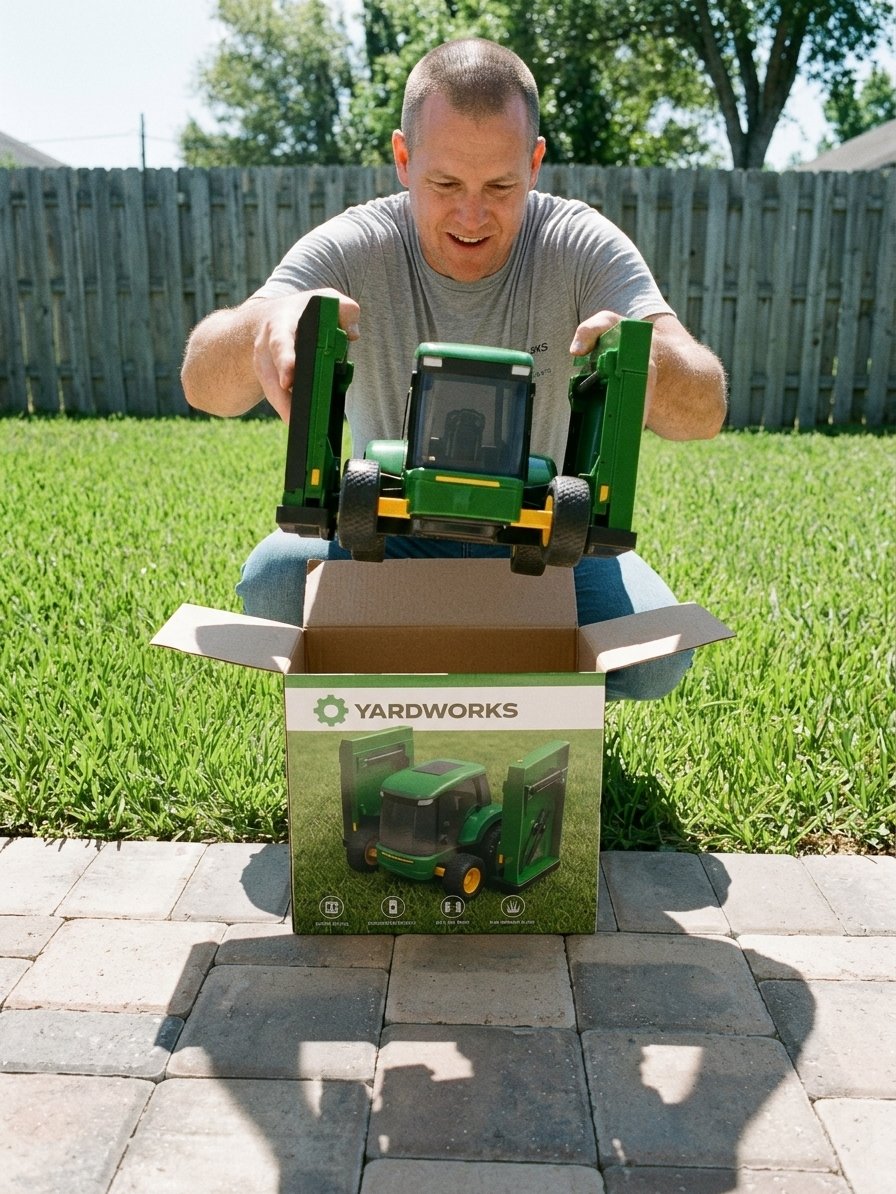
The unboxing photo is a good reference for what the first few minutes look like. The tractor comes out of the carton with its side decks tilted upward in a transport position, so it fits in a compact box. Lifting it out by the decks, as the man in the picture does, is part of the fun, but supporting the body with one hand is a smarter habit.
A sensible setup routine looks like this:
- Inspect the body. Check the tires, the cab glass and the linkage arms for anything that shifted in transit.
- Lower and lock the decks. Both wings should sit level and the pivot points should move freely without wobbling.
- Charge the battery fully. A half-charged pack gives uneven power and a shorter first session.
- Pair the transmitter. Switch on the remote first, then the tractor, and confirm that steering and throttle respond in the right direction.
- Test on pavers. A flat patio is the safest place to learn how the tractor turns before it touches grass.
Spending ten minutes on this routine prevents most of the beginner mistakes, like a deck dragging on one side or a stick that steers the wrong way when you panic.
Driving With the Transmitter
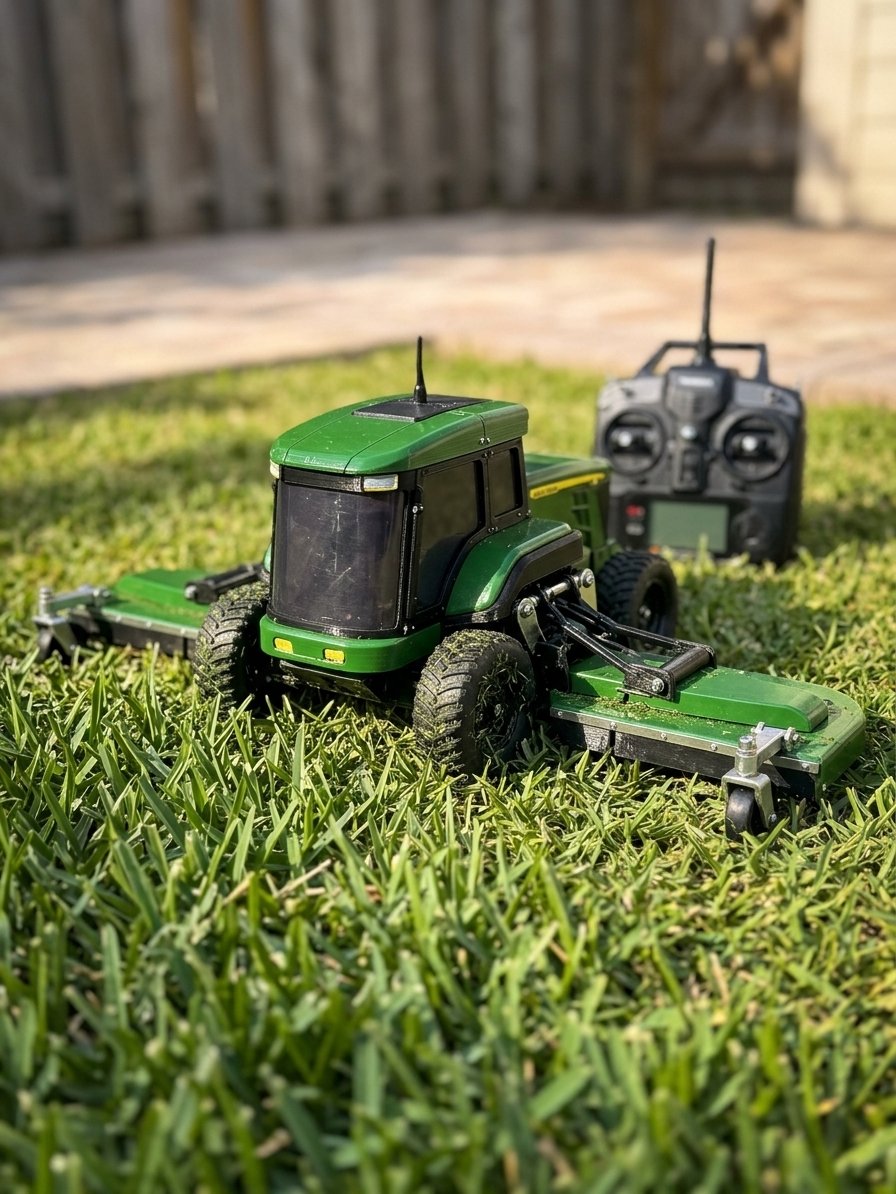
The transmitter in the grass-level photo is a classic two-stick radio with a small LCD screen in the middle. The tractor carries a short antenna on its roof, and the pair talk to each other over a radio link. One stick usually handles forward and reverse, the other handles steering, and the screen shows channel and battery information so you know when the remote itself is running low.
Smooth hands make a big difference. Jerky inputs make the tractor lurch, throw clippings sideways and leave uneven stripes. Gentle stick movements, a steady forward speed and wide, deliberate turns give the decks time to cut properly. Most owners find that the slowest comfortable speed produces the cleanest result, even though it is tempting to hurry.
Line of sight matters as well. The operator in the first photo sits at the edge of the yard with the whole lawn in view, and that is the right idea. Pick a seat where you can follow the tractor all the way to the far fence, and avoid positions where a shrub or a planter hides the machine. Steering a tractor you cannot see is the quickest way to bump it into a flower bed.
Mowing Technique: Passes, Grass Height and Clean Lines
The picture of the green tractor cutting between tall grass on one side and a freshly trimmed strip on the other is the best demonstration of what this machine can do. The border between cut and uncut turf is crisp, the freshly cut surface looks even, and the clippings lie flat instead of clumping.
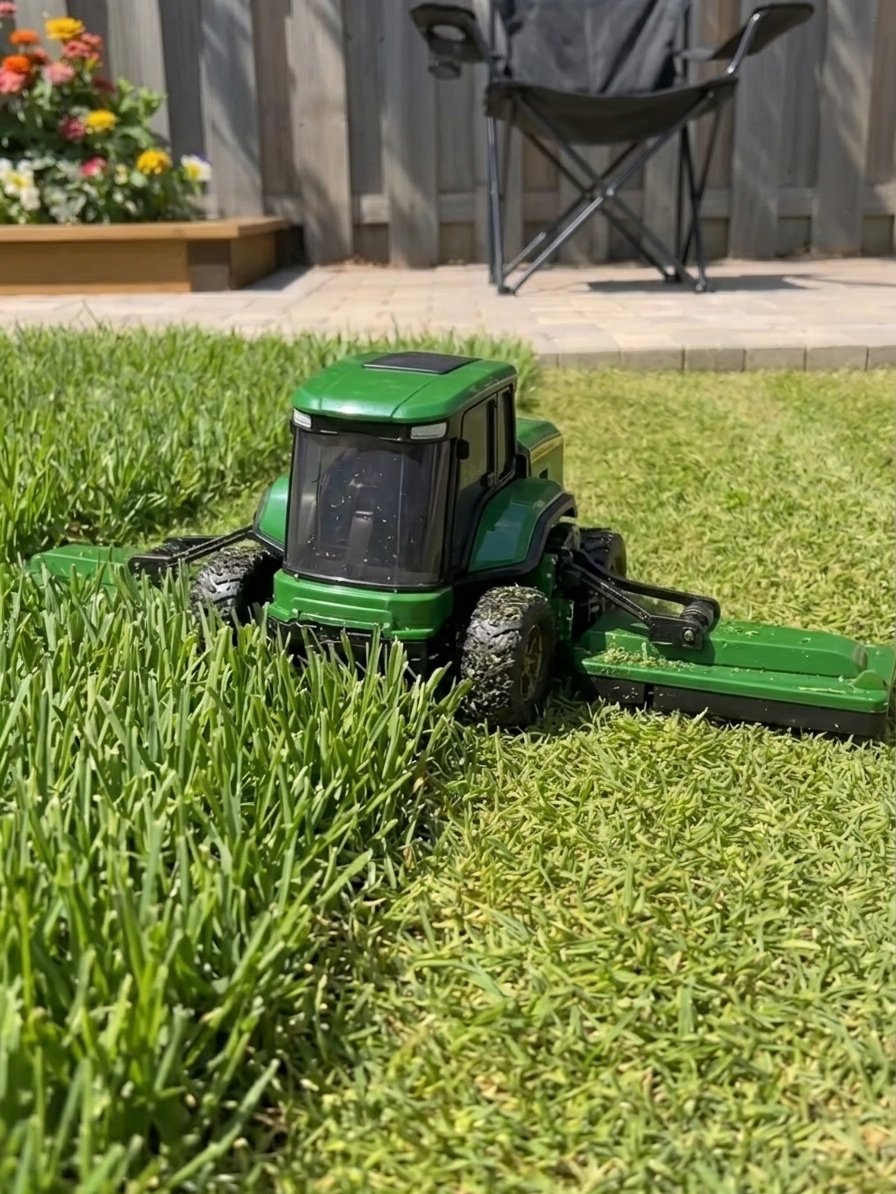
To get the same result at home, start with the outline. Run the tractor once around the edge of the lawn, then fill in the middle with long, straight passes that overlap by a few centimeters. Overlap is what hides small steering wobbles. If you alternate the direction every time you mow, for instance north to south one week and east to west the next, the grass stands up more evenly and stops leaning in one direction.
When the grass is tall, cut it in stages. Take the top off first, wait a day or two, then go back and trim to the final height. Forcing a small machine through a thick wall of growth strains the motors and leaves ragged tips. Dry grass also cuts better than wet grass, so wait until the dew has gone and the blades are no longer shiny with moisture.
Short clippings can stay on the lawn, where they break down and feed the soil. If the deck leaves heavy piles, drive over the same path again at a slightly different angle to spread them out.
Trimming Along Patios, Planters and Fences
Backyards are rarely wide open fields. They are made of patios, raised flower boxes, fences and curved borders, and this is where a compact remote tractor earns attention. In the red tractor photo, the machine runs right along a paved path with the left deck hanging over the stone and the right deck chewing into the lawn. Clippings spray onto the pavers, which is a reminder to keep a broom nearby.
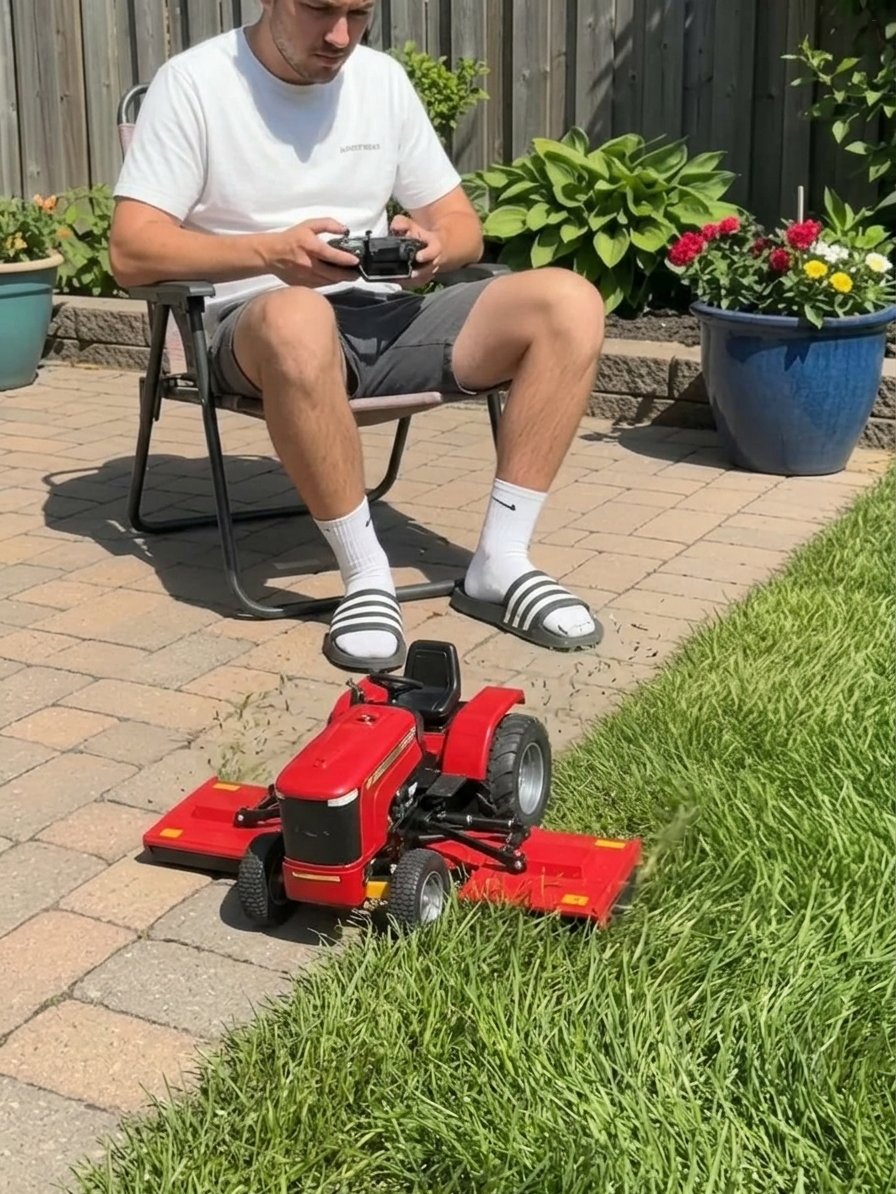
Approaching an edge at a shallow angle works better than driving straight at it. Let one wheel ride on the pavers if they are level with the grass, and keep the outer deck over the turf. Near planters and fence posts, slow right down and leave a hand’s width of clearance, because the wing decks extend beyond the body and can catch obstacles that the tires miss.
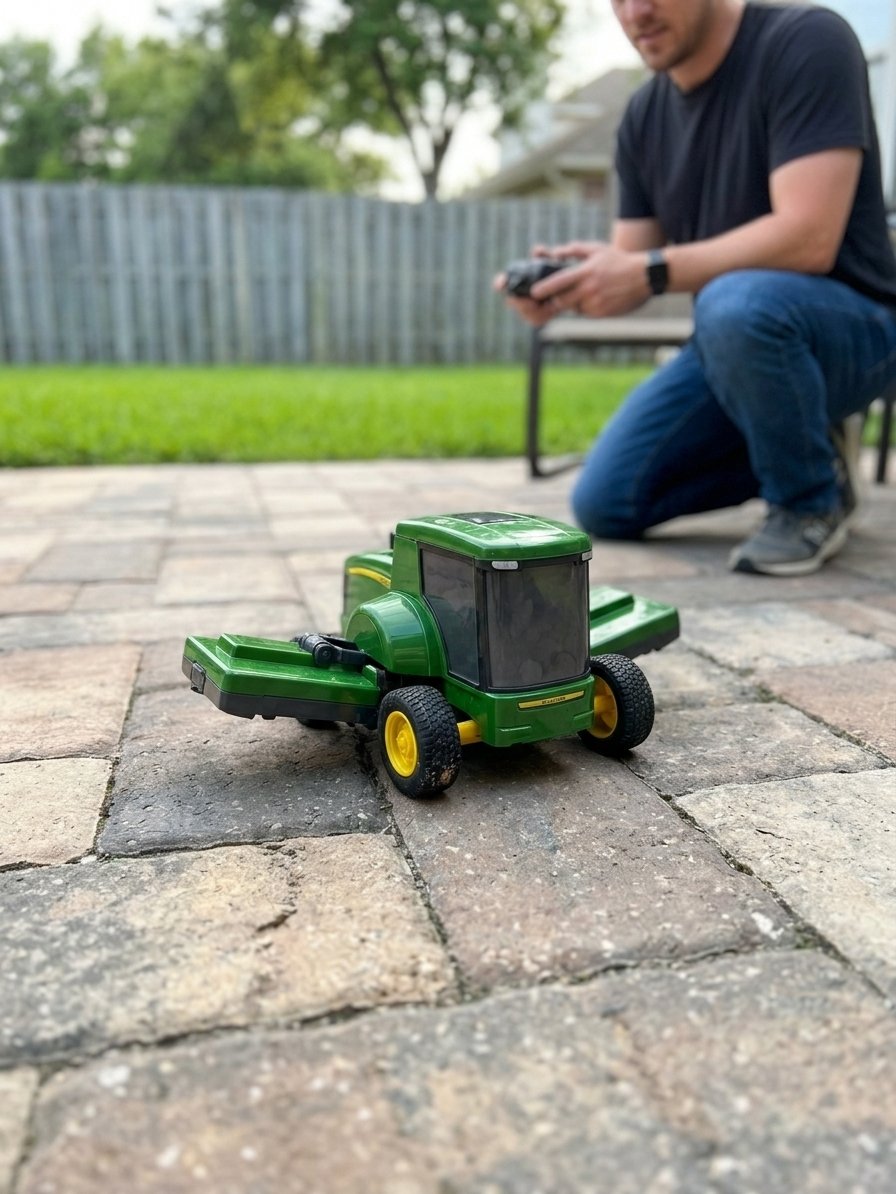
Hard surfaces are also useful for practice, as the crouching operator shows. A few slow loops on the patio teach you how wide the turning circle is and how far the decks swing in a pivot, so you are not guessing when the tractor is two meters from a hosta bed.
Safety Habits That Keep the Hobby Fun
A small mower is still a mower. The cutting parts spin quickly and can throw stones, sticks and toys. A few habits cover most of the risk:
- Walk the lawn first. Pick up pebbles, garden tools, children’s toys and loose cable before the tractor goes anywhere.
- Keep people and pets back. Set a clear boundary around the mowing area and make sure everyone knows the machine is active.
- Never reach for a running machine. Switch the tractor off at the body before clearing a jam or touching a deck.
- Do not mow wet or steep areas. Slick grass reduces traction and a tilted tractor can slide toward fences or steps.
- Respect the radio link. Stay within the stated range and stop if the tractor starts to respond late or erratically.
- Treat batteries with care. Charge on a hard surface, away from anything flammable, and do not leave a pack baking in direct sun.
It also helps to wear closed shoes. The relaxed look of slides and a lawn chair is great for photos, but a stray clipping or a dropped tool is easier to shrug off when your toes are covered.
Cleaning and Care After Every Mow
The close-up of the green tractor on pavers shows exactly what a mowing session leaves behind: bits of grass stuck to the decks, a dusting of green on the cab trim and damp debris in the wheel treads. Left alone, that residue dries into a crust that rubs against moving parts and encourages rust.
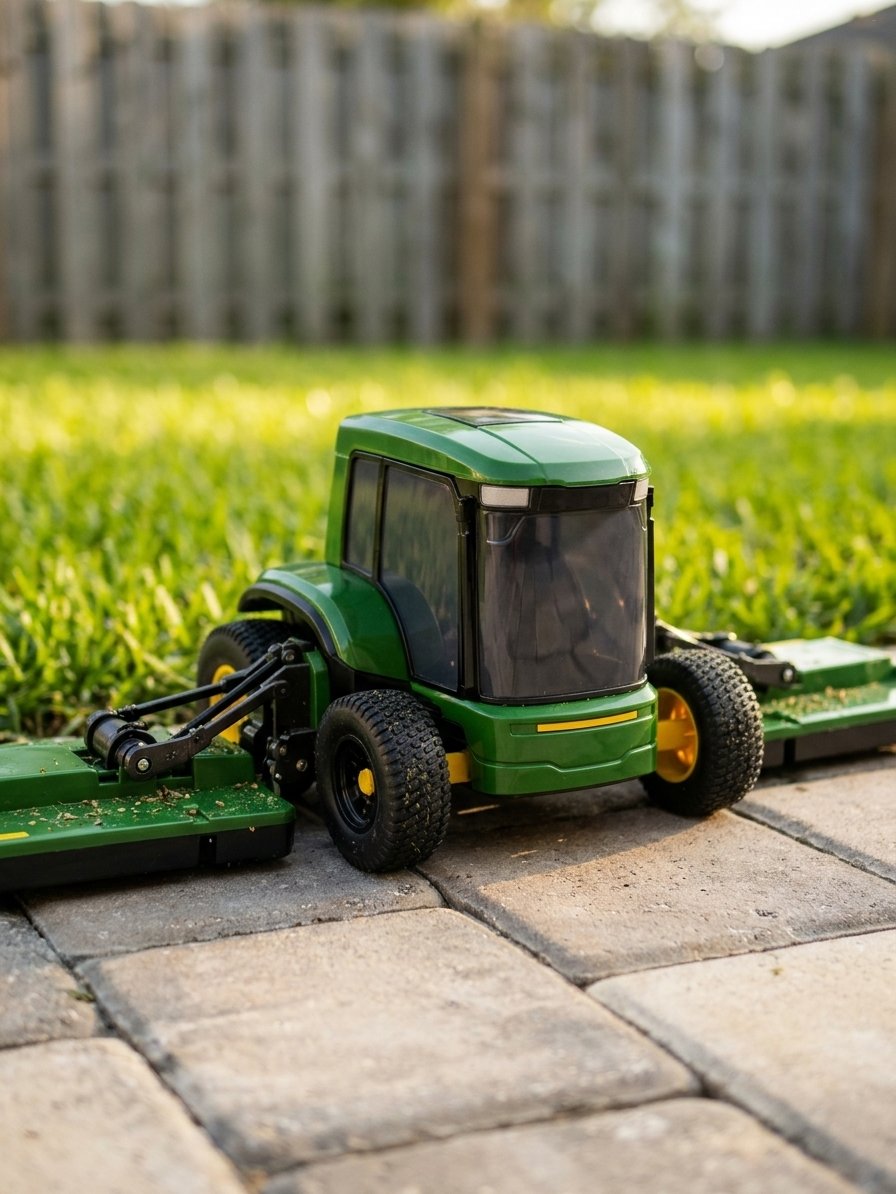
A short routine after each mow keeps the machine in good shape:
- Switch off the tractor and the transmitter, then remove the battery if the model allows it.
- Brush clippings off the decks, linkage arms and wheel wells with a soft brush or a dry cloth.
- Wipe the cab glass with a damp microfiber cloth so dust does not scratch it.
- Check the tire tread for trapped grass and small stones.
- Look at the pivot points for looseness, and tighten any fasteners that have worked free.
- Store the tractor indoors or under cover, away from moisture and direct heat.
Avoid pointing a strong jet of water at the electronics. A slightly damp cloth does the job, and the motors and receiver will thank you for staying dry.
Limits Worth Knowing About
This kind of mower is a lovely backyard companion, but it is honest to point out where it falls short. A miniature tractor works best on small to medium lawns, since battery capacity limits how long a session can last. Very large properties would need several charges, and thick, overgrown meadows are a poor match for small decks.
Rough ground is another challenge. Deep ruts, big molehills and hidden roots can stall the machine or tilt a wing off its line. The cutting width is wide for a small machine, yet the tractor still needs more passes than a full-size ride-on. Treat it as a tool for steady upkeep on a tidy lawn rather than a rescue vehicle for neglected ground.
Common Questions About Mini Tractor Robot Mows
Can it handle tall grass?
It can cut tall grass in stages, as the photo of the tall stand beside the cut strip suggests. Reduce the height gradually over a couple of mowing sessions instead of forcing it through everything at once.
Do I need a flat lawn?
Gentle undulations are fine because the linkage and gauge wheels help the decks follow the ground. Steep banks and slick slopes are better left to other tools.
How long does one session last?
That depends on the battery capacity, the thickness of the grass and how fast you drive. Smooth, slow driving uses less energy and usually gives you a longer run on a single charge.
Is it suitable for children to operate?
Kids love the sticks, but the cutting parts are real. Adult supervision, a clear lawn and a firm rule about never approaching a running machine keep it safe for everyone.
Does it replace a regular mower?
For a compact backyard, it can take over most of the weekly work. A hand mower or trimmer is still handy for the odd corner the tractor cannot reach.
Final Thoughts
Mini Tractor Robot Mows brings a playful idea into a practical job. A scaled tractor body, two wing decks and a radio transmitter are enough to cut a backyard lawn while the operator sits back with a drink in the shade. The photos show it clearly: crisp stripes in tall grass, clean trimming along a patio edge and a tidy machine waiting to be brushed off at the end of the afternoon.
The results depend on small habits. Learn the controls on pavers, walk the lawn before every session, keep your speed low and your passes overlapped, and clean the decks while the clippings are still fresh. Do that, and the tractor stays reliable and the grass stays even.
If you enjoy RC machines and you like seeing a tidy lawn at the end of the weekend, this miniature tractor mower combines both without the sweat. It turns a routine job into something you look forward to, and that is the best argument for giving it a place in the backyard.
NOTE: All images in this post are AI-generated and intended solely for inspiration. These are not real products available for sale, and we do not operate any online store or website for purchases.