Cat Bunk Bed for Kids: Adorable Cat-Shaped Bedroom Furniture
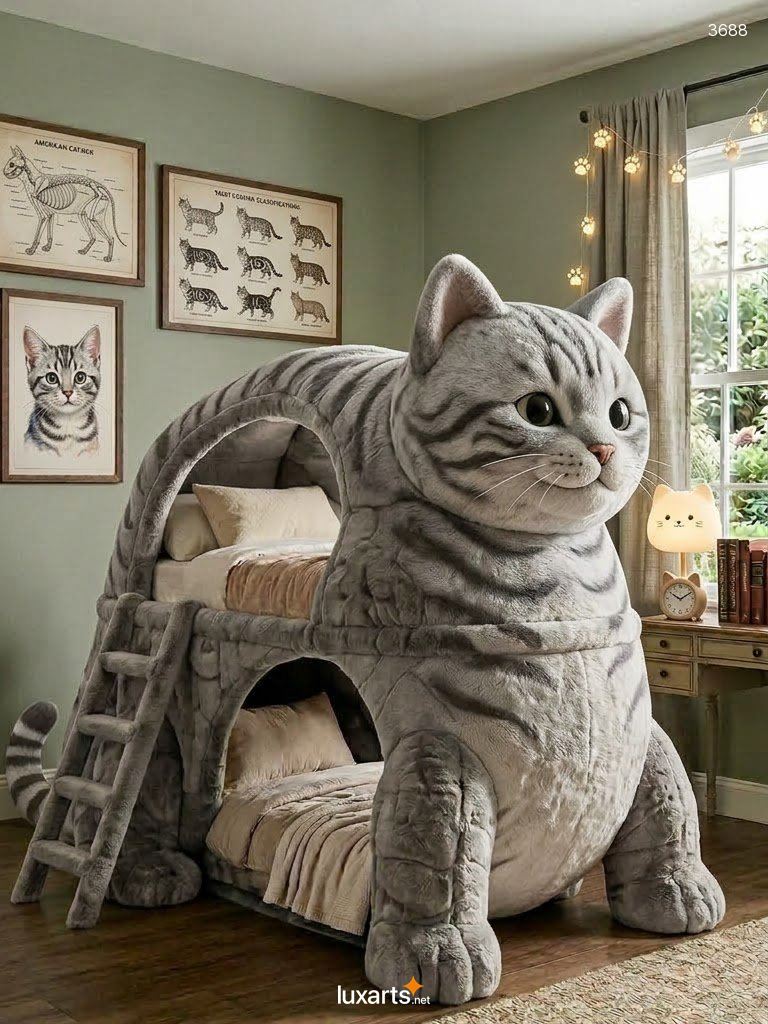
Ask a child how they want their bedroom to feel, and the answer is rarely “tidy and efficient.” It sounds more like “a hideout,” “a treehouse,” or “a place where my stuffed animals can live too.” A cat bunk bed answers that wish almost word for word. Instead of two plain rails stacked on top of each other, the whole structure turns into a giant, soft-looking cat, with a face peering over the top bunk, paws planted on the floor, and a curled tail that doubles as decoration or as a step.
This guide walks through what makes this style of children’s furniture so appealing, how the main designs differ, which safety points deserve attention, and how to arrange a room around one. If your child loves animals, or you simply want a bedroom that feels warm and playful, the sections below give a clear picture of what this furniture is really about.
What Makes a Cat Bunk Bed Different From a Standard Bunk
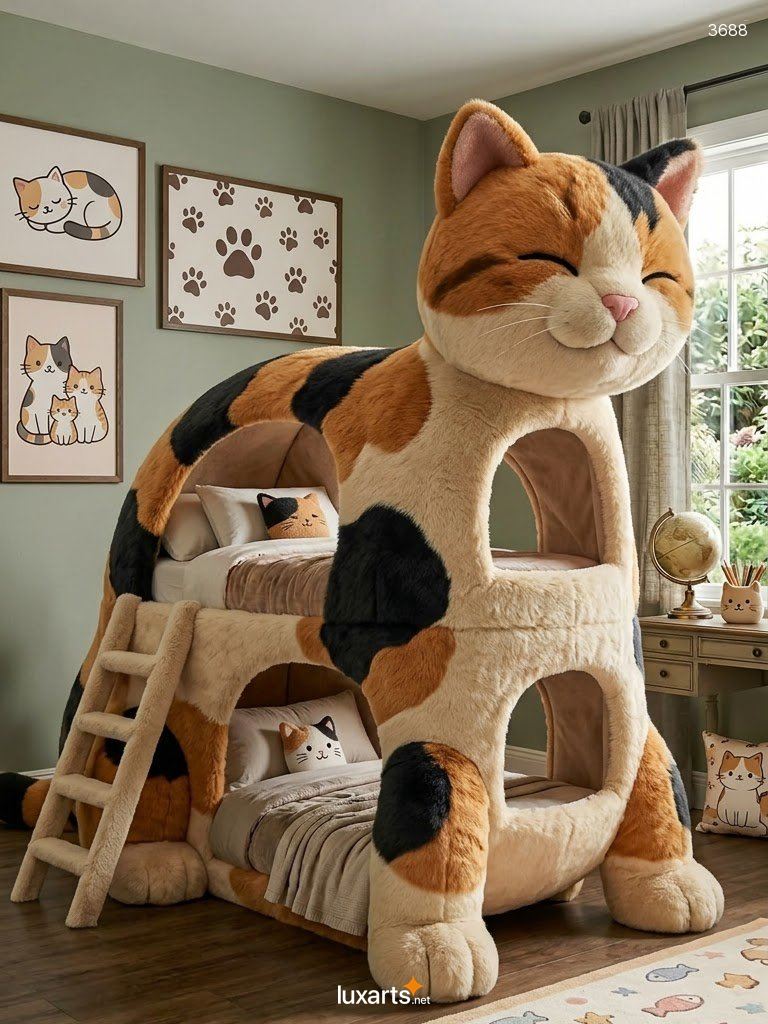
A cat bunk bed is a two-level sleeping structure shaped and styled to look like an oversized cat. The upper bunk usually sits inside the arch of the cat’s back, while the lower bunk tucks into a hollow that reads as a cave, a tunnel, or a soft belly. The head, ears, and whiskers rise at the top or the front, and the paws often frame the entrance to the lower bed.
The real difference from a regular bunk is that the furniture behaves like a character. A plain metal or wooden bunk is a frame you look through. A cat-shaped one is something you look at. Children notice this right away. They give it a name, decide what mood it is in, and say goodnight to it. For a child who feels uneasy about sleeping alone, a friendly face watching over the room can make bedtime feel far less lonely.
It also suits siblings well. Two children can share a room without arguing about who gets the better bed, because both levels feel like part of the same story. The top bunk becomes a lookout on the cat’s back, and the bottom bunk becomes a snug den. Nobody ends up with the boring option.
Cat Bunk Bed Designs and Poses You Will See Most Often
Designers approach the cat shape in a few different ways, and the pose changes both how the bed looks and how it works day to day.
The Sitting Cat
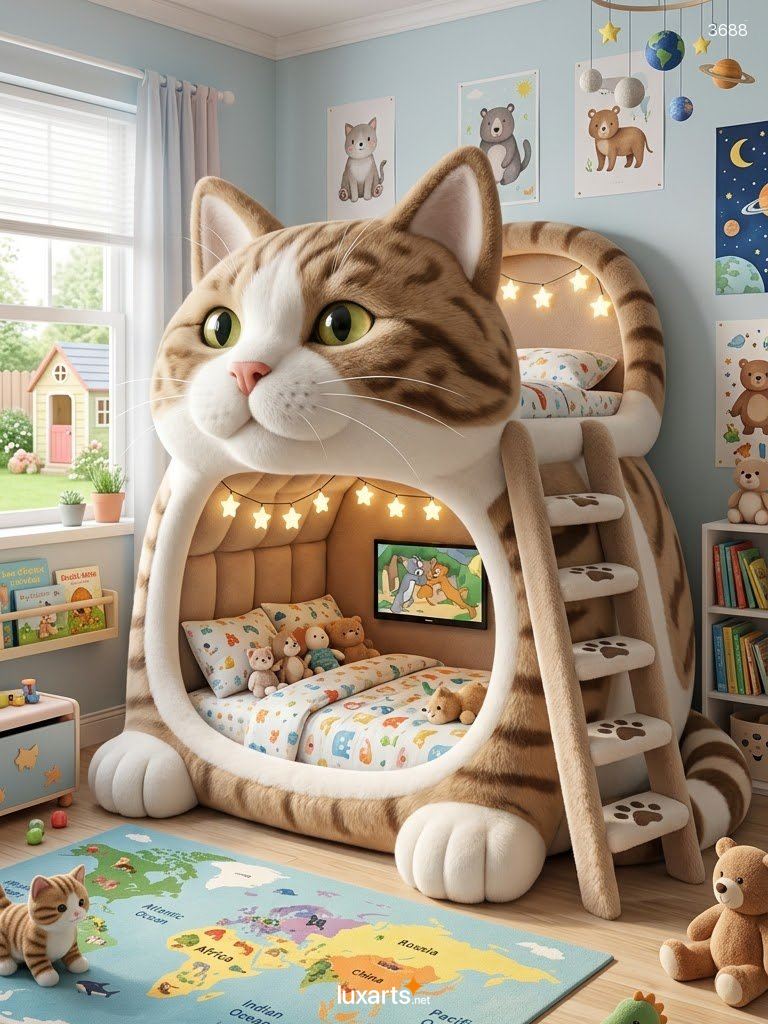
The sitting cat is the most dramatic version. The chest and front legs form one side of the bed, the head rises high with ears pointing up, and the bunks are carved into the body behind it. A lighter chest against a darker coat gives the piece depth, and a wooden ladder usually leans against the back. Because it stands tall and takes up real floor space, this design suits larger bedrooms where it can be the centerpiece.
The Sleeping Cat
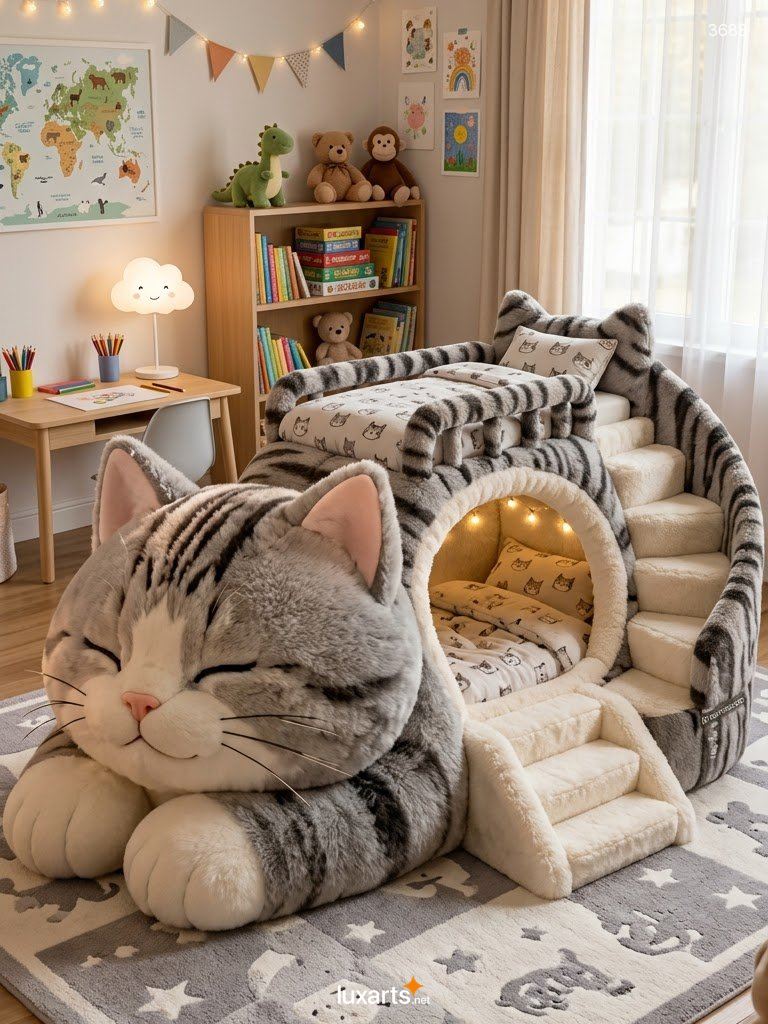
The sleeping cat is calmer. Its eyes are closed, its chin rests on the front paws, and the body curves around a tunnel-style entrance to the lower bunk. Wide, low steps often replace the ladder on one side, which many parents find reassuring for younger climbers. The overall mood is quiet and sleepy, almost like a lullaby in furniture form.
The Curled or Arched Cat
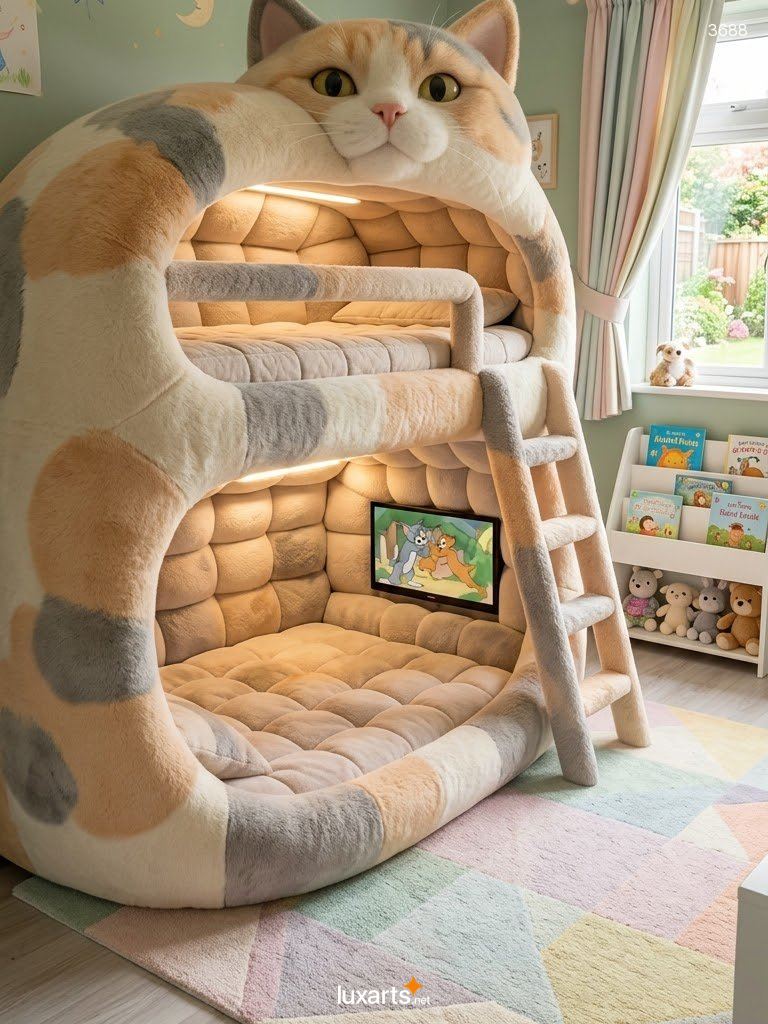
The arched cat forms one large curve, with the head resting on top of the frame and gazing down into the room. Both bunks open in the same direction, so the whole piece looks like a cat wrapped protectively around two sleeping children. In some versions the tail loops along the floor and works as a soft bumper along the edge of the lower bed.
Fur Colors and Patterns That Give Each Bed a Personality
Color does most of the personality work. A gray tabby with dark stripes feels classic and slightly wise, while a cream-white cat feels quiet and modern. Calico patches in orange, black, and cream bring more energy, and a blue-gray coat with a pale chest gives a soft, storybook look that recalls a British Shorthair.
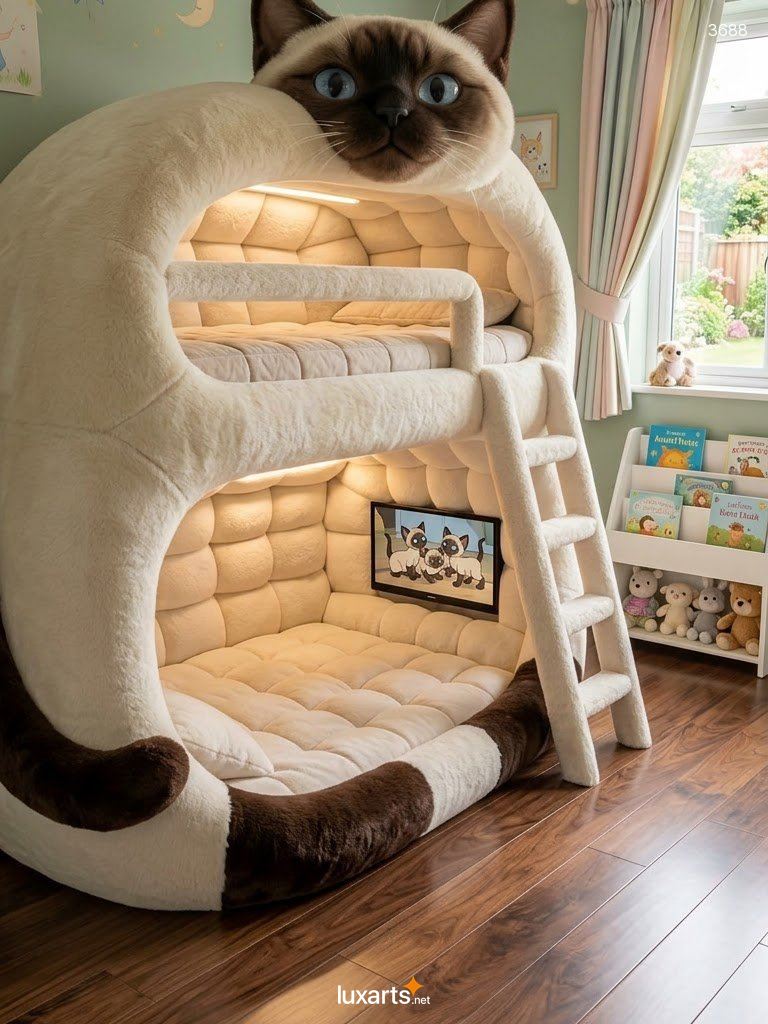
Siamese coloring is another striking option: a pale body with a deep brown face, ears, and tail, usually paired with bright blue eyes. Pastel versions in peach, mint, and baby blue push the design toward a nursery feel, which works well for toddlers and younger children who respond to gentle colors.
When picking a coat, look at the room around it. Sage green or pale blue walls pair nicely with warm tabby and calico tones. Blush pink or soft white walls let a cream cat blend into the room like a cloud. A dark-coated cat, such as a Siamese or a charcoal tabby, stands out strongly against light walls and can become the focal point without any extra decoration.
Turning the Lower Bunk Into a Reading Nook and Secret Den
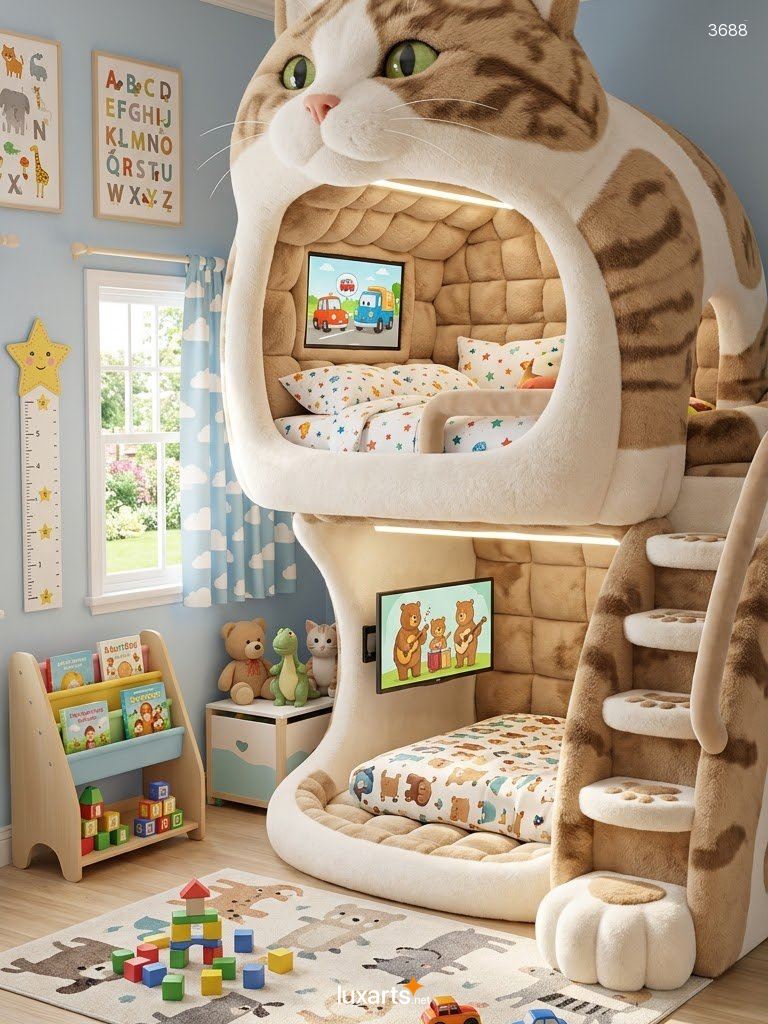
One of the best features of a cat bunk bed is how the lower level is treated. Instead of a dark gap under a mattress, the space is shaped like a hollow inside the cat’s body. Quilted padding on the walls, a rounded entrance, and warm lighting make it feel like a cave designed for curling up.
Kids use this space in ways adults do not always predict. It becomes a reading corner in the afternoon, a hideout for games, a quiet spot to calm down after a rough day, and a sleeping space at night. A few cushions, a small stuffed animal or two, and a soft night light turn it into the child’s own territory.
Low, warm LED lighting inside the arch works well because it glows without glaring. Choose lights that stay cool to the touch, and keep any cables tucked away and out of reach.
Ladders, Paw Steps, and Staircases: Getting to the Top Bunk
Getting up to the top bunk is half the fun, and cat-themed designs have some clever answers. The classic version uses a wooden ladder with flat rungs leaning at a gentle angle. Others build the steps into the shape, using rounded blocks with paw prints stitched on the treads so each step feels like walking up a cat’s leg.
Staircase versions are the most forgiving. Wide treads give small feet a full surface to land on, and a rail or padded side gives hands something to hold. Some sleeping-cat designs run the steps along the tail, so the climb follows the curve of the body. For older children, a slim ladder is often enough and takes up less room.
Whichever style your bed has, stability matters most. Steps should not wobble, treads should have some grip, and the child should be able to climb with both hands free of toys.
Safety Details Every Parent Should Check
A cute shape does not replace the basics of good bunk bed safety. Plush styling can even hide structural details, so it helps to look past the fur and check the fundamentals.
- Age for the top bunk: Many safety organizations advise that children under six should not sleep on an upper bunk.
- Guardrails: The upper bunk needs guardrails on every open side, and the mattress surface should sit well below the top of the rail, at least about five inches (13 cm).
- Gaps and openings: Spaces around the rails, ears, and cut-out arches should be small enough that a child’s head or body cannot slip through or become wedged.
- Frame strength: Under the soft cover, the frame should be solid wood or another rigid material, and it should not creak or shift when someone climbs it.
- Mattress fit: Use only the mattress size the design was made for, with no gaps at the edges.
- Cords and hanging items: Keep scarves, strings, and loose cables away from the bed, and route light cords well outside the sleeping area.
Bunk bed standards differ from one country to another, so it is worth reading the rules that apply where you live. A quick wiggle test on the ladder and rails every so often takes only a minute and catches loose parts early.
Soft Materials and Sleep Comfort
The plush look is the main visual appeal, but comfort matters just as much. Most cat bunk bed designs use a fleece, faux fur, or velvet-style outer cover over a firm structure, with quilted padding in the sleeping hollows. Soft surfaces suit the cat theme, and they also take the sting out of the occasional bump when a child is climbing or playing inside.
Sleep quality still depends on what is on the mattress. A supportive base, breathable sheets, and a light blanket give better rest than a heap of thick layers, especially in the upper bunk where warm air collects. Children who run hot at night may prefer cotton bedding over fleece.
Kids with allergies deserve a little extra thought. Long-pile fabrics can hold dust, so regular vacuuming and washable pillow covers keep the bed pleasant to sleep in.
Planning the Room Around Your Cat Bunk Bed
A piece this large calls for some planning. Measure the ceiling height first, because the upper bunk needs enough clearance above the mattress for a child to sit up without bumping their head. Leave space at the ladder or steps so the climb is not squeezed against a wall or a dresser.
Keep the decor around it simple so the cat remains the star. A round jute rug or a soft patterned rug helps define the sleep zone. Framed cat illustrations, a low bookshelf with front-facing covers, and a star-shaped or paw-print night light carry the theme without crowding it.
Place the bed away from windows with curtain cords, radiators, and ceiling fans. Position it so the lower bunk faces the room, where a parent can see in easily during a bedtime story. In shared rooms, leave a clear path between the bed and any desk or play area.
How a Cat-Shaped Bed Shapes Play, Imagination, and Bedtime
Children treat character furniture as a playmate. A cat bunk bed becomes a jungle gym in the morning, a pretend animal shelter after lunch, and a resting place by evening. Kids invent stories in which the top bunk is a mountain and the lower den is a cave, and those small scenes support the kind of imaginative play that builds language and social skills.
Bedtime routines can lean on the theme too. Parents often say things like “the cat is getting sleepy” to start winding down, or let the child tuck a favorite toy into the lower den before the lights go off. When a child looks forward to going to their bed, the nightly negotiation tends to shrink.
Independence gets a boost as well. Climbing up alone and arranging a personal nook gives children a sense of ownership over their space.
Keeping the Plush Surface Clean and Fresh
Soft exteriors attract dust, crumbs, and the occasional juice spill, so a simple routine goes a long way. Vacuum the fur surfaces weekly with a brush attachment, and spot clean marks with a damp cloth and mild soap, testing a small hidden patch first. Remove pillows and bedding for washing on a regular schedule, and let the bed air out before making it up again.
Check the ladder, screws, and rails every few months. Wood can settle over time, and a quick tightening keeps everything steady.
Final Thoughts
A cat bunk bed turns a piece of sleeping furniture into something a child can talk to, climb on, and hide inside. The best versions balance charm with careful construction: a friendly face and soft fur on the outside, and a firm, well-guarded frame underneath. Pay attention to the pose, the coat, the way the lower bunk is built, and the safety details, and the right design becomes much easier to spot.
For children who love animals, few bedroom pieces feel as personal. A cat bunk bed gives them a place that feels like theirs, and gives parents a room that looks joyful every time they open the door.
NOTE: All images in this post are AI-generated and intended solely for inspiration. These are not real products available for sale, and we do not operate any online store or website for purchases.