Introduction: Why the Tree Itself Deserves the Lights
Most holiday displays start at the roofline and end at the front door. The big tree in the middle of the yard, the one that has watched over the house for decades, usually gets left in the dark. That is a missed opportunity, because a mature tree is often the tallest and most dramatic shape on the property. Christmas Tree Wrap Lights change that by making the bark and branches the main attraction. Rope-style light strands spiral around the trunk, climb into the first forks, and trace the limbs outward, so the whole structure of the tree becomes visible after sunset.
The result looks nothing like a loose string of bulbs tossed over a shrub. A wrapped trunk reads as a piece of sculpture. Light follows every curve of the wood, and each ridge in the bark catches a little of the glow. Add snowflakes, stars, or small holiday characters along the strand, and an ordinary oak becomes the spot where neighbors slow their cars and children stop walking. This guide explains how wrap lights work, which design styles suit different yards, how remote controls change the mood, and how to combine wrapped trees with the rest of an outdoor display, with practical notes on spacing, safety, and seasonal care along the way.
What Christmas Tree Wrap Lights Are and How They Work
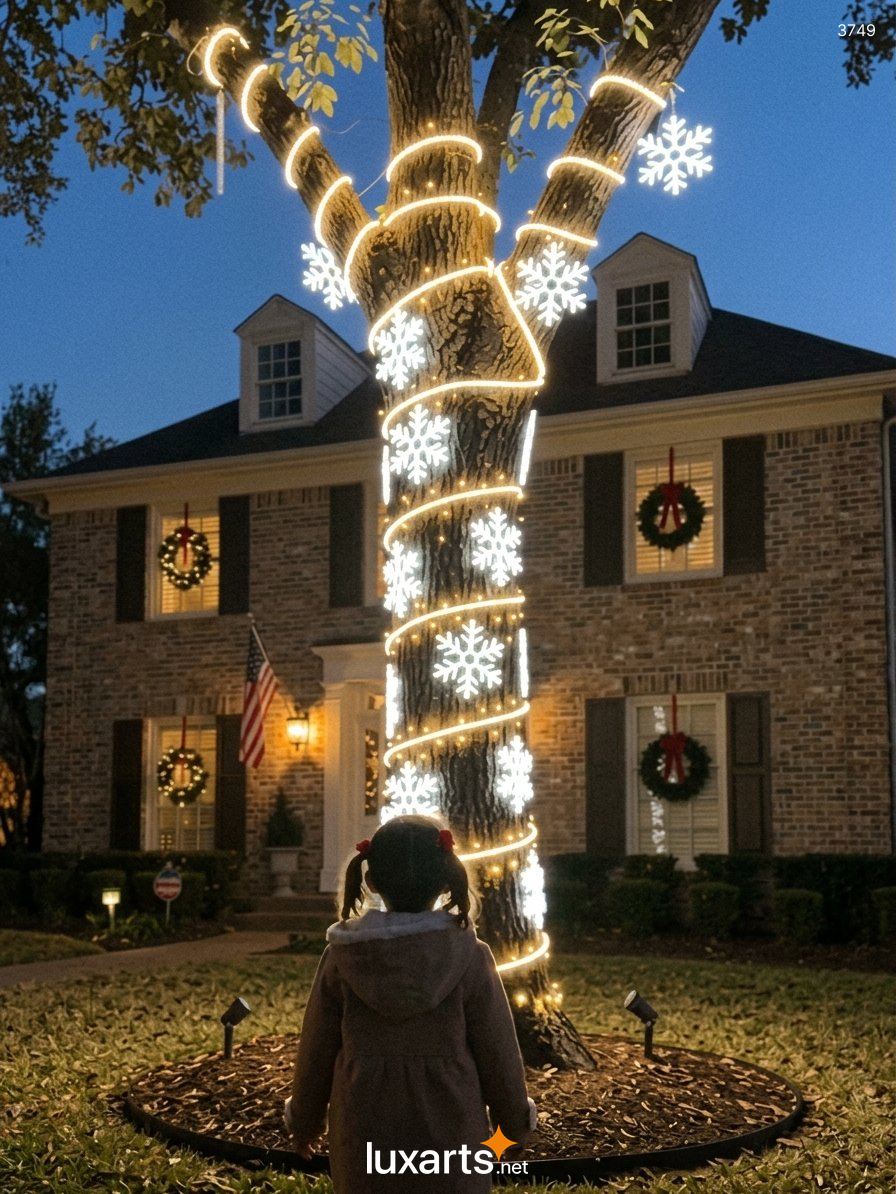
Christmas Tree Wrap Lights are flexible, continuous strands of LED lighting made to coil around cylindrical shapes such as trunks, thick limbs, posts, and columns. Many use a rope-style or tube-style cover that spreads the glow into one unbroken line instead of a row of separate dots. That is why the spirals in the photo above look like ribbons of warm light curling up the bark.
Rope Strands and Motif Panels
The rope strand does the structural work. It forms the spiral that leads the eye up the tree. Motif panels do the storytelling. These are flat, lit shapes such as snowflakes, crescent moons, stars, gingerbread figures, or Santa faces that sit along the rope and face outward. Because the rope and the panels belong to one system, the finished wrap looks planned instead of patched together.
Power and Controls
A typical outdoor wrap runs from a weather-rated power connection near the base of the tree. LED strands draw far less electricity than older incandescent bulbs and stay much cooler to the touch, which matters when lights sit directly against bark and leaves. Many systems also include a small handheld remote that opens up color changes, brightness levels, and animated modes, covered in more detail further down.
Why Outdoor Trees Make Such a Good Canvas for Christmas Tree Wrap Lights
Walk through a neighborhood at dusk and you will notice that most light displays sit low and wide. Trees break that pattern. A trunk rises several feet before it branches, so wrapped lights draw a vertical line that the eye follows past the roofline and into the sky. That height makes the display visible from the street, from the neighbor’s yard, and from the upstairs windows of your own house.
Bark also makes a better backdrop than most people expect. Dark, rough texture absorbs stray light and lets warm strands stand out with strong contrast. In the first photo, the deep grooves of the oak catch the glow and look almost carved, while the snowflake panels float against the darker wood. A plain white wall would flatten the same lights. A tree also stays put, so once you work out the spiral spacing and the placement of each motif, the same pattern can return every December, and small improvements each year build into a signature look people recognize.
Warm White Spirals: The Classic Way to Wrap a Trunk
Warm white remains the most dependable choice for Christmas Tree Wrap Lights. It echoes candlelight, matches the glow of lit windows, and sits comfortably beside brick, stone, and wood siding. The house behind the tree in the first photo shows the idea: amber light in the windows, wreaths hanging on each sill, and a trunk wrapped in the same golden tone, all reading as one scene.
Choosing the Spacing
Spacing decides whether a wrap looks elegant or crowded. A gap of roughly a hand-width to a forearm between each pass of the strand works well on a thick trunk, because bark stays visible between the spirals. Tighter spacing creates a dense glowing column, which suits a slim trunk. Wider spacing suits very large trunks, where the spiral needs room to be read from far away. Hold the strand loosely against the tree before committing to a pattern, and step back to the street to check how it looks from there.
Moving From Trunk to Branches
The strongest wraps continue past the trunk. In the first photo, the strand climbs into each fork and follows the limbs, finishing in thin bright rings near the top. That keeps the glow from stopping abruptly at the first split. On branches, use shorter, tighter spirals and leave a little slack so the strand can move with the wood. Skip the thinnest outer twigs, since they sway in wind and can snag a strand.
Adding Holiday Motifs: Santa, Gingerbread, Snowmen, and More
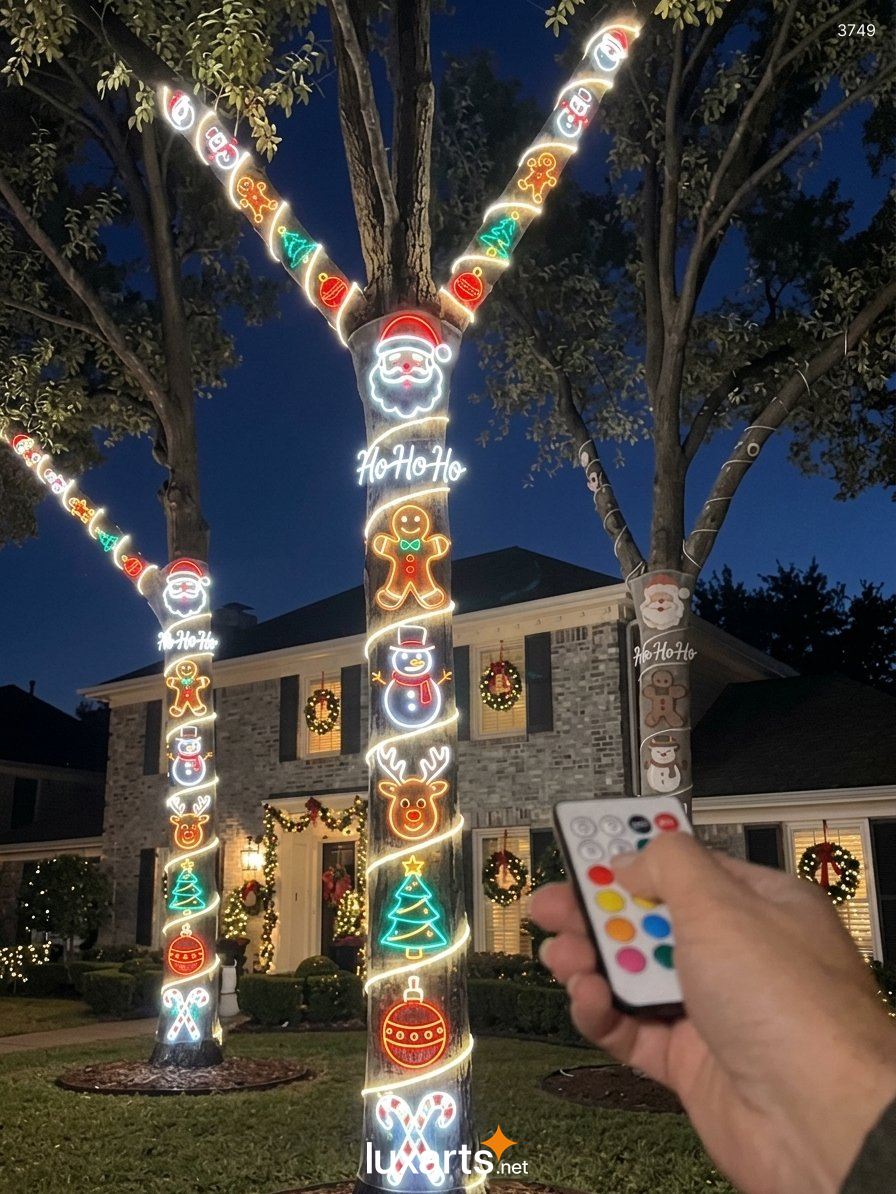
Warm white spirals look lovely alone, but motifs turn a wrap into a narrative. The tree in the photo above carries a Santa face near the fork, a “Ho Ho Ho” script, a gingerbread man, a snowman, a reindeer, a decorated pine, an ornament, and crossed candy canes, stacked one after another down the trunk. Each figure sits between loops of rope light, so the trunk reads like a vertical storybook you can follow from top to bottom.
This approach works especially well for families with children. Younger kids can name each character as they walk up the path, and the repeating order becomes a small ritual. Mirror the same sequence on a second trunk, as the photo does across the yard, and the design feels like a deliberate parade. Keep the palette consistent, though. Red, green, and gold motifs on a warm white rope look cohesive, while too many unrelated hues pull attention away from the figures.
A Night Sky Theme: Moons, Stars, and Spiral Galaxies
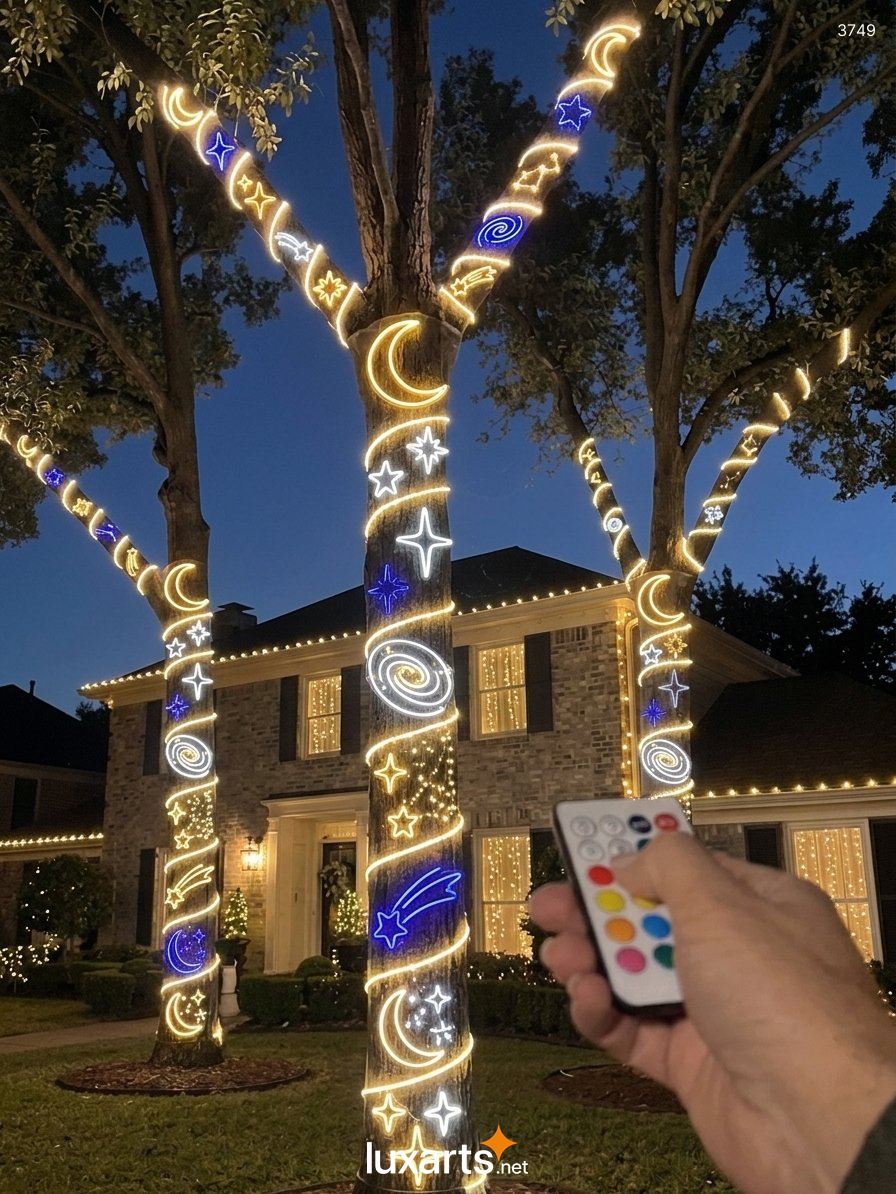
Not every outdoor tree has to speak Christmas in the traditional sense. The trunks in the photo above carry crescent moons, four-point stars, small spirals that resemble galaxies, and a shooting star in deep blue. It is a quieter, more modern take that suits the season, because winter nights are long and the sky feels close. Soft white and gold shapes sit against royal blue accents, and the contrast keeps the scene calm instead of loud.
A celestial theme also lasts longer than a strictly Christmas one. Moons and stars are not tied to a single holiday, so the same wrap can stay lit through January, when the yard still benefits from some life after the main festivities end. It fits homeowners who prefer a refined look over a cartoon-style display.
Remote Controls: Color, Brightness, and Mode at Your Fingertips
Both the night sky photo and the Santa-and-gingerbread photo show a hand holding a small remote with a grid of colored buttons. That detail points to one of the most useful features of a modern wrap light system. With a single handheld controller you can usually switch between steady and flashing modes, dim the glow when guests arrive, or change a cool blue to a warm gold depending on the mood. A slow fade feels peaceful on a quiet night, while a faster chase pattern suits a neighborhood gathering. Remotes also simplify setup. Instead of walking back to the outlet to test each mode, you can stand at the curb, press a button, and see exactly what a passerby sees. That quick feedback helps you spot a loose section or an uneven spiral before the final adjustments.
Pairing Wrapped Trees With Glowing Yard Figures
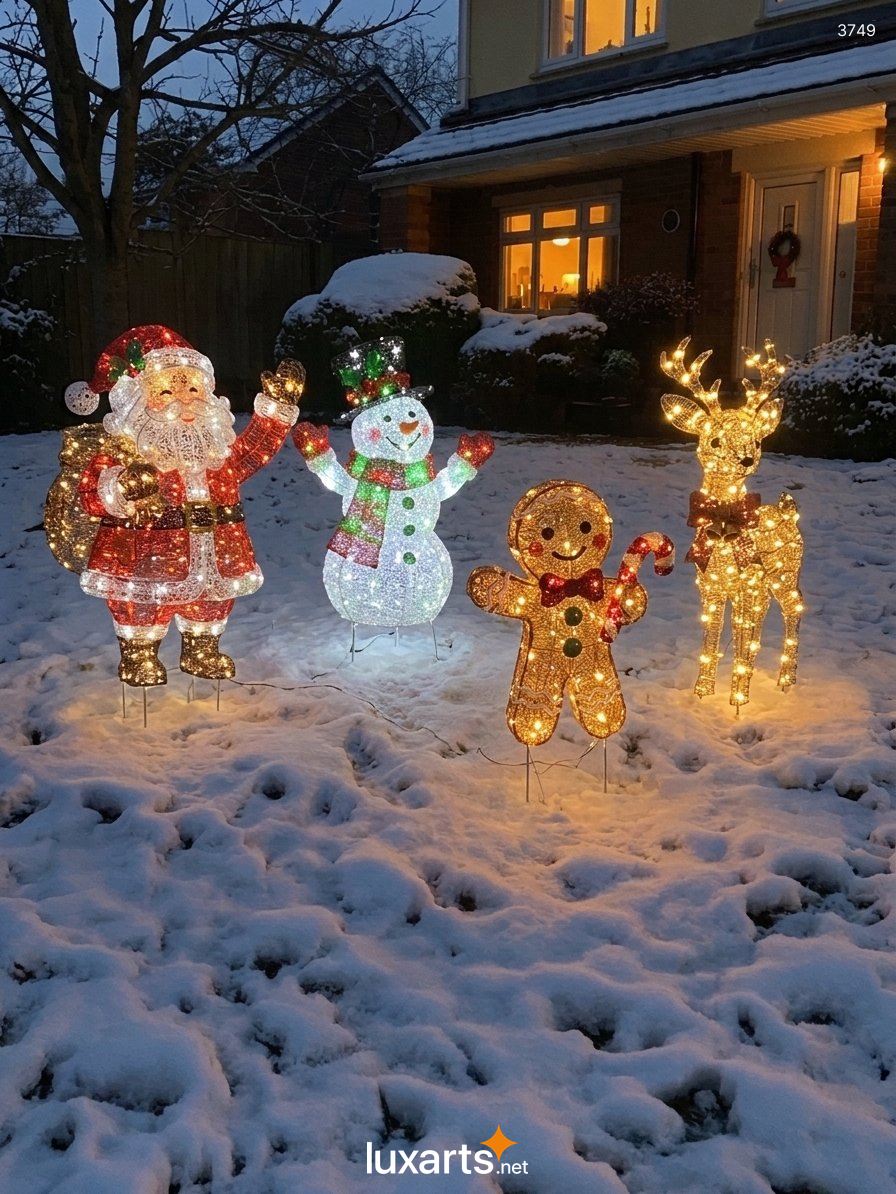
A glowing trunk gets even better with company at ground level. Figures such as Santa, a snowman, a gingerbread man, and a reindeer, like the group standing in the snow above, create a lower layer of light that balances the tall vertical line of the tree. Their sparkling surfaces, built from many small points of light, catch the eye at a child’s height while the wrapped tree draws attention overhead.
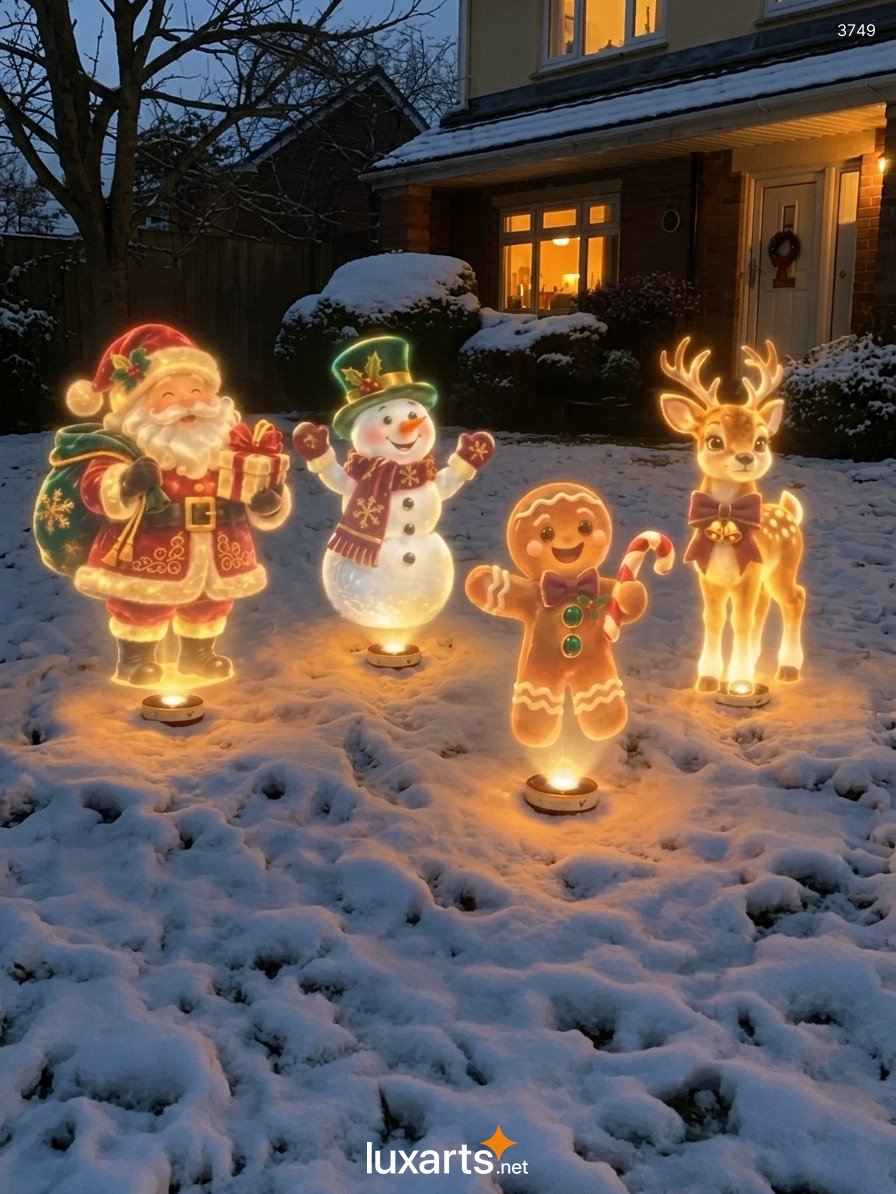
The second photo shows a softer approach. The same four characters appear as smooth, glowing silhouettes lit from small round bases set into the snow. Instead of a sparkle texture, each figure gives off an even, painted-looking glow, with details such as embroidered trim on Santa’s coat, snowflakes on the snowman’s scarf, and a bell on the reindeer’s bow. Both styles work, and the choice depends on whether you prefer glitter or gentleness. Group figures in a loose arc rather than a straight line, leave space between them so each silhouette stays readable, and angle them slightly toward the path so the faces are visible from where people walk.
Light-Sculpted Shrubs That Echo the Tree
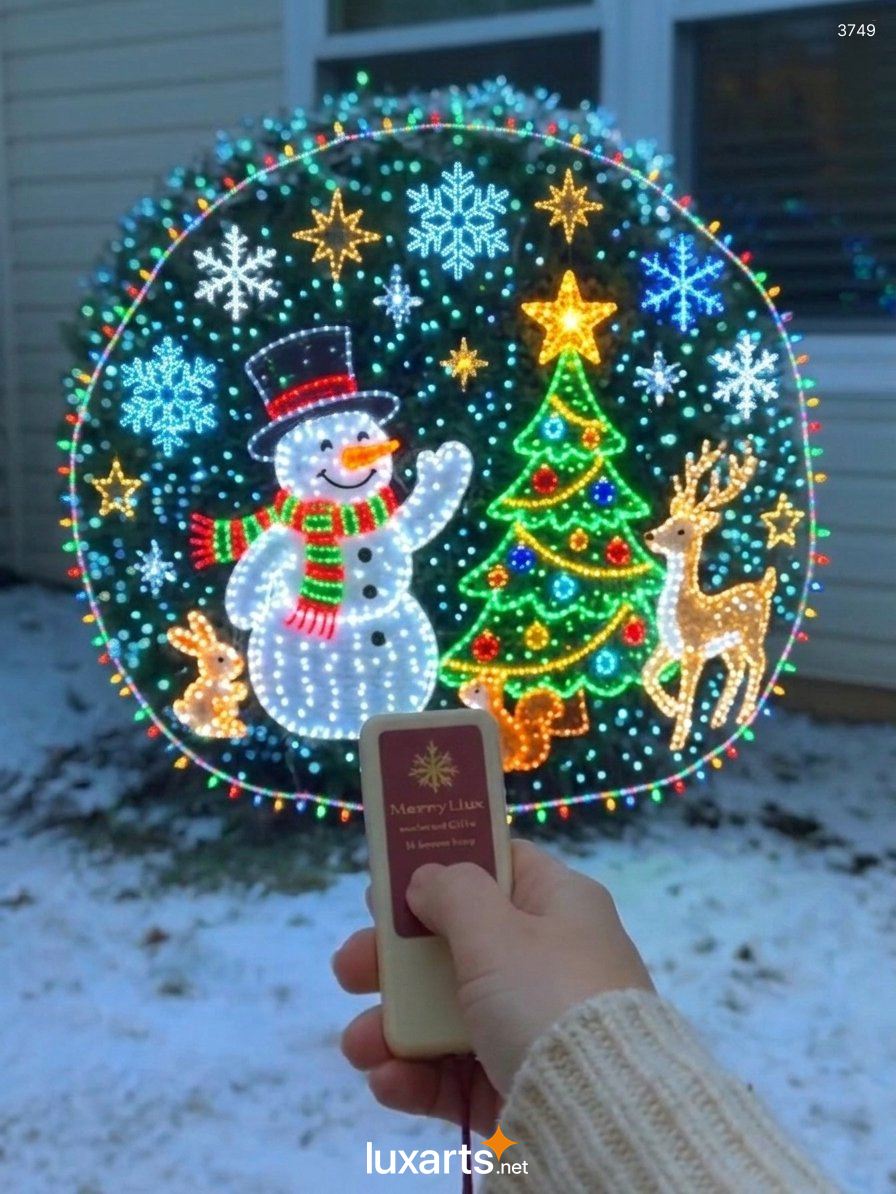
Round shrubs and hedges can carry the same theme as the wrapped tree. In the photo above, a large bush is covered in tiny multicolor bulbs, with a lit scene at its center: a smiling snowman waving beside a decorated tree, a reindeer, a rabbit, and a squirrel, surrounded by snowflakes and stars. The remote in the foreground suggests the pattern can be adjusted by hand as the evening goes on.
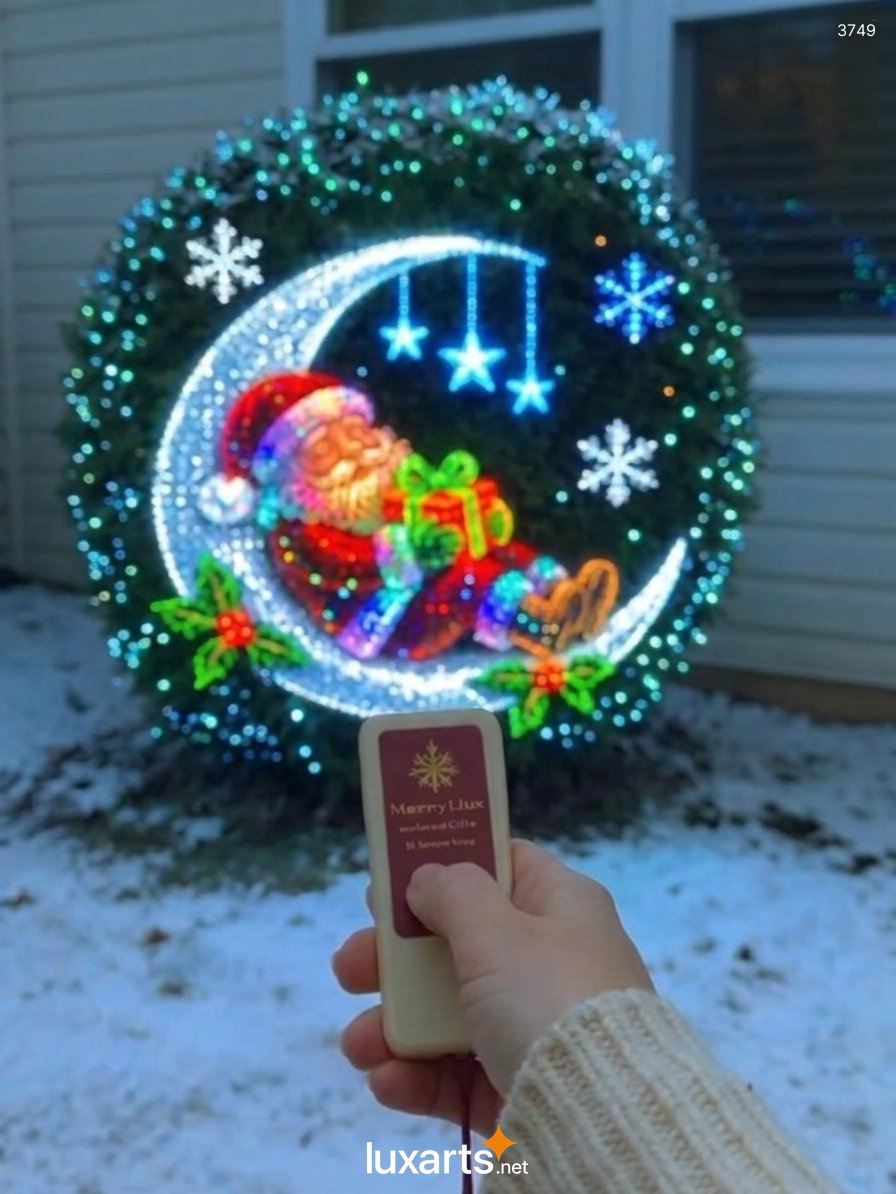
The next shrub shows a sleeping Santa resting on a crescent moon with a gift in his arm, hanging stars dropping from the moon’s edge, and sprigs of holly at the corners. The bush behind the scene supplies a glowing frame, and the scene itself offers a calm focal point that pairs naturally with a celestial wrap on a nearby trunk. Using shrubs this way spreads light across the yard at mid height, filling the gap between tall trees and low figures. It also works in smaller gardens with no big trees, since a clipped bush can carry a full display on its own.
Building a Layered Whole-Yard Display
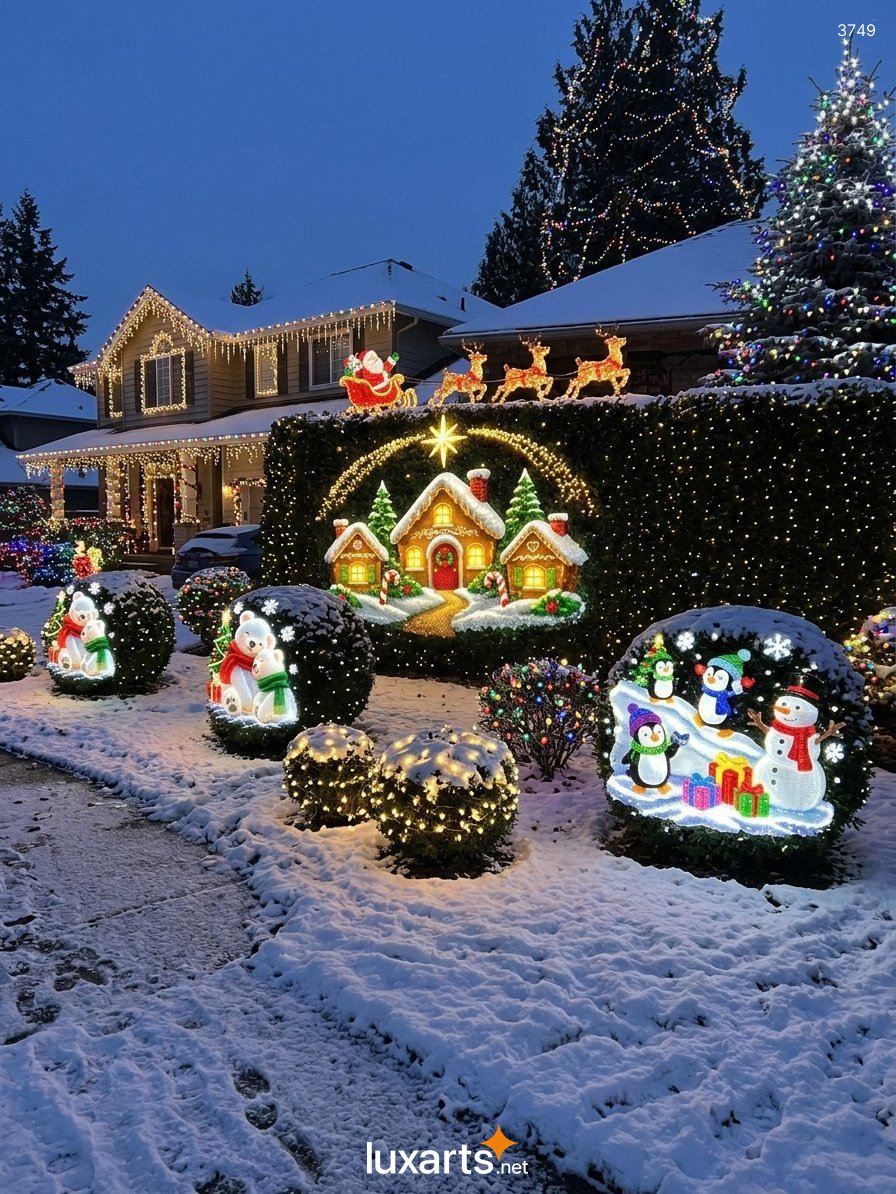
The best outdoor displays work in layers, and the photo above is a good example. Tall evergreens wrapped in colored light fill the background. A hedge covered in tiny white bulbs forms a wall, and in front of it a lit village scene with a glowing star, snow-capped cottages, and candy canes sits at the center. Around that, round shrubs show polar bears, penguins, snowmen, and wrapped presents, while a sleigh and reindeer run across the top of the hedge.
Each layer has a different height and a different role. Tall elements create drama, mid-height elements carry the details, and low elements guide the eye toward the front door. When planning, sketch the yard from the street and mark three zones: high, middle, and low. Put wrapped trees in the high zone, scene-covered shrubs in the middle, and figures in the lowest, repeating colors across all three so the layers feel connected. Keep one area calm, too. A stretch of lawn or a plain hedge left unlit gives the eyes a place to rest and makes the bright areas look brighter.
Projection-Style Figures for Interactive Glow
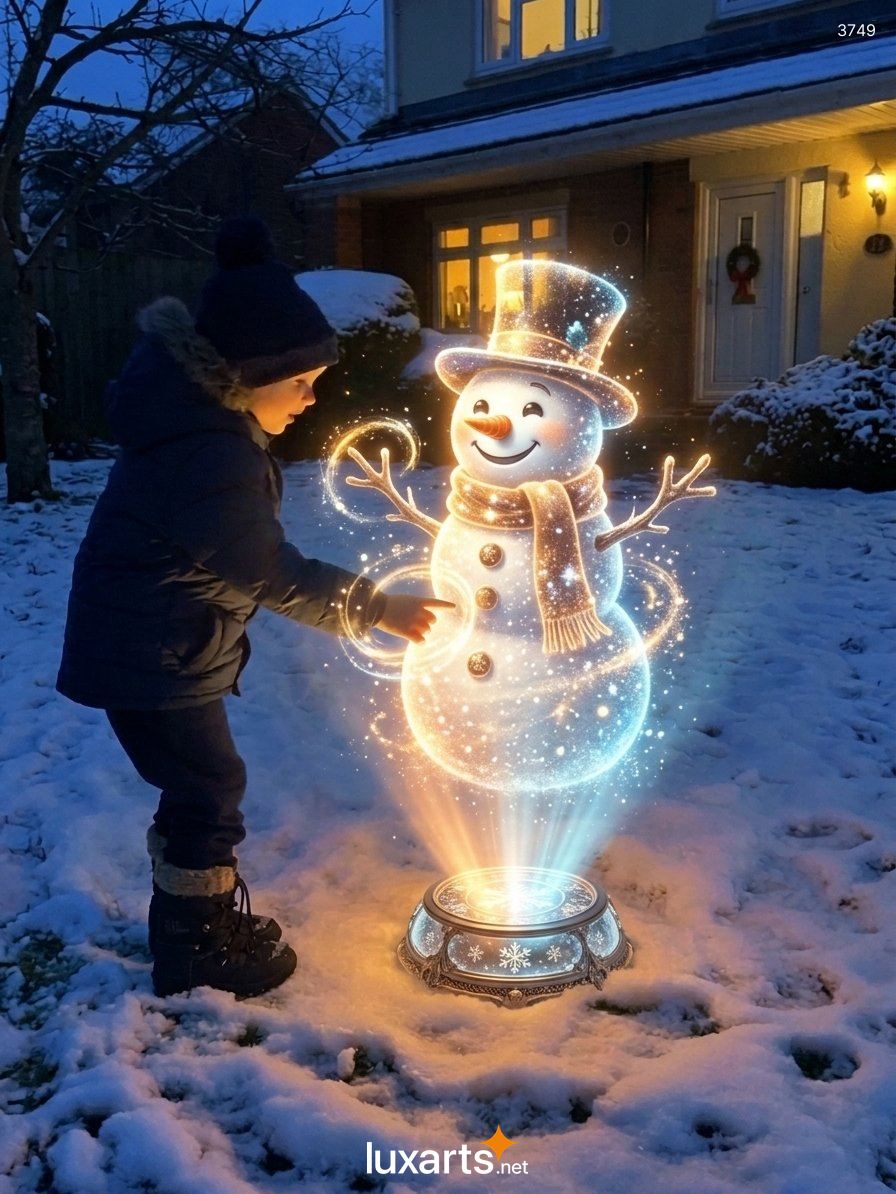
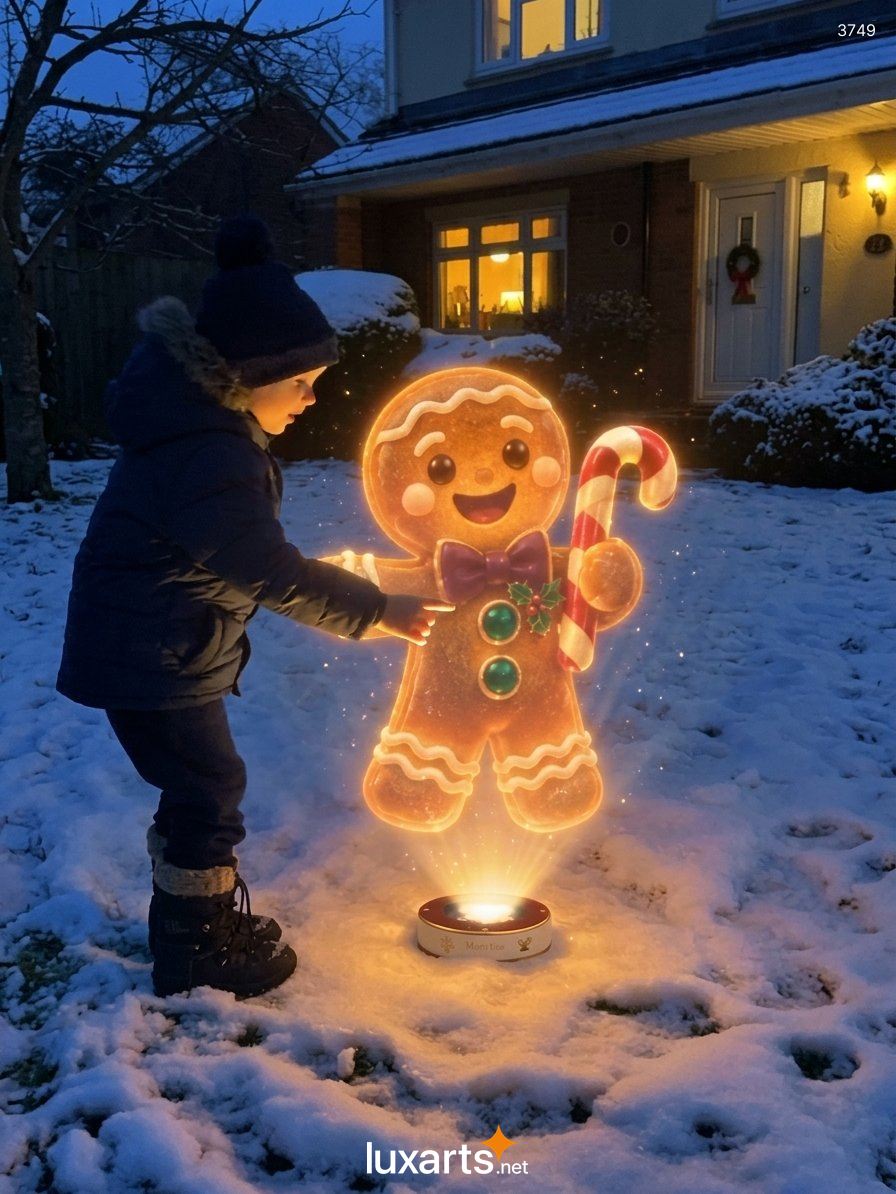
The last two photos show figures that appear to rise from a round base on the ground. A snowman in a top hat glows above an ornate silver-toned base while a child reaches toward it, and a gingerbread man holding a candy cane floats above a smaller disc. The light looks soft and shimmering, with tiny sparkles drifting around each figure. Pieces like these suit families because they invite touch and curiosity. Children walk straight toward them, which turns a display into an experience. Place them beside the path where the wrapped trunk is visible beyond, so visitors take in the close-up character and the tall glowing tree in the same glance.
Practical Tips for Wrapping Safely and Neatly
Prepare the Tree First
Before any lights go up, look over the trunk and branches. Remove loose bark flakes, dead twigs, and anything sharp that could rub against the strand’s cover. Check the tree’s health too, since a limb that is about to fail is no place for a lit strand. Test the lights on the ground first so any dead section can be fixed while it is still easy to reach.
Wrap Loosely and Leave Room to Grow
Trees keep growing, even slowly, and a strand pulled tight can press into bark over time. Wrap with a little slack and use soft ties instead of staples or nails, which can injure the tree. The rough surface of the bark already gives the spiral plenty of grip.
Keep the Electrical Side Safe
Use only outdoor-rated strands, extension cords, and connectors. Keep plugs lifted off wet ground and covered with a weatherproof cover. Use a ground-fault protected outlet when possible, and avoid overloading a single circuit with too many strands. A plug-in timer can switch the display on at dusk and off at bedtime, which saves energy and keeps the system from running all night.
Caring for Your Wrap Lights After the Season
When the season ends, unwind the strands gently from the top, working carefully around branches and avoiding sharp pulls against the bark. Wipe away dirt and moisture, then coil the strand in loose loops around a piece of cardboard or a wide spool, since tight knots weaken wires and crack the covering. Keep each remote in a labeled bag with its matching strand. A quick check for cracks or exposed wire before storage lets you repair problems in the quiet months instead of during the December rush. Take a photo of the finished tree each year as well; it works as a map for the next year’s spiral.
Final Thoughts on Christmas Tree Wrap Lights and Festive Outdoor Sparkle
A yard full of decorations can still feel flat if nothing reaches above eye level. Christmas Tree Wrap Lights fix that by turning the tallest, most permanent features of the property into the brightest ones. A simple warm white spiral brings classic charm. Motifs like Santa, gingerbread, and snowmen tell a story down the trunk. Moons and stars offer a calmer, more contemporary mood. A remote adds control, while shrubs, figures, and glowing scenes add layers around the base.
Start with one tree, keep the spacing generous, and let the bark show between the spirals. Watch how neighbors and visitors react once the lights switch on at dusk, then add pieces next season based on what you see. Done thoughtfully, the lights bring festive sparkle to outdoor trees that lasts through the whole winter and gives the yard a personality of its own.
NOTE: All images in this post are AI-generated and intended solely for inspiration. These are not real products available for sale, and we do not operate any online store or website for purchases.