
Food Shaped Pet Bed with Removable Plush Toppings for Cats & Dogs
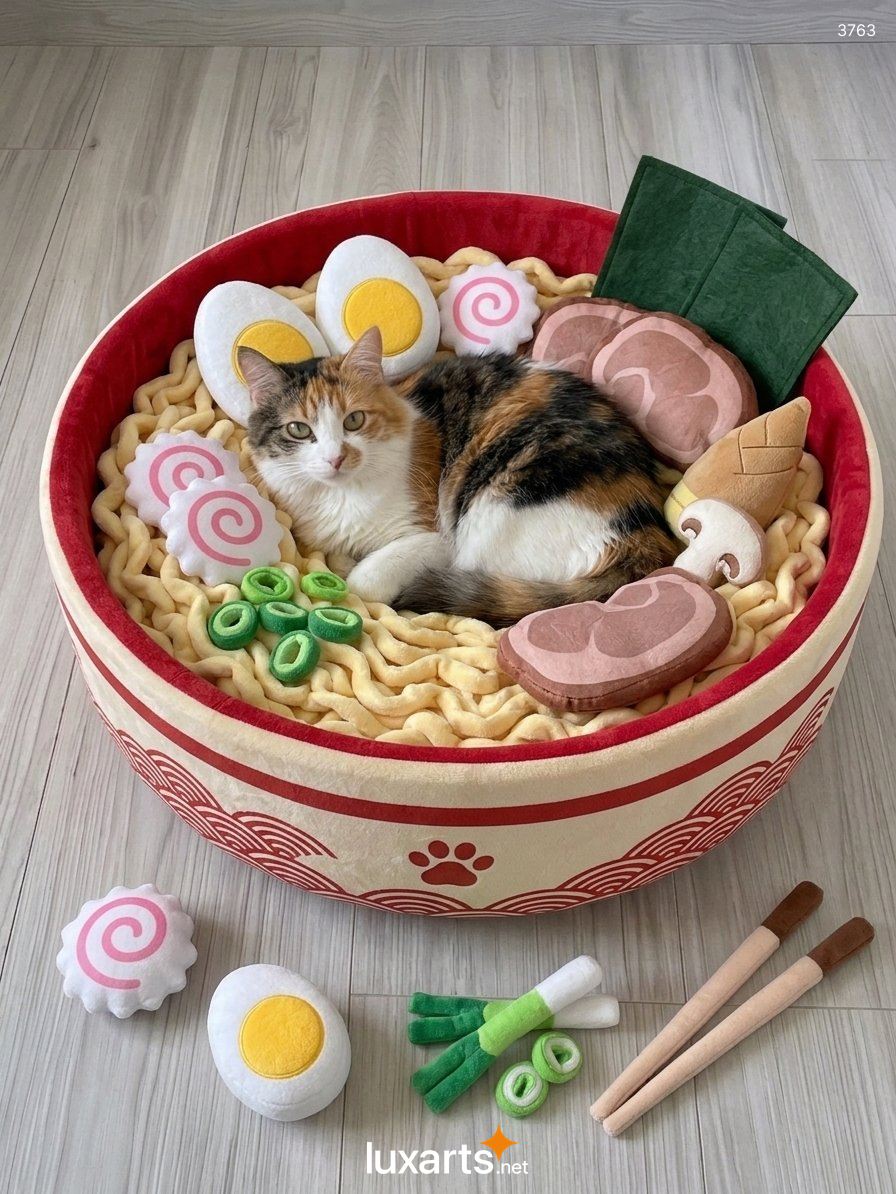
Walk into a living room where a calico cat is curled up inside a giant bowl of ramen, and it is hard not to smile. The noodles are plush, the soft-boiled egg is stuffed with fiber fill, and the cat looks completely at home. That small scene explains why the food shaped pet bed has become one of the most talked-about ideas in pet furniture. It takes something animals already love, a snug place to nest, and wraps it in a design that makes people laugh, take photos, and share them with friends.
The charm goes deeper than looks, though. The best versions come with removable plush toppings: small stuffed pieces such as eggs, mushrooms, cherries, or lettuce leaves that can be lifted out, tossed, carried around, and washed on their own. That one detail turns a decorative bed into a sleeping spot, a toy set, and a piece of home decor all at once. This article looks at how these beds are built, why pets respond to them, which themes work best, and how to keep everything clean and safe for daily use.
What Makes a Food Shaped Pet Bed Different from a Standard Bed
A conventional pet bed is usually a cushion, an oval bolster, or a flat mat in a neutral color. It does the job and then disappears into the background. A food shaped pet bed does the opposite. The whole structure is modeled after a dish or a meal: a ramen bowl with a raised rim, a taco shell that folds around the sleeper, a sundae dish piled with scoops. The outer wall is printed or embroidered to match, so even the side of the bed reads as part of the illustration.
The shape is not purely cosmetic. A deep, rounded wall gives a cat or small dog something to lean against, and the bowl-like interior keeps the body gently curved. Many pets sleep in a loose curl anyway, so a bed that already follows that curve tends to feel natural from the first night. The raised rim also blocks a little floor draft and creates a sense of boundary, which matters to animals that like to feel tucked in rather than exposed.
Then there is the personality factor. People who care about how a room looks have long been stuck with pet beds in beige or gray. A food shaped pet bed lets the animal’s sleeping spot become a small focal point, closer to a piece of playful furniture than a utility item. Guests notice it, children want to pose next to it, and the pet ends up with a bed that suits a household with a sense of humor.
The Role of Removable Plush Toppings
The toppings are what separate a fun concept from a genuinely useful one. On a fixed design, every egg, mushroom, and cherry is sewn permanently into the filling. That looks fine on day one, but it traps dust and hair in places that are hard to reach, and it gives the pet nothing to interact with. Removable plush toppings solve both problems.
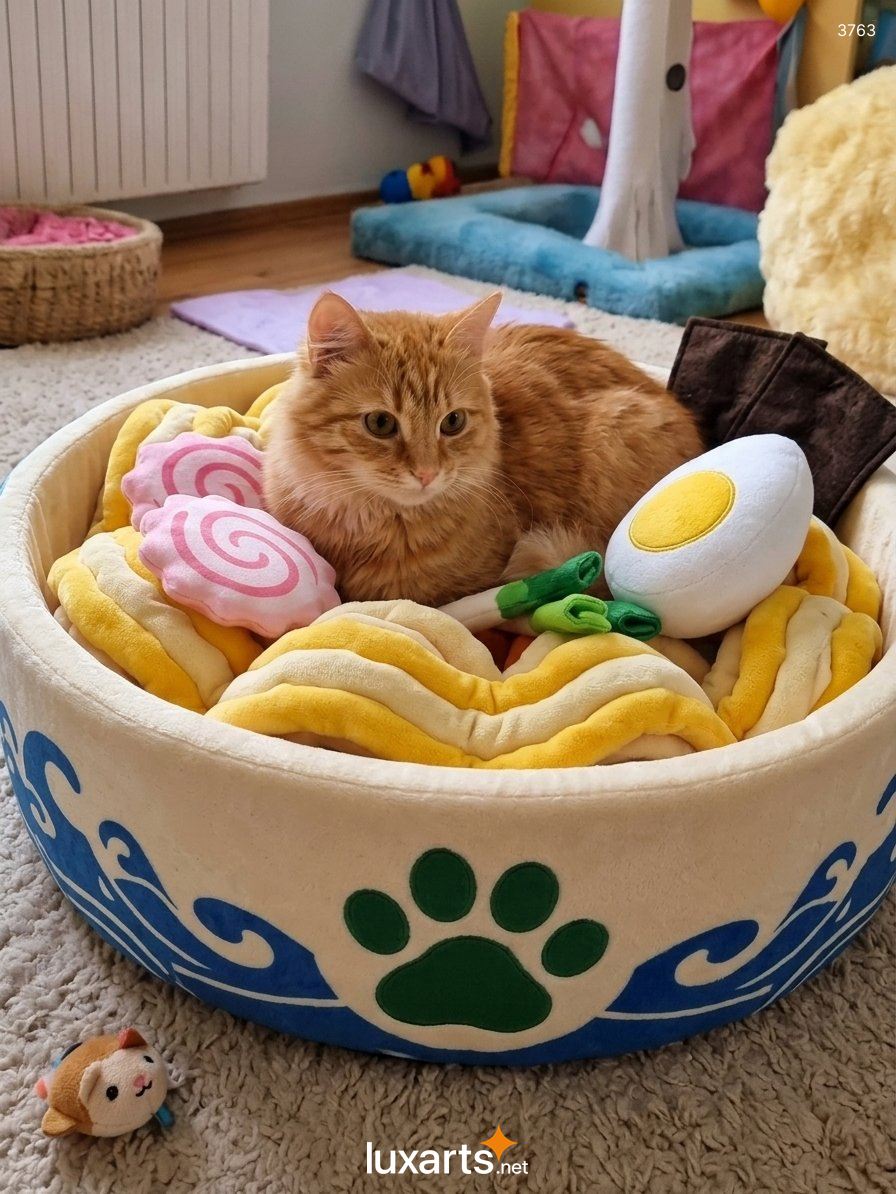
Each piece is a separate stuffed item. The soft-boiled egg in a ramen bed, the pink swirl fish cake, the scallion pieces, and the shiitake caps all sit loose on top of a textured base such as a pile of wavy noodles. A cat can nudge them aside to make room, carry one across the floor, or curl around a favorite piece. An owner can lift everything out in seconds, shake the base, and wash the parts according to the care tag.
Three practical benefits follow from this design:
- Easier cleaning. Small plush pieces can go into a mesh bag and be washed apart from the larger base, which gets its own cycle or a surface wash.
- Built-in enrichment. Pets that lose interest in ordinary toys often respond to unfamiliar shapes and textures. Fresh pieces to bat, pounce on, or rest a chin against add variety without filling the room with extra items.
- Flexible layout. Some days a pet prefers an open center with the toppings pushed to the edge. Other days it wants a pile to burrow into. Removable pieces let the pet, or the owner, decide.
There is also a durability angle. When one topping gets worn from heavy play, it can be set aside while the rest of the bed stays in use. The base is not spoiled by the loss of a single decorative piece.
Popular Food Themes and What Each One Brings to the Room
Designers have borrowed from nearly every corner of the kitchen. The themes below show how different foods translate into sleeping spaces, and each one suits a slightly different pet and a slightly different room.
Ramen Bowl Beds
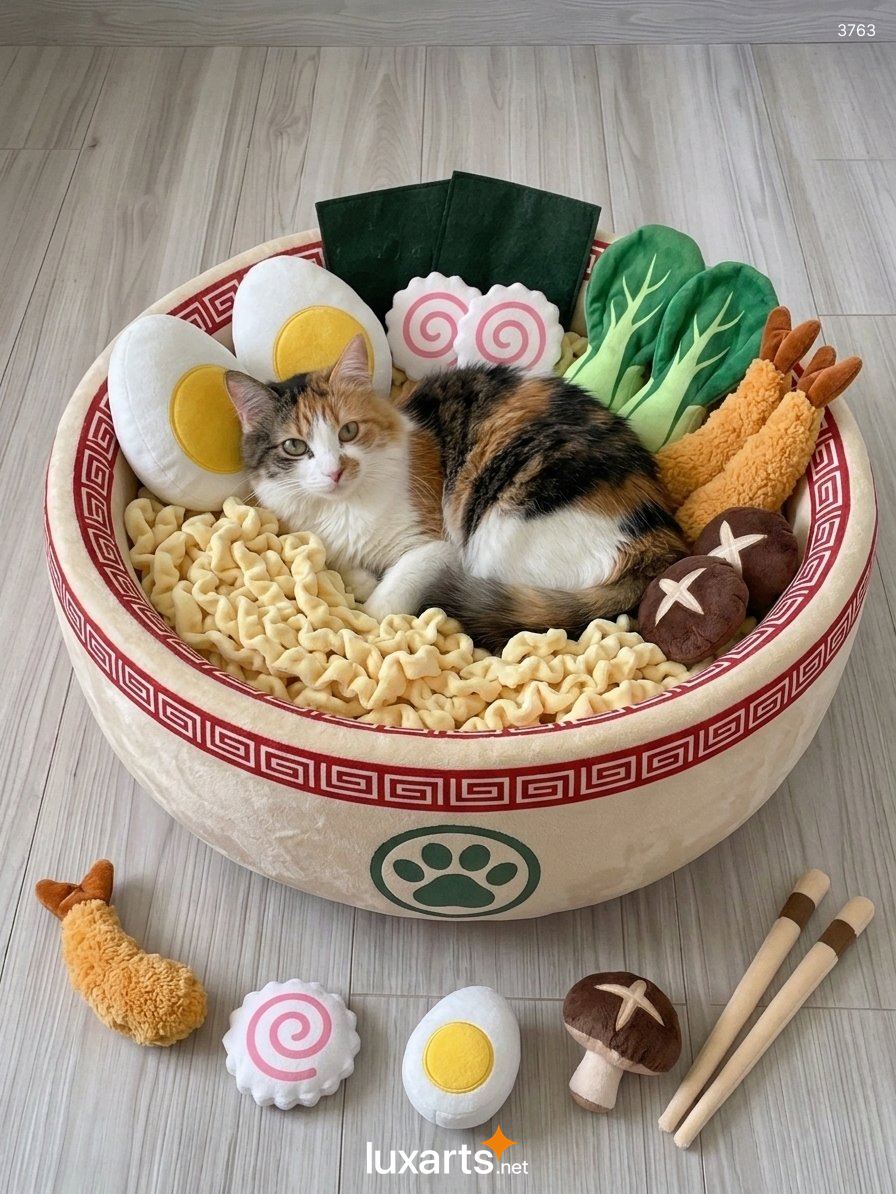
Ramen is probably the most recognizable theme, and it is easy to see why. A round bowl is already a natural nest shape, and a bowl of ramen comes with toppings in a wide mix of colors and forms. Look closely at one design and you will find a base of crinkled, cream-colored noodles, folded dark green nori sheets, slices of chashu pork, a bamboo shoot, and thin green scallion rings. Another version swaps the pork for tempura shrimp, bok choy leaves, and brown shiitake mushrooms, with a Greek key pattern running around the rim.
The bowl exteriors carry their own details. One uses a red band and a pattern of overlapping waves, a style borrowed from traditional Japanese ceramics. Another uses a blue wave print on a cream background. Both finish with a paw print on the front, a quiet reminder of who the bowl belongs to. The tangled noodle filling works especially well for cats that like to knead before settling, because the texture gives their paws something to grip.
Salad Bowl Beds
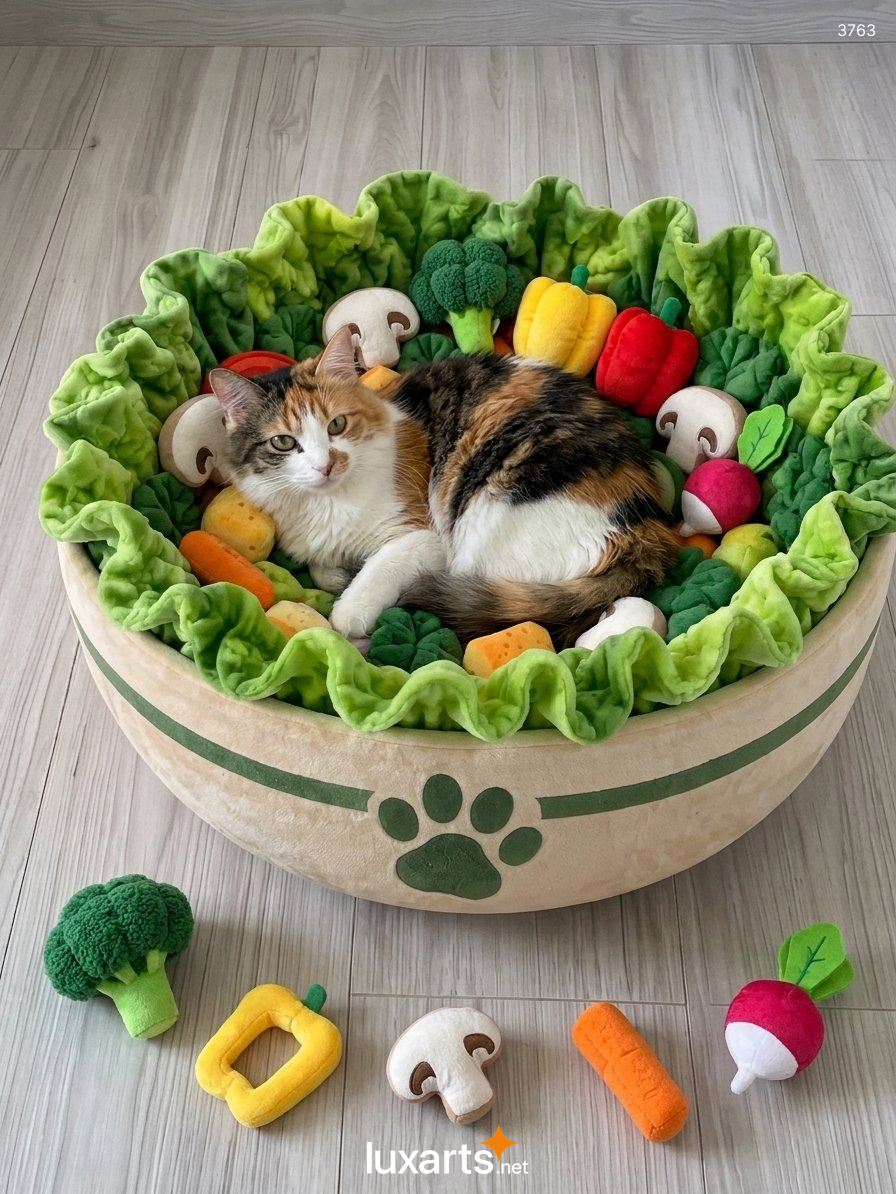
The salad bowl is the gentlest option visually. Ruffled green fabric forms a lettuce collar around the inside edge, and the center is filled with soft broccoli florets, button mushrooms, red and yellow bell peppers, a radish, and orange carrot pieces. The lettuce ruffle doubles as a cushion for the chin and as a rim that keeps a sleeping cat from sliding around. A beige exterior with a dark green stripe keeps the overall look calm, which suits homes with natural wood, linen, and houseplants.
Ice Cream Sundae Beds
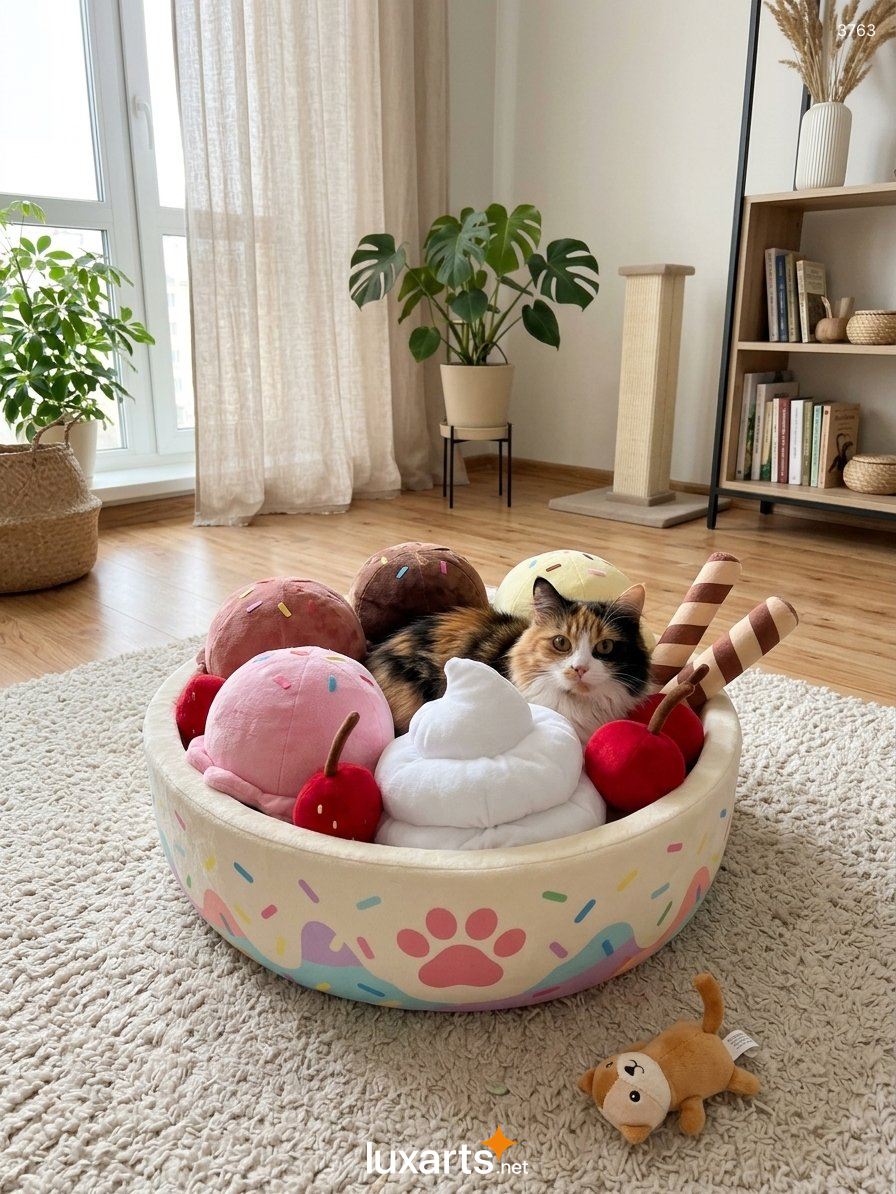
The sundae bed leans into color. Large round scoops in strawberry pink, chocolate brown, and pale pistachio sit inside a dish-shaped base, topped with a swirl of white whipped cream, two red cherries, and a pair of striped wafer sticks. The scoops are big enough for a cat to lean against, which gives the bed a bolstered feel. Sprinkles printed along the outer wall carry the theme down to the floor. It pairs nicely with a bright nursery, a child’s room, or a pet corner with pastel accessories.
Taco Beds
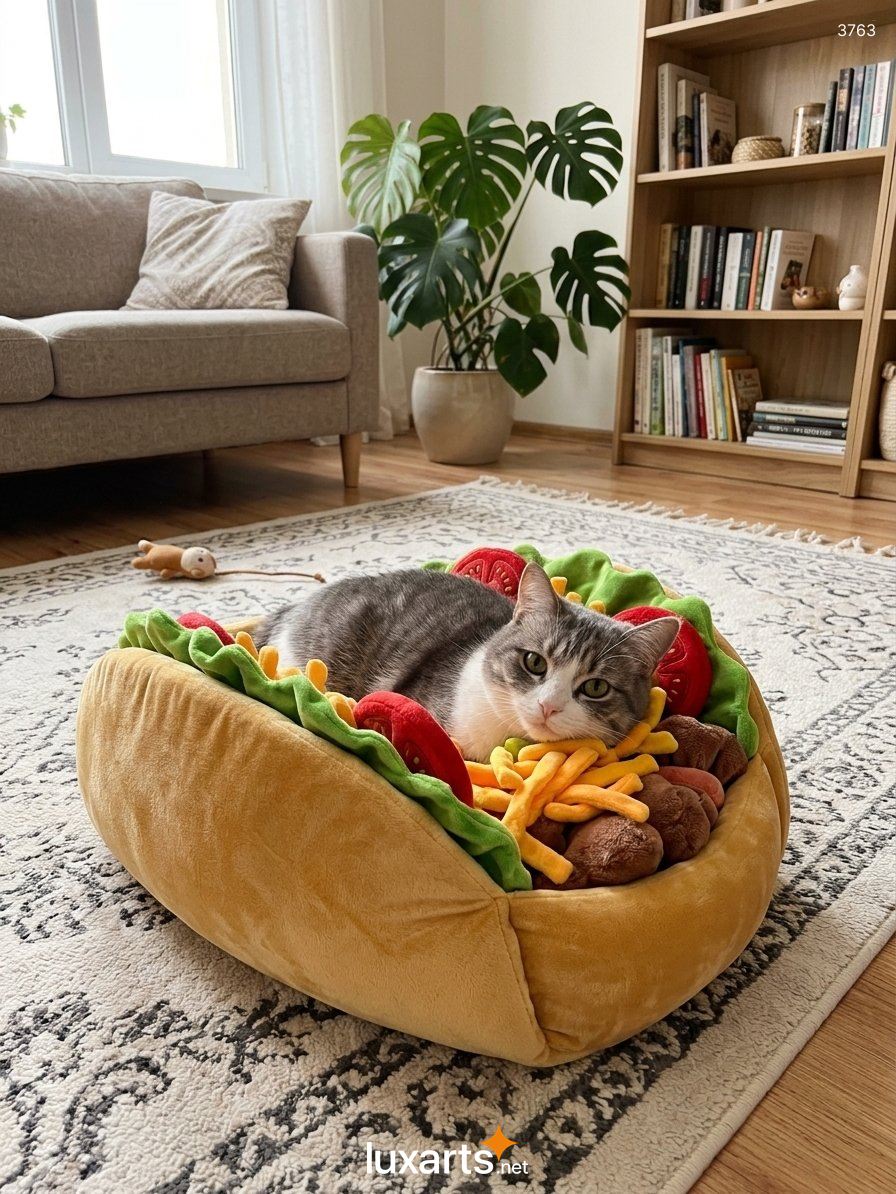
A taco is a clever choice because the real food is already shaped like a pet hideaway: a folded shell with an open top. The plush version uses a smooth golden shell, a ruffle of green lettuce, round tomato slices, a handful of shredded cheese strips, and clusters of brown seasoned meat. The shell wraps up the sides and back, so a cat or small dog can tuck into the curve while still watching what is happening in the room. The fold at the base also gives the bed a stable shape that stays put on a rug.
Fruit Bowl Beds
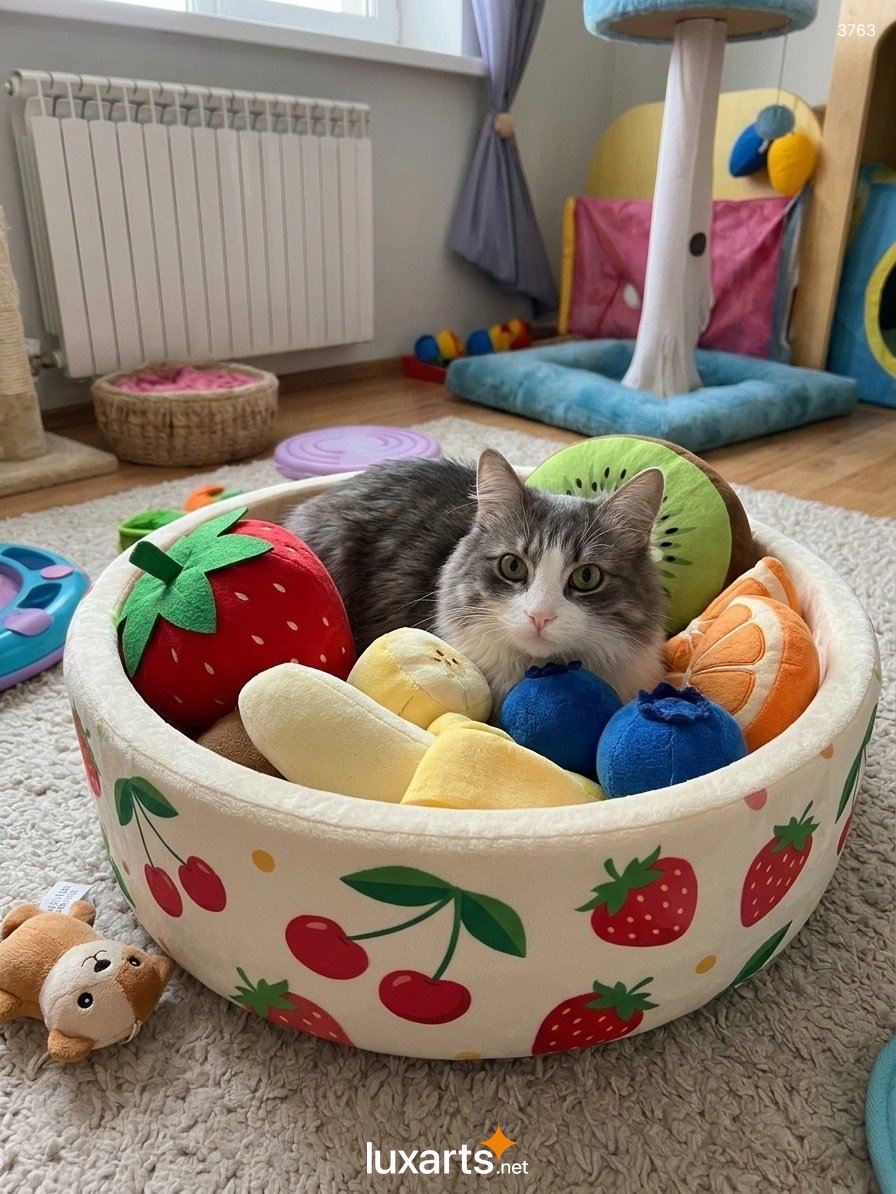
The fruit bowl design takes a cheerful approach. A cream bowl printed with cherries and strawberries holds an oversized plush strawberry, a kiwi slice, an orange segment, banana pieces, and round blueberries. The toppings vary in size, so a pet can choose between a small blueberry to bat around and a large strawberry to lean on. Because the colors are bright but the base is light, the bed fits easily into a room with plenty of natural light.
Why Cats Love Bowl-Shaped Beds
Most people who share a home with a cat have seen it squeeze itself into a shoebox, a laundry basket, or a bathroom sink. Cats are drawn to snug spaces that press lightly against the body. The sides of a bowl-shaped bed give that same contact without forcing the cat into a cramped or unsafe spot. A food shaped pet bed channels the behavior into something designed for it.
The soft toppings add another layer. Cats often investigate new objects with their noses and paws before deciding whether they are safe. A stuffed egg or a plush mushroom gives them something harmless to sniff, knead, and rest against. Over a few days the bed picks up the cat’s scent, and that familiar smell helps it feel like territory rather than just another object in the room.
Cats also spend a large part of the day asleep, usually in short stretches spread across many hours. A bed with a reliable rim and a comfortable interior gives them somewhere to return to again and again. Placing it near a window or in a quiet corner generally works better than leaving it in a busy hallway.
Can Dogs Use a Food Shaped Pet Bed Too?
Yes, with a few adjustments. Small dogs such as toy breeds and compact terriers fit well inside the bowl-style designs, since the rim gives them the nest-like feeling that many dogs look for. Dogs tend to turn in a circle before lying down, and a round bowl supports that habit.
The main difference lies in how dogs treat toppings. Many dogs carry, shake, and chew soft items far more energetically than cats do. For a dog that likes to tear into plush toys, the removable pieces work best as supervised play items rather than permanent bed decoration. A dog that handles stuffed pieces gently can keep them in the bed all day, while a determined chewer may do better with the toppings stored nearby and brought out for short play sessions. Either way, size matters. The bed should be wide enough for the dog to stretch out slightly, and every topping should be too large to be swallowed.
Materials, Filling, and Construction
A good food shaped pet bed depends on what sits beneath the artwork. The outer fabric is usually a short-pile plush or soft microfiber, chosen for warmth and a gentle feel against fur. The base padding should be dense enough to hold the bowl shape after weeks of use. If the walls sag, the design loses its charm and the pet loses the support.
Several construction details deserve attention:
- Stitching. Seams on the toppings should be tight and even, with no loose threads that a claw or tooth could catch.
- Embroidered features. Details like the yellow yolk on a plush egg or the white cross on a shiitake cap hold up better when sewn on rather than glued.
- Filling. Polyester fiber fill is common and generally keeps its shape through washing. Loose pellets or beads can spill if a seam fails.
- Base grip. A non-slip underside keeps the bed from sliding across wood or tile when a pet jumps in.
- Wall support. The rim should stay upright without folding inward under the pet’s weight.
Weight matters as well. A bed that is too light can tip when a heavier pet leans on the edge, while a very heavy one is hard to move for cleaning. A moderate weight combined with a grippy bottom strikes a sensible balance.
Safety Habits for Plush Toppings
Any stuffed item can become a hazard if it is damaged and swallowed, so a few habits go a long way. Check each topping at least once a week. Look for open seams, thin patches in the fabric, or stuffing showing through. A piece that is starting to fall apart should come out of the bed right away.
Pay attention to small parts. Green scallion rings, a tiny cherry stem, or a mushroom cap can be pulled off if the stitching weakens. Watch how your pet handles each piece during the first week, since habits differ from animal to animal. Some cats only want to sleep beside a plush item, while others treat it as prey and kick it with their back legs.
Supervision is sensible during the early days, especially with puppies, kittens, and any animal known to chew fabric. If a pet swallows stuffing or fabric, or shows signs such as vomiting, loss of appetite, or unusual tiredness afterward, contact a veterinarian promptly. For pets that love to chew, keeping the toppings separate from the sleeping area and handing them out during play is a simple way to reduce risk.
Cleaning and Maintenance
Fur, dander, and the occasional hairball find their way into every pet bed, and a plush surface collects them quickly. Regular care keeps the bed fresh and keeps the colors from dulling.
- Every day or two: Lift out the toppings, shake the bed, and brush off loose hair with a lint roller or a soft brush.
- Weekly: Vacuum the base with an upholstery attachment, paying attention to the creases between the noodles, leaves, or scoops.
- Every few weeks: Wash the removable toppings in a mesh laundry bag on a gentle cycle with a mild, unscented detergent, then air-dry them or use low heat.
- As the care label allows: Wash the main cover or spot clean it, and let it dry completely before the pet returns.
Strong fragrances can bother pets, so skip heavily scented detergents and fabric softeners. Make sure every piece is fully dry before it goes back into the bed, since trapped moisture leads to odors and mildew. If the care label says the base cannot go into a washing machine, a damp cloth with a diluted pet-safe cleaner will handle most surface messes.
Placement and Home Styling
Because a food shaped pet bed is also a decorative object, where you put it affects both the pet’s comfort and the look of the room. Cats usually prefer spots with a view, such as beside a window, near a bookcase, or at the end of a sofa where they can watch the household. Dogs often choose locations close to their people. Keep the bed away from direct heat sources like radiators and heaters, since plush fabric holds warmth and can become uncomfortable.
Think about the color palette too. A sundae bed in pastel tones looks right beside light curtains and a woven basket. A taco bed adds warmth to a room with wood floors and a neutral rug. A salad bowl sits comfortably among houseplants. A pair of ramen bowls, one for each pet, makes a funny and memorable corner in a multi-pet home.
Helping a Pet Accept a New Bed
Even the most charming bed means little if the pet ignores it. Give the animal time. Place the bed in a spot the pet already uses and leave the toppings where they are so the shape looks familiar. A blanket or a worn t-shirt that carries the owner’s scent can help. Some owners leave a few of the pet’s regular treats near the rim, which builds a positive link with the bed without forcing anything.
Avoid lifting the pet into the bed again and again, because forced contact can create resistance. Let curiosity do the work instead. Most cats test the edge first, then step inside, then settle after a few visits. Dogs may take a day or two. If the pet seems unsure about a particular topping, simply move that piece aside. The removable design makes it easy to adjust until the animal feels comfortable.
Final Thoughts on the Food Shaped Pet Bed
The appeal of a food shaped pet bed lies in how many needs it covers at once. It offers a sheltered spot for sleep, a set of soft toys for play, and a decorative piece that makes a room feel more personal. The removable plush toppings are what make the idea practical, since they simplify cleaning, give pets some variety, and let the arrangement shift to suit the animal.
Ramen, salad, sundae, taco, and fruit designs all start from the same sensible idea: a deep, soft nest that a pet wants to curl up in. Choose the theme that fits your home, check the stitching on a regular schedule, keep an eye on how your pet treats the toppings, and let the pet decide how the bed gets used. A bowl that makes the whole household smile while keeping a cat or dog comfortable is a good thing to have in the corner of a room.
NOTE: All images in this post are AI-generated and intended solely for inspiration. These are not real products available for sale, and we do not operate any online store or website for purchases.


